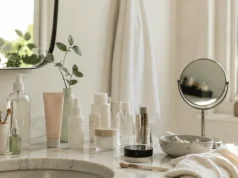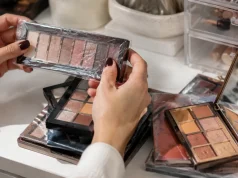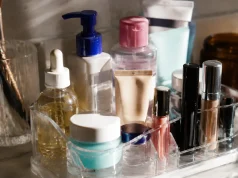

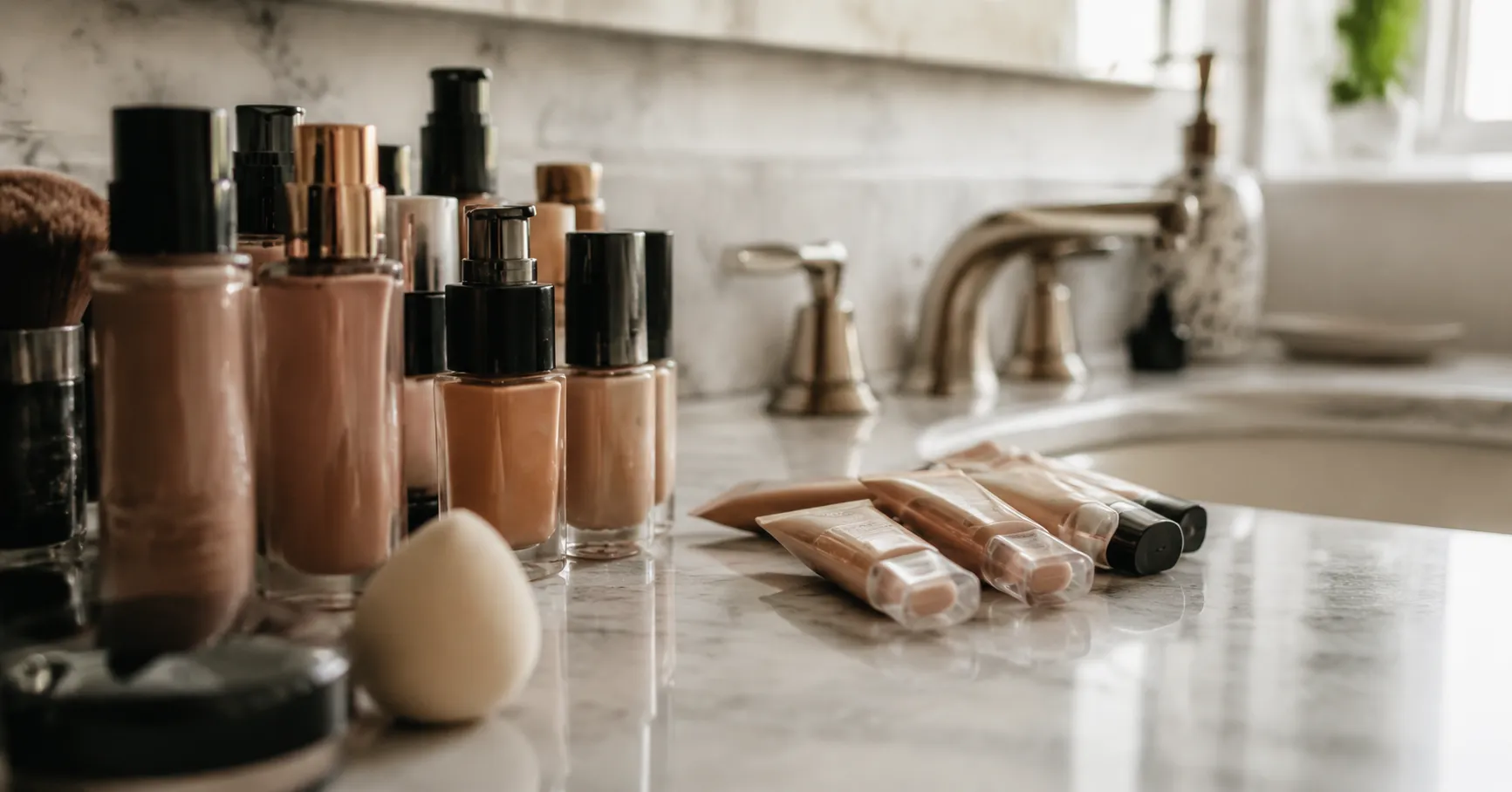
My bathroom counter used to be a graveyard of half-used foundation bottles. You know the ones the thick, full-coverage formulas that promised “12-hour wear” and delivered something closer to a mask by hour three. I bought into it for years. Fully. Embarrassingly.
Then one summer in Phoenix I was visiting my friend Dara, whose skin always looked like she’d just stepped out of a spa I asked her what she was wearing. She held up this tiny tube that looked more like a lip balm than a face product. “It’s just a skin tint,” she said. “I stopped doing foundation two years ago and I’ll never go back.”
I was skeptical. I have uneven skin tone, some redness around my nose, the occasional stress breakout. I genuinely believed I needed coverage. That belief, it turns out, was doing me more harm than good.
What Heavy Foundation Is Actually Doing to Your Skin
Here’s the thing nobody puts on the packaging: thick, film-forming foundations can trap sebum, disrupt your skin barrier over time, and this one surprised me actually make uneven texture look worse because they settle into every line and pore like grout between tiles.
I spent two years faithfully applying a high-coverage foundation every morning. My skin was not improving. If anything, my pores looked more visible on the days I wore it than on the rare days I didn’t. That’s not a coincidence, and I wish I’d made the connection sooner.
But it’s not just about pores. Some heavy foundations contain silicones and occlusives that, for certain skin types, interfere with how well your skincare underneath actually penetrates. You’re essentially layering a semi-impermeable film over products you paid good money for.
What a Skin Tint Actually Does Differently
Lightweight skin tints sit on a different point of the spectrum entirely. They’re not trying to replace your skin they’re trying to even it out while letting it breathe. Most of them contain hydrating or skin-conditioning ingredients, so they’re actively doing something beneficial while they’re on your face, not just sitting there.
The coverage is sheer to light. That part is real, and I won’t pretend otherwise. If you need to cover something specific, a skin tint alone isn’t your answer. But here’s the counter-intuitive thing sheer coverage on healthy, hydrated skin often looks more polished than heavy coverage on skin that’s been relying on heavy coverage.
The skin gets lazy. Or maybe “dependent” is the more accurate word. When you stop letting it breathe and function on its own, it starts producing more oil to compensate, which means you need more product to manage that oil, which creates more of the problem. It’s a cycle that skin tints quietly opt out of.
The Skin Tints Worth Actually Trying
Not all lightweight skin tints are created equal and this is where the category gets interesting rather than just virtuous.
Armani Beauty Luminous Silk Face and Body Oil is technically a skin tint in spirit even if not always in name. It gives that blurred, barely-there finish that makes people ask if you’ve been sleeping better. It layers beautifully over SPF.
Laura Mercier Tinted Moisturizer Natural Skin Perfector has been around long enough that it predates the current skin tint trend by about two decades which should tell you something. Dermatologists have been recommending it quietly for years. It has real SPF 30, something a lot of newer skin tints still can’t say.
Ilia Super Serum Skin Tint is the one I landed on personally. It has a serum base with hyaluronic acid and niacinamide, which means it’s actually doing something for your skin while it sits there. The finish is dewy without being greasy, and it wears through a full workday without oxidizing into a weird orange situation which, if you’ve used enough foundations, you know is a genuine threat.
Then there’s the Charlotte Tilbury Hollywood Flawless Filter, which is less a tint and more a light-diffusing base or topper. Some people use it alone, some mix it into a heavier product to thin it out. Either way, it bridges the gap if you’re not ready to go full minimal.
How to Actually Make the Switch
Here’s where a lot of skin-tint converts go wrong: they switch products without switching their expectations. They put on a skin tint, see that their redness is still slightly visible, and decide the product “doesn’t work.” But the benchmark was always wrong.
Start by asking what coverage you actually need versus what coverage you’ve just gotten used to needing. Those are different questions.
If your skin has been under heavy foundation for years, give it three to four weeks of the lighter alternative before you judge results. The adjustment period is real. Your skin will produce more oil at first because it’s calibrating to the new normal. Push through it.
Use a color-correcting concealer spot-specifically under-eye, around the nose, on any active breakouts and let the skin tint handle the overall even-out. This hybrid approach gives you the coverage you actually want without the suffocation of full-face foundation.
Also, sunscreen. Wear it underneath. Many skin tints have SPF built in, but even when they do, the layer tends to be too thin to reach the advertised protection level. A separate SPF step under your tint is still the better call.
The One Thing People Get Wrong About Lightweight Coverage
There’s a persistent idea that wearing less coverage means caring less about your appearance. That somehow full-coverage foundation is the “professional” or “put-together” choice and skin tints are what you wear when you’re being casual.
That’s completely backwards and honestly, whoever decided coverage equals effort did a lot of damage.
A skin tint on well-maintained, hydrated skin reads as effortless in the best way. It says your skin is in good enough shape that you’re not hiding it. That’s a different kind of confidence than full coverage, not a lesser one.
Is every situation right for minimal coverage? Probably not and I’m not going to pretend that a skin tint is the answer for a formal event where you want a very specific, polished finish. But for the daily routine, for the average Tuesday, for the life where you want to get out the door in ten minutes looking like yourself? The heavy foundation is doing more work than the situation calls for.
What would your skin actually look like if you gave it six weeks to exist without a film over it?
That question sat with me for a while before I did anything about it. When I finally switched, I was annoyed it took me so long to ask it.