
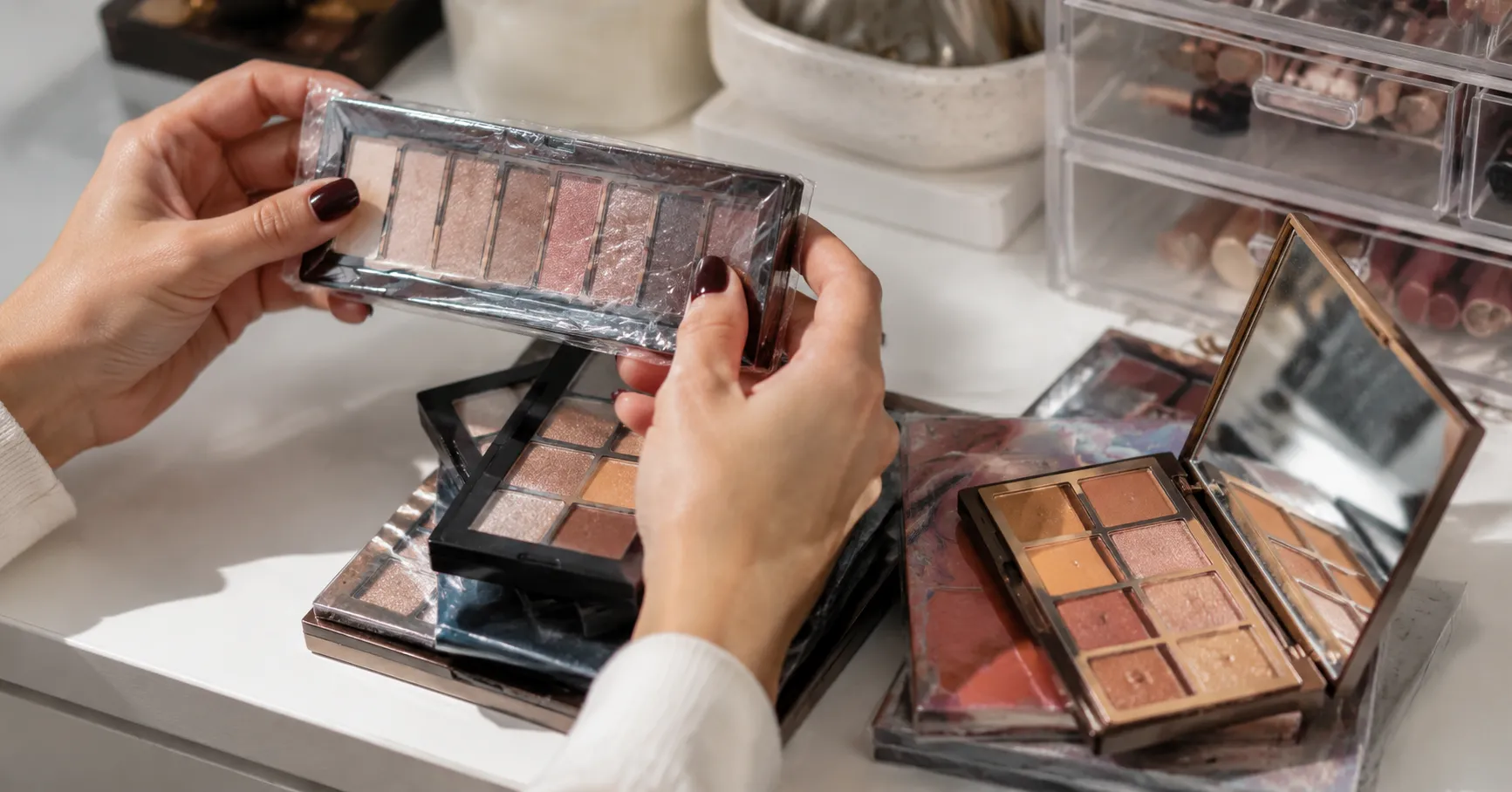
There’s a particular kind of guilt that lives in the back of a makeup drawer. You know the one. A palette you swore you’d use every day, still sealed in its plastic film three months later. Or one you cracked open twice before it got buried under newer, shinier things. If you’re reading this, there’s a good chance you’ve been here before and there’s an even better chance you’re about to do it again.
The beauty industry is extraordinarily good at making you feel like you’re missing something. Launches are engineered with urgency. Limited editions whisper scarcity. Influencer tutorials make a42-pan palette look not just useful but necessary. And somewhere between the unboxing video and the checkout screen, the part of your brain that was going to ask “but do I actually need this?” quietly goes offline.
So before you add another palette to your cart, it’s worth slowing down long enough to ask a few questions that the algorithm will never ask on your behalf.
The Illusion of Range
Palette marketing loves one word above all others: versatile. Thirty shades, endless looks. The implication is that more options equal more creativity, more freedom, more you. In practice, most people reach for the same four to six shades every single time they do their makeup. The rest of the pan sits pristine, decorative, almost performative in its untouched perfection.
This isn’t a character flaw. It’s how human preference actually works. We gravitate toward what feels familiar and flattering, which tends to be a fairly narrow band of colors regardless of what’s available to us. A thoughtfully edited9-pan palette from a brand that understood your undertones will almost always outperform a sprawling 24-shade collection where half the shimmers are tooicy and three of the mattes are nearly identical.
The size of a palette is not a measure of its usefulness. It’s a measure of its ambition and ambition, in this case, belongs to the brand, not to you.
What You Already Own Is Probably Enough
Here’s the uncomfortable truth that no beauty editor is incentivized to say: for most people, the palettes they already own cover the full range of what they actually wear. The gap isn’t in the products. It’s in the technique, the lighting, the tools, or simply the time they’re willing to spend.
There’s something almost counterintuitive about this. We buy palettes hoping they’ll expand our repertoire, but creative limitation often comes not from a shortage of shades but from unfamiliarity with blending, placement, or the specific finishes we already have. A new palette doesn’t solve that. It just adds more pans to the pile.
Before you shop, do an audit. Pull out every palette you own and actually swatch them side by side. You may discover you already have four nearly identical warm mattes, or that you own two burgundy-to-bronze progressions that perform almost identically. That moment of recognition is worth more than whatever is currently trending.
The Formula Conversation Nobody Wants to Have
Not all eyeshadows are created equal, and price is only loosely correlated with quality. But there is a real difference between a pigment-dense, well-milled shadow that blends like a dream and one that sheers out to nothing or kicks up fallout every time you tap the brush. The problem is that you can’t know which one you’re getting from a swatch photo or an influencer reel shot under ring-light conditions optimized to make everything look flawless.
This is where the palette conversation gets more nuanced. A single well-performing palette one where the mattes are truly blendable, the shimmers actually transfer, and the formula doesn’t oxidize weirdly into your crease is worth more in daily use than three mediocre ones stacked in a drawer. But we’re rarely shopping for the one that will last. We’re shopping for the one that looks good in the video.
Pay attention to the categories of feedback that are hard to fake: longevity reports from people with oily lids, how the mattes look in non-studio lighting, whether the “duochrome” actually shifts or just photographs as if it does. That kind of research takes more than scrolling through a comment section, but it’s the difference between a palette that earns a spot in your routine and one that earns a spot in the guilt pile.
The Psychology of the New
It would be dishonest to pretend this is only about makeup. The pull toward a new palette is rarely just about eyeshadow. It’s about novelty, which your brain treats as a reward in itself. It’s about the imagined version of yourself who has more time in the mornings, who experiments more freely, who has finally figured out cut crease technique. The palette isn’t really the product the aspirational self is the product. The palette is just the transaction.
That’s not cynical, it’s just honest. Beauty products have always been partly about fantasy, and there’s nothing wrong with that. The problem is when the fantasy does all the purchasing while the reality your actual morning routine, your actual skill level, your actual color preferences never gets a vote.
Wanting something because it’s beautiful is a completely legitimate reason to want it. But beauty on its own isn’t a reason to buy it, and knowing the difference between those two things is the beginning of shopping with a little more intention.
When the Answer Really Is Yes
None of this is an argument against ever buying another palette. There are genuinely good reasons to add one to your collection: a formula you’ve never found replicated elsewhere, a color story that fills an actual gap, a collaboration that moves you in some way that goes beyond hype. Sometimes the right palette at the right moment is exactly that right.
The distinction is whether you’re buying toward something or running toward something. Buying toward looks like: I’ve been wanting a true deep olive matte for months and nothing I own comes close. Running toward looks like: this drops Friday and everyone is buying it and I don’t want to miss out.
One of those is a decision. The other is a reflex.
A Different Way to Browse
If you want to keep engaging with beauty content and most people do, because it’s genuinely fun consider shifting how you consume it. Watch tutorials from the palettes you already own. Read reviews not for discovery but for education about formula and technique. Follow artists whose aesthetic actually overlaps with yours rather than artists whose skill level is so far beyond your daily routine that everything they recommend becomes aspirational theater.
The culture around beauty consumption has gotten faster and more anxious in direct proportion to how many new products are launching every week. Slowing down doesn’t mean opting out. It means deciding when something earns your money instead of just your attention.
That palette will probably still be available next month. And if it’s sold out by then, something nearly identical or honestly better will have taken its place. The urgency was never really real. It was just very well designed.