

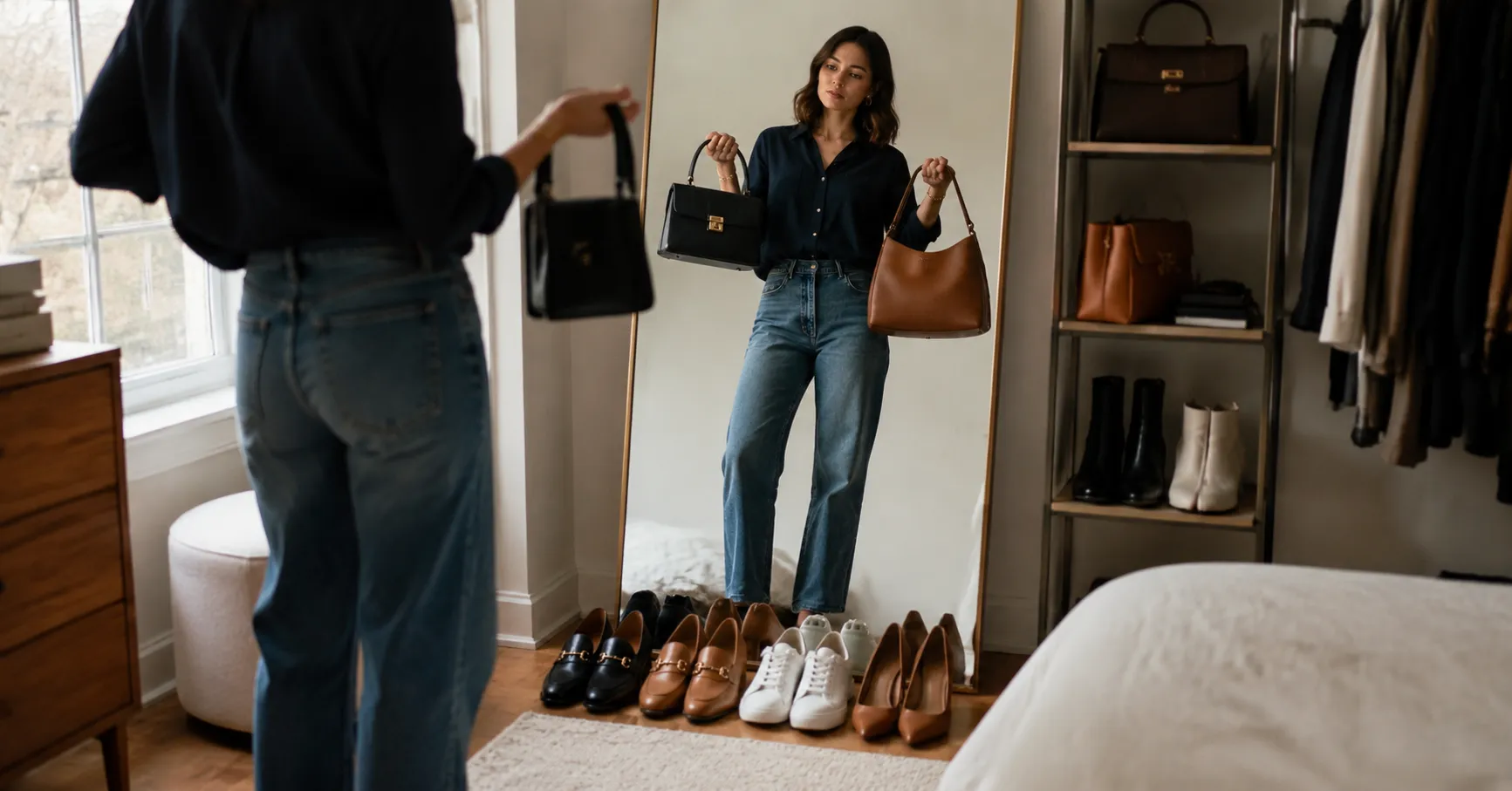
There’s a moment most of us have stood in front of a mirror, fully dressed, holding two different bags, genuinely unsure which one to grab. It’s not vanity. It’s the quiet recognition that accessories carry weight not just physically, but visually. The relationship between your bag and your shoes is one of the most quietly powerful dynamics in getting dressed, and yet almost nobody talks about it with real nuance. Most advice collapses into a single rule: match them. But that’s both too simple and occasionally wrong.
Let’s actually dig into this.
The Old Rule and Why It Still Has a Point
The traditional guidance match your bag to your shoes in color comes from a very specific aesthetic era. Mid-century dressing was about polish, cohesion, and the appearance of deliberate effort. A nude pump paired with a nude structured handbag telegraphed that you had thought it through. That coordination read as sophistication.
That logic isn’t dead. It just needs reframing. The underlying principle isn’t that the colors must be identical it’s that your accessories should feel like they belong to the same world. A caramel leather tote and tan suede loafers share a warmth, a texture family, a season. They don’t match; they rhyme. And that distinction matters more than most people realize.
When you’re building an outfit from scratch, thinking about your shoes and bag as a unit even loosely creates a visual anchor. Everything else can be more expressive because the foundation is stable.
Color Doesn’t Have to Mean Identical
Here’s where most people overthink it. You do not need to find a bag that is the exact shade of your shoes. In practice, rigid matching often reads as costumey or stiff. What you’re actually going for is tonal harmony or intentional contrast and both can work beautifully if you understand the difference.
Tonal harmony means staying within the same color family or temperature. Warm tones together: rust, camel, terracotta, gold. Cool tones together: black, navy, silver, slate grey. You can mix warm neutrals freely. A cognac bag with brown boots? That’s not a mistake, that’s a considered palette.
Intentional contrast is the other move, and it requires a bit more confidence. Black shoes with a white bag isn’t an accident it’s a graphic choice. It creates visual tension that can look extremely modern when the rest of the outfit supports it. The trick is that contrast needs to be the statement, not a side effect of not caring. When it’s deliberate, people can feel it.
Where things go wrong is the middle ground: a burgundy bag with dusty pink shoes, or olive green with forest green. These are close enough to look like an attempted match that didn’t quite land, but far enough apart to create visual dissonance. That’s the zone to avoid.
Material and Texture: The Underrated Factor
Color gets all the attention, but material does just as much work. Leather reads differently than canvas. Patent has its own register. Suede carries a specific softness that changes the whole feel of a pairing.
As a general orientation, like textures tend to feel cohesive. A sleek patent leather pump and a structured patent clutch have an undeniable visual logic. Equally, a casual raffia tote with rope-soled espadrilles makes complete sense they share a natural, artisanal quality. The materials are in conversation.
Mixing textures can also be intentional and beautiful, but it requires one of them to be the focal point. A buttery soft suede bag can soften the edge of a sharp stiletto. A rugged leather crossbody can ground an otherwise delicate lace-up flat. What you’re doing is creating balance, not matching.
Where it gets complicated is when the formality levels of two materials conflict. A very polished, high-gloss evening bag with worn canvas sneakers creates a kind of cognitive dissonance the two pieces are speaking different languages about different occasions. Even if the colors work, the materials are telling the viewer contradictory things.
Formality Alignment Matters More Than You Think
Every shoe and every bag carries an implicit occasion code. Stilettos say evening, or at minimum, effort. White leather sneakers say weekend. Platform sandals say summer and casual ease. Your bag needs to be speaking roughly the same language.
A structured top-handle bag in stiff leather has a daytime corporate energy. It works with block-heeled mules, pointed-toe kitten heels, or polished loafers. Take that same bag and wear it with athletic slides, and something feels off not because of color, but because of what each piece is implying about where you’re going.
This formality alignment principle is especially useful when you’re building what might be called a “crossover” outfit one that’s meant to work for both a daytime meeting and an evening dinner. In those cases, you want a bag and shoe pairing that meets in the middle. A quality leather shoulder bag with block-heeled ankle boots is a classic solution because both pieces carry a moderate formality that translates across contexts.
When Breaking Every Rule Actually Works
Fashion has always progressed by ignoring its own advice. And there are legitimate, stylish reasons to abandon the coordination principle entirely.
The maximalist approach where bag and shoes are radically different colors, materials, and styles can work when the outfit itself is operating as the unifying force. If you’re wearing a printed dress or a bold textured coat, the visual noise of your accessories gets absorbed into a larger composition. The outfit is the statement; the bag and shoes are just participants.
Street style has also normalized the idea of the “wrong” bag as a deliberate choice. A ratty canvas tote with an otherwise polished blazer-and-trouser combination creates a studied nonchalance that reads, in the right context, as very cool. It’s a way of signaling that you’re not trying too hard. The risk is that it tips into actually not trying and that’s entirely about the quality and condition of each piece.
The other exception worth naming is cultural and subcultural dress, where different rules apply by design. The maximalist coordination of some Southern church attire, where bag and shoes and hat are all the same fabric, is its own aesthetic language and a highly intentional one. The point isn’t universal rules but understanding what conversation your choices are entering.
A Practical Framework for Getting Dressed
If you want something usable for daily decisions, try thinking about it this way. Start with your shoes, because they’re harder to change once you’re dressed and they set the formality floor. Then ask: what material, weight, and approximate color temperature would feel like it belongs in the same room as these shoes? Not identical just compatible.
From there, consider the outfit’s center of gravity. If your clothing is doing a lot of work visually, your bag and shoes can afford to be quieter and cohesive. If your clothing is simple, your bag and shoes have more room to be interesting or mismatched.
The last thing to check is condition and scale. A tiny mini bag with chunky platform boots creates a visual imbalance that usually reads as awkward. A very oversized tote with delicate sandals can feel similarly off-proportion. Scale matching isn’t about the pieces being the same size it’s about neither one overpowering the other to the point of making the pairing look accidental.
Dressing is, in the end, a series of small decisions about what you want to communicate and how much energy you want to put into the communication. The bag and shoe relationship is just one thread in that. But it’s a load-bearing thread and once you start paying attention to it, you can’t really stop.