

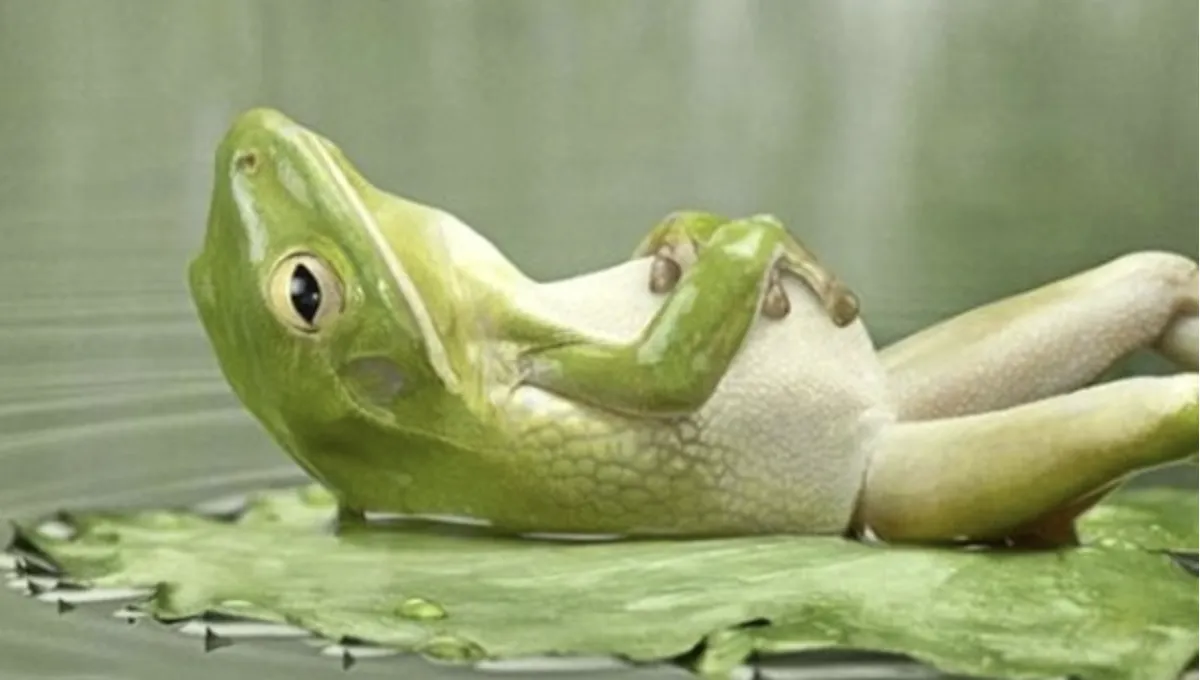
You’re Tired, But Not for the Reason You Think
There’s a particular kind of exhaustion that sleep doesn’t fix. You know the one. Eight hours in bed, and you wake up already bracing for the day. Coffee doesn’t touch it. A weekend off doesn’t clear it. Most people assume the answer is more sleep, or better sleep, and they’re not entirely wrong but they’re missing a larger picture that sleep science has been quietly assembling for decades.
Rest, it turns out, is not a single thing. It never was. The idea that rest equals sleep is one of the most consequential oversimplifications in modern wellness culture, and it’s costing people enormously not just in productivity, but in the texture of their daily lives.
The Seven Types of Rest (And Why Most People Only Know One)
Dr. Saundra Dalton-Smith, an internal medicine physician who spent years puzzled by patients reporting fatigue despite adequate sleep, eventually proposed a framework that reframes the entire conversation. Her research identified seven distinct types of rest: physical, mental, sensory, creative, emotional, social, and spiritual. The reason this matters is that each type corresponds to a different kind of depletion and they cannot substitute for one another.
A software engineer who works twelve-hour days might get physical rest. His body is mostly still. But his mental rest debt is astronomical. A schoolteacher who genuinely loves her students can be emotionally drained in ways that no amount of lying on a couch will resolve. A graphic designer surrounded by screens, notifications, and open-plan office noise might be suffering from sensory overload that a nap will do nothing to address.
This mismatch resting in one dimension while remaining depleted in another explains why so many people feel like they’re always behind on recovery, always running slightly empty, no matter what they try.
What Your Brain Is Actually Doing When You Zone Out
Here’s where neuroscience enters the picture, and it genuinely reframes what “doing nothing” means.
In the early2000s, researchers scanning the brains of people who were simply resting not performing any task, just lying still with their eyes closed made an unexpected discovery. The brain didn’t quiet down. It lit up in a specific pattern, eventually named the default mode network. This network, active during rest and mind-wandering, is now understood to be responsible for some of the brain’s most important work: consolidating memories, processing emotions, rehearsing social scenarios, generating creative connections, and constructing the sense of narrative self.
In other words, when you stare out the window, your brain isn’t idling. It’s integrating.
The problem is that modern life has effectively declared war on this state. Smartphones have colonized the gaps. Every waiting room, every elevator ride, every moment of potential mind-wandering is now filled with a scroll, a podcast, a notification. We have, without fully intending to, eliminated one of the brain’s primary maintenance routines.
Marcus Raichle, the Washington University neuroscientist who helped map the default mode network, estimated that the brain consumes about 20 percent of the body’s total energy despite representing only 2 percent of its mass. Rest doesn’t reduce this consumption as dramatically as we assume the default mode network is metabolically expensive. What changes is the quality of what the brain is doing with that energy. Directed task work and free-ranging default mode activity are not interchangeable. Both are necessary.
The Sensory Debt Nobody Talks About
Walk through almost any open-plan office and conduct a quiet inventory of what your nervous system is processing at any given moment: fluorescent hum, the percussion of keyboards, a phone conversation two desks over, the blue-spectrum glare of monitors, the faint smell of someone’s lunch. None of it is dramatic. All of it is accumulating.
Sensory rest is perhaps the most underrated category in Dalton-Smith’s framework, partly because the deprivation is so ambient and constant that it stops registering as deprivation at all. It becomes baseline. People describe themselves as “just being anxious” or “not a great sleeper” when the more precise description is that their sensory system has been running hot for so long it can no longer down-regulate cleanly.
The research on this is less consolidated than sleep science, but the clinical observations are consistent. Environments with reduced sensory input what researchers sometimes call restorative environments show measurable effects on cortisol levels, attention restoration, and mood. Rachel and Stephen Kaplan’s Attention Restoration Theory, developed in the 1980s and still influential today, proposed that natural environments restore directed attention by providing stimulation that is inherently fascinating but non-demanding. The rustling of leaves doesn’t require you to respond. A bird doesn’t need an answer. The nervous system, in these conditions, slowly lets go.
This is not mysticism. It is neurobiology.
Emotional and Social Rest: The Most Personally Complicated Ones
Emotional rest requires the ability to stop performing. That’s the bluntest way to put it. Many people, especially those in caregiving roles or high-accountability positions, spend enormous cognitive and emotional resources managing how they appear staying composed, staying encouraging, staying appropriate. This is real labor, and it depletes real reserves.
Social rest is adjacent but distinct. It’s the recognition that not all social interaction is restorative, and some of it is actively draining. An introvert who genuinely loves their friends can still return from an evening out needing an hour alone in silence. That’s not antisocial. That’s a system returning to equilibrium. The cultural pressure to treat all social engagement as inherently positive denies this reality, and it leaves a lot of people quietly confused about why they feel worse after activities that were supposed to help.
There’s also something worth noting about creative rest the need to receive beauty and wonder without any obligation to produce. Creatives who only consume their field through a professional lens, always evaluating, always benchmarking, tend to burn through this reserve faster than they realize. Sitting with a piece of music and just listening, not analyzing, not comparing that’s not laziness. It’s replenishment of a specific kind.
Why We’re Bad at Resting on Purpose
Even when people intellectually accept that they need rest, they’re often remarkably bad at actually taking it. There are structural reasons for this workplaces that reward visible busyness, economies built on continuous consumption, social media architectures designed to make disengagement feel like falling behind.
But there are psychological reasons too. Rest requires tolerating a temporary absence of productivity, and for people who have anchored their self-worth to output, that tolerance is genuinely difficult to build. Researchers studying what’s sometimes called “idleness aversion” have found that people will choose to stay busy even when rest is available and the busy task is meaningless simply because busyness itself feels more comfortable than stillness.
The irony is that this pattern degrades the very output people are trying to protect. Sleep researchers at Harvard Medical School have documented the compounding cognitive costs of sleep deprivation reaction time, decision-making quality, emotional regulation all deteriorate in ways that the tired brain is particularly poorly equipped to self-assess. You become less capable precisely as you become more convinced you’re managing fine.
The same logic likely applies across all seven rest categories, though the research is less complete outside of sleep. A mind that never accesses its default mode network doesn’t think less it thinks worse. A nervous system that never gets sensory quiet doesn’t toughen up it sensitizes.
What Actually Happens When You Let Yourself Stop
There’s a well-documented phenomenon in endurance sports called supercompensation the body doesn’t just recover to its previous baseline after stress and rest; it overshoots it, emerging slightly stronger than before. The rest is not neutral. It’s generative.
There’s reason to believe something analogous happens cognitively and emotionally, though it’s harder to quantify. The creative breakthroughs that happen in the shower, the problem solutions that appear mid-walk, the emotional clarity that comes after a genuinely quiet weekend these aren’t coincidences. They’re the default mode network delivering what it’s been working on while you weren’t paying attention.
Johann Hari, in his book Stolen Focus, documents interview after interview with researchers describing what deep, undistracted rest does to human creativity and problem-solving and the picture that emerges is not of a brain that was wasting time. It’s of a brain that was doing something we’ve been systematically interrupting.
The science of rest is, in its way, a science of trust. Trust that the brain working without your supervision is still working. Trust that the afternoon where nothing got done wasn’t a failure. Trust that stillness is not the same as stopping.
Most people are waiting for permission to rest properly. The research has been granting it for years.