
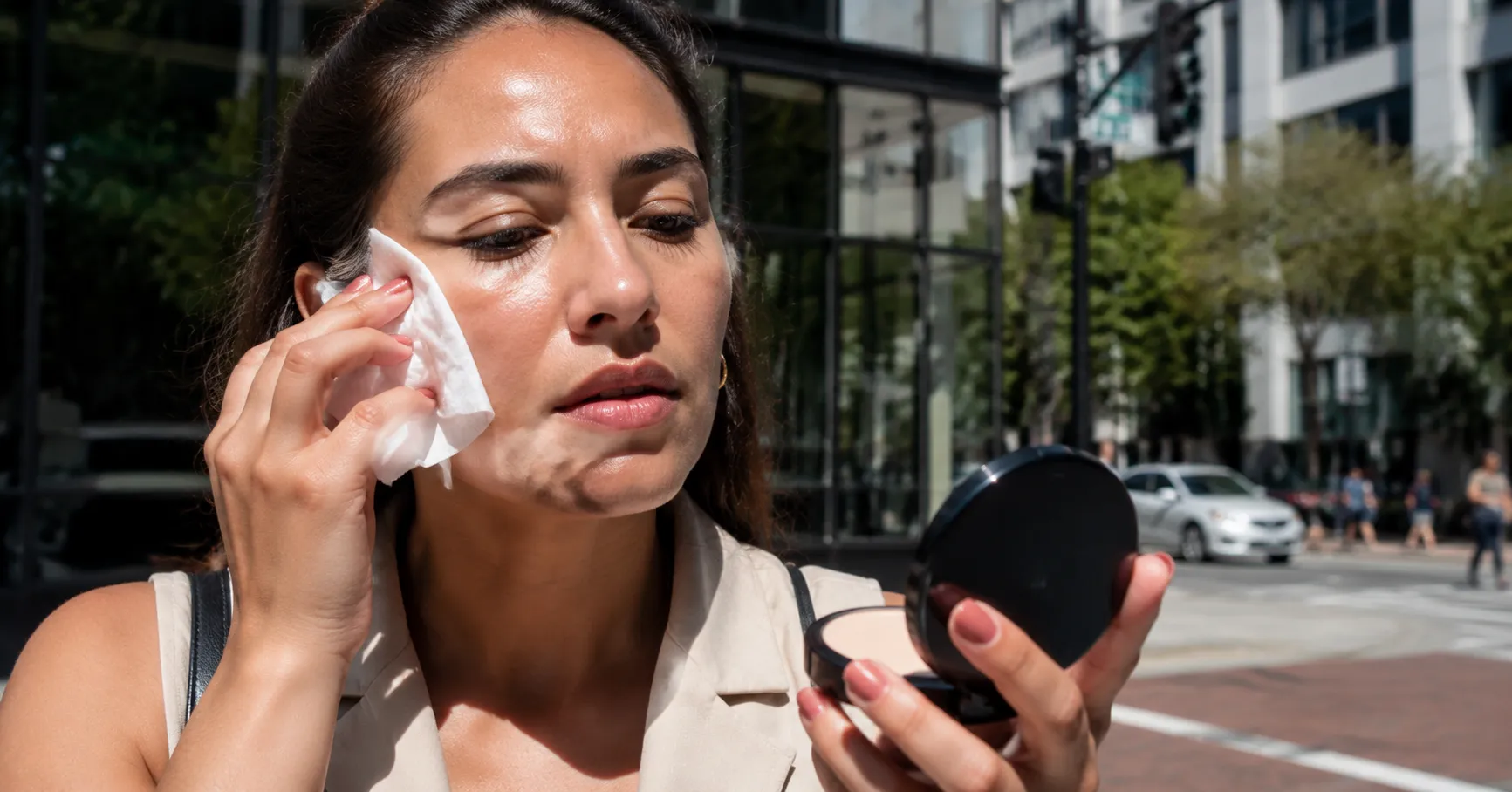
There’s a quiet war happening on your face every single day. Heat, humidity, the oils your skin produces by the hour, the friction of a mask, the simple act of talking all of it working in slow, relentless opposition to the makeup you carefully applied that morning. The beauty industry has spent decades developing weapons for this battle, and the two most significant ones don’t come from botanicals or ancient remedies. They come from chemistry: polymers and powders. Understanding what each one actually does and why they sometimes fail changes the way you think about everything from foundation selection to the order you layer your products.
The Old Reliable: Why Powders Became the Default Fix
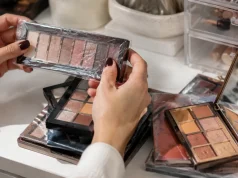
Powders have been used to set makeup for well over a century, and their mechanism is almost satisfyingly simple. Talc, silica, cornstarch, kaolin clay these materials work primarily by absorbing sebum, the skin’s natural oil. Oil is the enemy of most film-forming cosmetics. When sebum migrates up through your foundation, it disrupts the uniform surface, breaks down the emulsion, and causes that mid-afternoon slide that makes your skin look like it’s sweating through your makeup rather than wearing it.
Setting powders interrupt this process physically. The particles sit on top of the skin’s surface and act as a kind of sponge layer, capturing excess oil before it can saturate the product beneath. There’s also a secondary effect that most people don’t consciously register: powder reduces surface tackiness. Many foundations particularly long-wear formulas contain ingredients that remain slightly adhesive when dry. This helps them grip the skin, but it also means they pick up environmental particles and feel uncomfortable without a powder layer to neutralize that stickiness.
The limitation of powders is equally mechanical. They don’t bond to skin. They don’t form a cohesive film. Once the particles are saturated with oil, or once you sweat enough to physically displace them, their protective function essentially ends. You can reapply, and it helps but you’re adding more absorption capacity on top of an already-compromised layer. This is why people who wear powder-only setting methods often hit a wall around hour six or seven.
Enter the Polymers: Setting Sprays and the Science of Film Formation
The rise of setting sprays over the past twenty years introduced something categorically different. Most modern setting sprays are built around synthetic polymers most commonly acrylatescopolymers, polyvinyl alcohol derivatives, or film-forming agents like trimethylsiloxysilicate. These aren’t absorbing anything. They’re doing something far more interesting at the molecular level: they’re forming a continuous, flexible film over everything you’ve applied.
When a setting spray dries, the water or alcohol carrier evaporates and leaves the polymer chains behind. Those chains link together and create a mesh-like structure across the skin’s surface and through the layers of makeup beneath the spray. It’s chemically similar, in principle, to what happens when you apply a coat of hairspray the product doesn’t absorb the thing it’s protecting, it encapsulates it.
This is why polymer-based sprays can meaningfully extend wear in ways that powder alone cannot. They’re not waiting for oil to arrive and then soaking it up. They’re creating a physical barrier that slows the rate at which sebum can migrate through to the surface in the first place. They also reduce the impact of mechanical friction a polymer film stretches and flexes with the skin rather than sitting as loose particles that can be rubbed away.
The trade-off is flexibility, literally and figuratively. A heavy polymer film on skin that moves constantly around the mouth, at the corners of the eyes will eventually crack or peel, especially if the formulation doesn’t account for elasticity. Cheaper setting sprays with rigid polymer systems sometimes cause foundations to look almost creased or fractured by the end of the day, particularly in areas of high movement. This isn’t a failure of the spray concept, it’s a formulation problem. High-quality polymer-based products include plasticizers ingredients that maintain the film’s flexibility as the skin moves.
What Humidity Actually Does to Both Systems
Here’s where the chemistry gets genuinely interesting, and where a lot of popular advice falls apart. The common belief is that powder is bad in humid climates because it looks cakey. That’s partially true aesthetically, but the deeper issue is functional. Certain absorbent powders cornstarch is the primary offender are hygroscopic. In high-humidity environments, they don’t just absorb oil. They absorb atmospheric moisture as well. A cornstarch-based setting powder in a tropical climate can actually accelerate the breakdown of what’s beneath it by introducing water into the system. The same ingredient that works beautifully in a dry environment becomes genuinely counterproductive when the air itself is saturated.
Silica is a more humidity-stable alternative because its absorption is more selectively oil-based rather than broadly hydrophilic. Brands reformulating for global markets increasingly use surface-treated silicas precisely for this reason.
Polymer sprays have their own humidity complications. Some film-forming agents are sensitive to water during the drying phase if you apply a setting spray in extremely high humidity, the evaporation of the water carrier slows dramatically, which means the polymer chains take longer to link properly and the resulting film can be weaker or uneven. This is why application technique matters: a fine mist from a greater distance, in a cooler environment, generally produces a more consistent film than a heavy application in a bathroom still steaming from a shower.
The Case for Using Both and Why Order Matters
The most interesting insight from formulation science is that polymers and powders aren’t competing technologies. They’re complementary ones, and the order in which they’re applied determines whether they help or undermine each other.
Setting powder applied before a polymer spray creates a composite system. The powder absorbs the first wave of sebum and provides an additional surface for the polymer film to anchor to particles give the film more contact points than a smooth emulsion surface alone. Then the spray creates the protective layer on top. The result is a system that handles both oil saturation and physical disruption better than either method alone.
Applying them in the reverse order spray first, then powder tends to produce worse results. The polymer film is disrupted during application of the powder brush, and the film’s integrity is compromised before it can do its job. The powder layer applied on top of a film also sits less securely than powder applied directly to skin.
For people with very oily skin, a light powder application under foundation used as a primer essentially followed by powder after foundation, followed by a finishing spray, creates a layered architecture that each product in sequence contributes to. It sounds like a lot of steps, but the chemistry justifies each one.
Reading Ingredient Lists Like a Formulator
The practical upshot of all this is that the marketing language around long-wear products is almost never as informative as the ingredient list. “Transfer-resistant” and “24-hour wear” claims tell you the aspiration. The ingredients tell you the mechanism.
Look for trimethylsiloxysilicate in foundations and setting sprays it’s one of the most effective film-forming agents for wear, originally borrowed from sunscreen chemistry. In powders, surface-treated silica outperforms talc for oil control in most skin types, and significantly outperforms cornstarch in humid conditions. If a setting spray lists alcohol denat. very high on the list, it will dry faster but may be more drying on the skin and more likely to produce a stiff rather than flexible film.
None of this requires a chemistry degree to apply. It just requires shifting the frame from “which product is best” to “what is this product actually doing, and does that match what my skin and environment need.”
The battle on your face is real, but it’s not random. The ingredients know exactly what they’re doing. The question is whether you do too.