
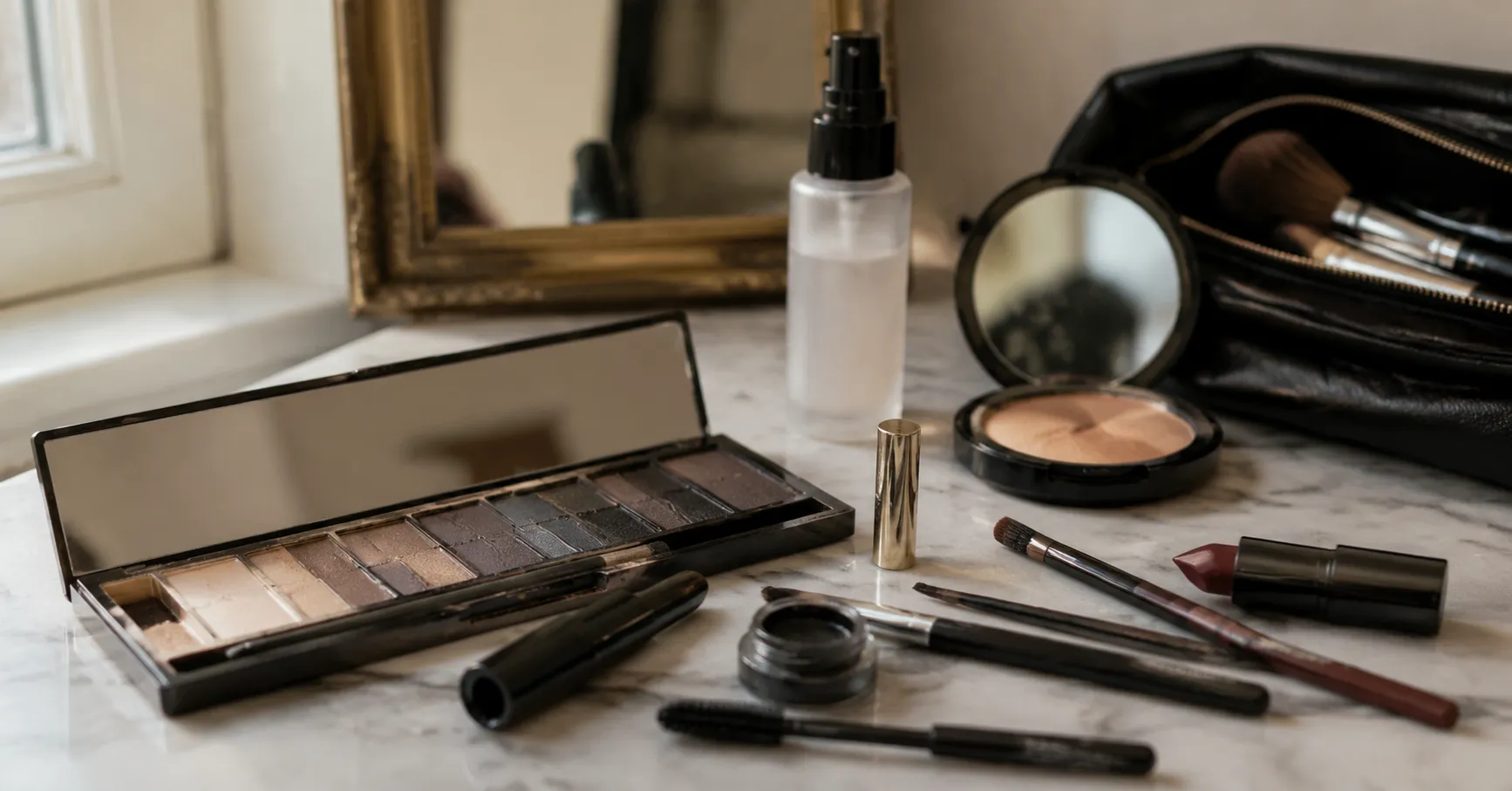
There’s a specific kind of defeat that every makeup lover knows. You spend forty-five minutes perfecting a smoky eye, blending shadows until the gradient looks like something out of a editorial shoot, and then three hours later you catch your reflection and find that masterpiece has migrated south. The liner has smudged into raccoon territory. The highlight has disappeared. The lipstick exists only as a faint memory in the corners of your mouth. The look didn’t just fade it surrendered.
Longevity in makeup isn’t just a convenience issue. It’s the difference between feeling like yourself all day and spending your energy managing a slow unraveling. The good news is that smudge-proof, all-day wear isn’t reserved for professional makeup artists with their kit bags and setting sprays and thirty-minute prep routines. It’s a system. Learn the system, and the look stays.
Skin Is the Canvas Treat It Like One
Everything begins before the first product touches your face. Skincare and makeup have an uneasy relationship that most people misunderstand. The instinct is to moisturize heavily before applying foundation, reasoning that hydrated skin equals better coverage. But heavy occlusives thick creams loaded with petrolatum or mineral oil sit on top of the skin rather than absorbing into it, and foundation applied on top has nothing to grip. It literally slides.
The fix isn’t skipping moisture. It’s timing it correctly and choosing the right formulas. A lightweight, water-based moisturizer or a gel moisturizer applied at least ten minutes before primer gives skin the hydration it needs while still allowing the surface to normalize. If your skin leans oily, a niacinamide serum underneath controls sebum production at the source rather than just blotting the symptoms.
Primer gets underestimated constantly. People think of it as optional, a marketing upsell. It isn’t. A good primer is essentially a binding agent between your skin and your makeup it fills in texture, controls oil or dryness depending on the formula, and creates a surface that foundation actually wants to cling to. For oily skin, a silicone-based or mattifying primer. For dry skin, an illuminating or hydrating primer. For combination skin, spot-apply both where needed rather than choosing one for the whole face.
Foundation That Stays Is Foundation Applied Right
The formula matters, but the application method matters just as much. Buffing liquid foundation in with a densely packed brush builds coverage while pressing it into skin rather than sitting it on top. A damp beauty sponge, stippled rather than swiped, is kinder to texture and layers foundation in a way that mimics skin. What doesn’t work for longevity despite being intuitive is applying too much product at once. Thick layers are heavy layers. They shift, they crease, and they draw attention to every pore and fine line. Thin, buildable layers stay.
Concealer timing is something most tutorials skip past too quickly. Applying concealer directly after foundation means you’re blending on top of something still wet, which means both layers move. Wait two minutes. Let the foundation tack down. Then your concealer lands and stays exactly where you put it.
The Setting Powder Debate Baked vs. Loose vs. Pressed
Setting powder is not optional if longevity is the goal. But there’s a real difference between the powders on the market, and the wrong one creates new problems while solving the original one.
Loose translucent powder is the gold standard for setting under-eye concealer the baking technique, where you let powder sit on the concealer for several minutes before dusting it away, locks the concealer in place and reduces creasing dramatically. For the rest of the face, a light-handed application of a finely milled loose powder or a pressed powder mattifies and sets without adding visible texture.
Baked powders, the ones with that marbled, sun-baked look in the pan, tend to have more luminosity and are better for skin that leans dry they set while adding a glow rather than flattening the finish. For oily skin, a straight matte pressed powder or a blotting powder worn throughout the day does more work than any long-wear foundation formula on its own.
One thing worth saying plainly: if you have dry or mature skin, avoid heavy powder layering. The look you’re trying to lock in will look caked within an hour. A light mist of a hydrating setting spray more on that shortly does more setting work with less visible weight.
Eyes That Don’t Move
The eye area is where longevity becomes genuinely technical, because you’re working against several forces simultaneously: natural oils from the eyelid, humidity from the eye itself, and the constant movement of skin as you blink and squint. A cream shadow applied directly to bare skin and expected to hold all day is not a strategy. It’s optimism.
Eye primer is the non-negotiable here. A single pass over the entire lid before any shadow creates a completely different surface one that grips powder shadow rather than allowing it to skim across skin and settle into creases. The difference in wear time between primed and unprimed lids can easily be six hours. For darker, pigment-heavy looks, eye primer also prevents the dreaded crease shadow that develops in the natural fold of the lid.
Liner longevity depends on the product type. Pencil liners smudge. That’s not a flaw in the product for certain looks, that smudgability is the entire point. But if you want liner that survives a full day, you want either a gel liner applied with a thin brush or a felt-tip liquid liner. Both dry down to a formula that essentially becomes waterproof. Smudging them after the fact requires actual effort.
For mascara, the secret that nobody talks about enough is wiggling the wand at the root of the lashes rather than simply dragging it upward. The root application adds the darkness and volume, the upward pull lengthens, and coating the tips last prevents the drying and flaking that causes mascara to migrate under the eyes by midday. Waterproof formulas are the obvious choice for longevity, but they’re also drying with regular use a regular volumizing mascara applied with the root-first technique and sealed with a setting spray can perform surprisingly close.
Lip Color That Outlasts Everything
Lips are their own challenge, partly because they move more than any other feature and partly because eating and drinking are difficult to avoid. The traditional advice use a lip liner to fill in the whole lip before applying color is traditional because it genuinely works. Liner formulas are drier and more waxy than lipstick, which means they grip the lip surface and give the color something to bond to. When the top layer of lipstick eventually wears off, the liner underneath maintains the shape and a ghost of the color.
The blotting technique, where you apply lipstick, blot with a tissue, dust a very light pass of translucent powder over the blotted lip, then apply a second layer, builds a film of color that resists transfer significantly better than a single application. It sounds fussy. It takes about ninety additional seconds. The results are the kind of thing that makes people ask if you’re wearing a stain.
Liquid lipsticks and lip stains operate by a different chemistry altogether they’re formulated to dry down and form a color film rather than sitting as a wax or emollient layer. They last. The tradeoff is that they require more precision in application before they set, because correcting a dry liquid lipstick at the edges is considerably harder than cleaning up a traditional formula. Apply. Clean the edges immediately. Then let it dry.
The Final Seal
Setting spray is the last step and the one that pulls everything together. A quality setting spray, misted in an X and T motion across the face from about eight to ten inches away, creates a light binding layer over the entire look. It knits together the powder and foundation and concealer into something more cohesive less like separate products stacked on skin and more like a single unified finish.
The difference between setting spray types matters here too. Matte setting sprays are formulated for oily skin and high-humidity environments. Dewy or hydrating sprays work better for dry skin and create a luminous finish rather than a flat one. Urban decay’s All Nighter and MAC Fix+ are the cultural shorthand for this category, but most major brands produce at least one reliable option.
What setting spray cannot do is rescue an application built on the wrong foundation a heavy moisturizer that never absorbed, a primer skipped, powder applied with too heavy a hand. The spray is the seal on a well-constructed system, not a correction for a flawed one.
That’s the real secret inside all of this: smudge-proof looks aren’t about any single miracle product. They’re about understanding why makeup moves in the first place and systematically removing each reason. Oil sits between skin and product neutralize it with primer. Foundation layers are too thick and heavy apply thinner and build. Powder sits on top of everything use less, use finer, use a spray to integrate it. Once the logic is clear, the system becomes intuitive. And the look you put on in the morning is still recognizably the same look at midnight.