
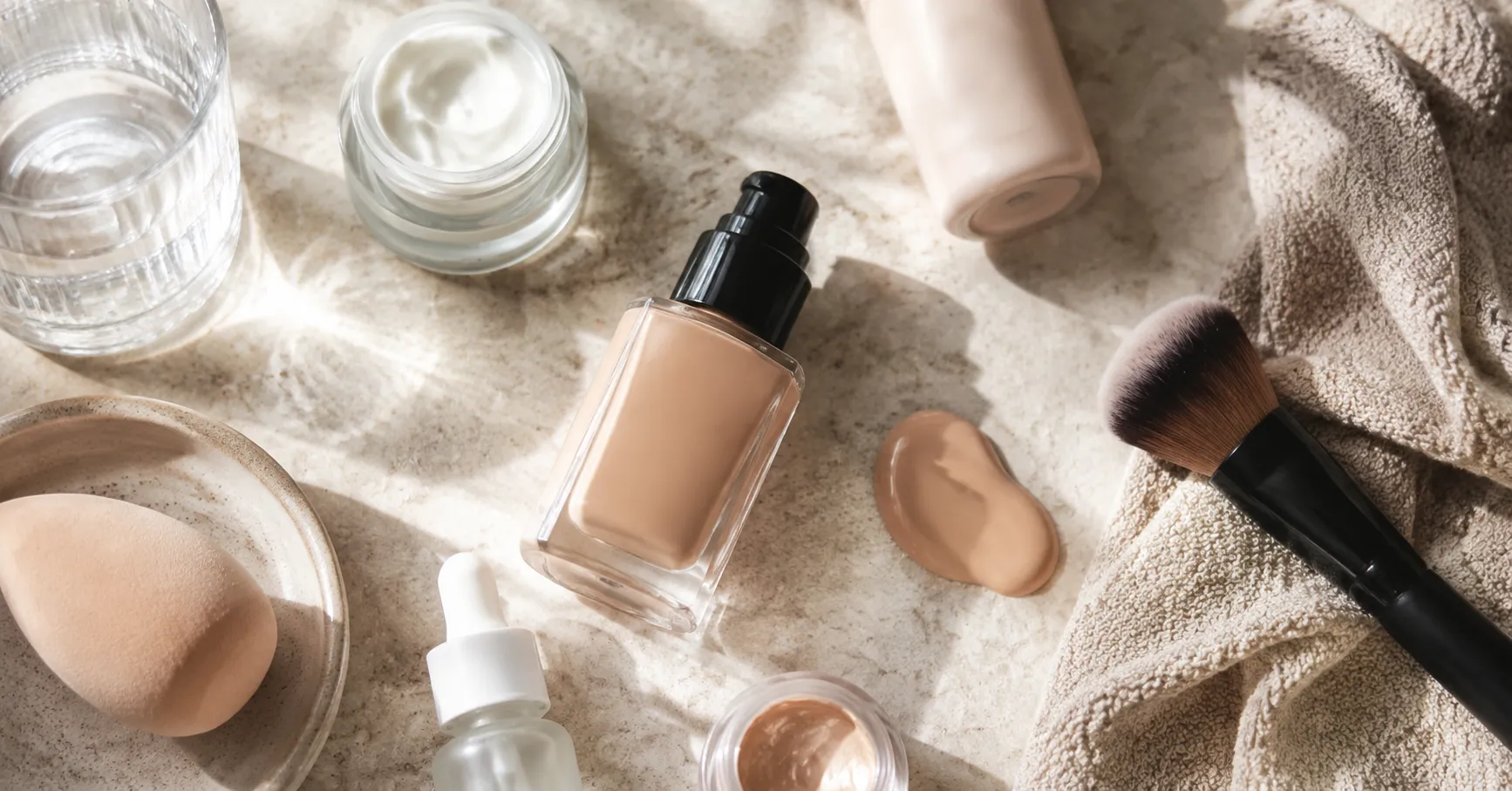
There’s a moment most of us know intimately. You’ve spent twenty minutes on your makeup, stepped into natural light, and the person staring back at you looks like they’re wearing a mask. The foundation sits on top of your skin rather than melting into it. It’s too flat, too uniform, too obviously there. What you wanted was that elusive thing skin that just looks like better skin. What you got was a face that looks done.
The frustrating part? The problem usually isn’t the product. It’s everything that happens before and after it.
The Real Reason Foundation Goes Cakey
Most people blame their foundation formula when things go wrong. They switch from liquid to serum, from medium coverage to sheer, and nothing fundamentally changes. That’s becausecakiness isn’t primarily a product problem. It’s a surface problem, a layering problem, and sometimes a timing problem all at once.
Dry patches and excess oil don’t just affect how skin looks they affect how product sits. Foundation is essentially a suspension of pigment, and whatever texture exists on your skin when you apply it becomes magnified, not corrected. A slightly flaky patch near your nose becomes a cracked, highlighted fault line. A congested area around your chin turns into an uneven, thick-looking zone that no blending will fix.
The other culprit nobody talks about enough is product accumulation. Each layer you apply primer, concealer, foundation, powder adds physical weight. When those layers aren’t compatible in texture or formulation, they start to separate and bunch. That’s the cake. Not too much product exactly, but too many incompatible things stacked without intention.
Skin Prep Is Doing More Work Than You Think
Here’s where the actual transformation happens, and most of it occurs before you open your foundation bottle.
Exfoliation is the unglamorous prerequisite nobody wants to talk about because it doesn’t feel like “doing your makeup.” But running a gentle chemical exfoliant two or three times a week something with lactic or mandelic acid rather than the harsh scrubs that cause micro-tears changes the actual texture of the canvas. Foundation doesn’t grip rough, uneven skin well. It clings to the high points and skips the low ones. Smooth skin lets product move.
Hydration matters more than most people realize, and the timing of it matters too. Applying foundation over moisturizer that hasn’t absorbed is one of the most consistent routes to that pilling, sliding, separated look. Give your moisturizer a genuine five to ten minutes. If you’re in a rush and can’t wait, blotting lightly with a tissue before applying foundation removes the excess slip without stripping the hydration underneath.
Primer is often misunderstood as something that just makes foundation last longer. What a good primer actually does is unify your skin’s texture so the foundation has a consistent surface to adhere to. Silicone-based primers fill in pores and fine lines. Water-based primers add a layer of hydration that helps skin-finish foundations blend seamlessly. The key is matching the primer base to the foundation base. Layering a heavy silicone primer under a water-based foundation is asking for separation.
Application Is a Technique, Not Just a Tool Choice
Brushes versus sponges is a conversation that will apparently never end, but the real answer is more nuanced than team brush or team beauty blender. The method matters more than the tool.
Stippling pressing the product into the skin in short, dabbing motions rather than sweeping it across is fundamentally different from buffing. Buffing can create a smooth, even finish, but it also tends to deposit more product and obscure skin texture entirely, which is what creates that painted-on look. Stippling with a damp sponge or a flat foundation brush lets you build coverage selectively, pressing pigment against skin so it fuses rather than sits on top.
The damp sponge specifically is worth a dedicated mention. A dry sponge absorbs product; a wet one pushes it into the skin. That’s not a small difference. When a sponge is thoroughly saturated with water and wrung out, it has no more room to absorb. The foundation goes onto your skin instead of into the sponge, and the slight dilution from the water creates a finish that genuinely looks like skin.
Temperature plays a surprising role too. Your hands are warm. Running a foundation brush under cool water before use or working quickly so your hands transfer heat into the product can actually change how it blends. It sounds trivial. In practice, particularly with thicker formulas, it isn’t.
Coverage Strategy: Less Isn’t Always the Answer
There’s a common overcorrection that happens when people are trying to avoid a cakey look: they go so sheer that they’ve effectively just applied tinted moisturizer over a patchy complexion and hoped for the best. The secret isn’t using less foundation. It’s using it differently.
Spot application is underrated. Instead of applying foundation all over the face and then adding concealer, try applying nothing to areas that genuinely don’t need it. The center of your forehead if it’s clear, the high point of your cheekbones if your skin is even there, the bridge of your nose. Coverage only where coverage is needed means less total product on your face, which means less risk of buildup.
Color-correcting before foundation also reduces the amount of foundation you need to reach your desired result. An orange or peach corrector on dark undereye circles means you don’t have to pile on layers of concealer and then foundation to neutralize them. The coverage math gets easier when you’re not fighting underlying discoloration with sheer pigment alone.
Setting Without Suffocating
Powder is where a lot of otherwise well-executed foundation applications go wrong. The instinct to dust powder everywhere to lock things in, to control oil, to make sure it lasts often creates the exact cakey finish people were trying to avoid.
Translucent setting powder belongs in specific places: the undereye area, where concealer creases, and anywhere that’s actively oily. Everywhere else, a setting spray is usually doing more for the finish. The fine mist of a setting spray doesn’t add any layer of physical product; it just helps everything melt together and softens the line between what’s applied and what’s skin.
Baking the technique of pressing a heavy amount of loose powder under the eyes and letting it sit has a place in photographic or stage makeup where lights flatten texture and wash out the face. In natural light, in real life, it creates a chalky, thick look that photographs terribly and sits visibly heavier than the surrounding skin. Most people doing their daily makeup should skip it entirely.
If you do need powder for oil control, pressing rather than sweeping makes a significant difference. A pressed powder puff or a flat brush applied with a pressing motion controls shine without disturbing the foundation layer underneath. Sweeping motions the natural gesture most people use physically move the product you’ve already blended, creating those telltale streaks and uneven patches.
What “Skin-Like” Actually Means
Real skin isn’t uniform. It has variations in tone, a little visible texture, areas of natural shine and areas of natural matte. Skin-like foundation application isn’t about achieving a perfect, poreless surface. It’s about keeping enough of your actual skin visible that the overall effect reads as skin rather than coverage.
That means leaving some freckles. It means not concealing every small discoloration if the result is a flat, texture-free zone that looks nothing like surrounding skin. It means letting the natural sheen on the high points of your cheekbones exist, rather than setting everything to the same matte finish.
The goal, finally, is something almost paradoxical makeup that’s only visible when you want it to be. Foundation that people can’t quite name when they look at you. Not “her skin is perfect” but just “she looks good,” with no conscious awareness of why. That gap between what’s applied and what’s noticed is where the real skill lives. And it turns out it has very little to do with which bottle you’re using.