
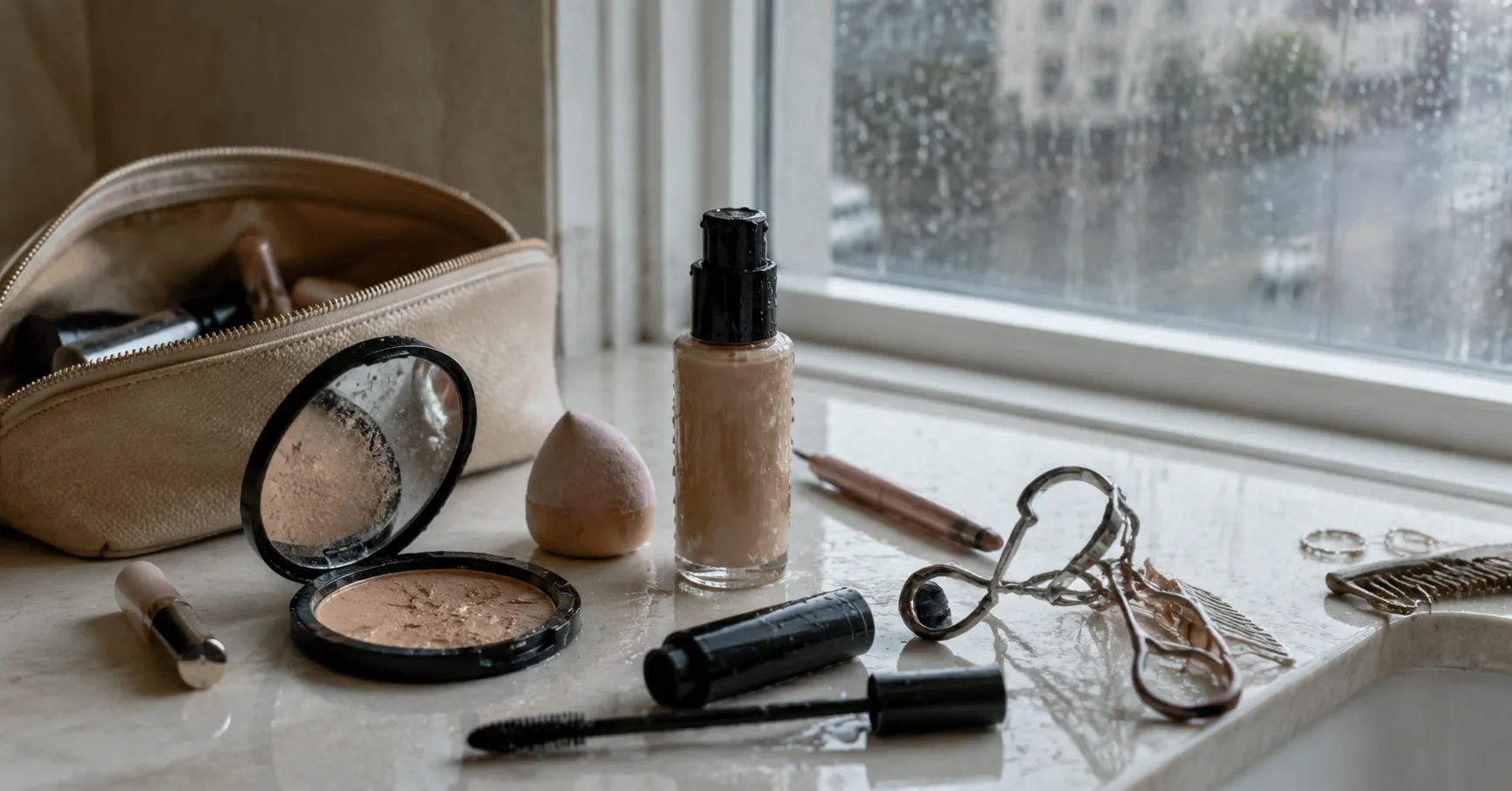
There’s a particular kind of defeat that every makeup wearer knows. You spent twenty minutes in the morning getting everything right the blend is seamless, the liner is sharp, the highlight catches the light at exactly the angle you wanted. Then by noon, your foundation has migrated into your pores, your mascara has made its slow pilgrimage south, and the whole careful effort looks like it lost a fight with a humid afternoon. It’s not a dramatic collapse. It’s a slow surrender, and it happens to almost everyone.
The beauty industry has spent decades selling solutions to this problem, and the market is now flooded with setting sprays, primers, long-wear formulas, and powders that all promise to be the answer. Some of them work. Many of them work only under specific conditions that the brand neglects to mention. What actually keeps makeup in place isn’t one magic product it’s understanding why makeup moves in the first place, and building a routine that addresses those reasons from the ground up.
Why Makeup Melts (And It’s Not Just the Heat)
Sweat is the obvious villain, but it rarely acts alone. The real culprits are a combination of excess sebum, moisture, friction, and the simple physics of layering products that weren’t designed to work together.
Your skin produces oil throughout the day. That oil breaks down the bond between your skin and any product sitting on top of it, which is why people with oilier skin types tend to experience more fading and slippage. But even people with dry skin aren’t immune dry skin often overcompensates by producing oil in certain zones, and the moisturizers and hydrating primers that dry skin needs can sometimes create a slightly slick base layer that causes issues later.
Humidity accelerates everything. When there’s moisture in the air, water-based products reactivate, powder formulas stop setting properly, and anything sitting on the surface of your skin becomes more vulnerable. This is why a full face of makeup can survive a mildly warm day in a dry climate but completely fall apart on a cooler, more humid one. Temperature matters, but humidity is the variable most people underestimate.
Friction is the third factor people rarely think about. Touching your face, adjusting your glasses, resting your chin in your hand each small contact disturbs the makeup film. Masks made this dramatically visible over the past few years, but friction has always been quietly eroding wear.
The Foundation of Everything: Skin Prep
If the makeup melts, it almost always starts here. No product, regardless of how long-wear its formula claims to be, can perform well on a poorly prepped canvas.
The goal of skin prep before makeup isn’t hydration for its own sake it’s achieving a balanced, stable surface. Skin that’s adequately moisturized actually holds product better than skin that’s dry and flaky, but the timing matters enormously. Applying foundation immediately after a rich moisturizer is like trying to paint over wet glue. Most moisturizers need at least five minutes, ideally ten, to absorb and settle before you layer anything on top.
For oily or combination skin, a lightweight gel moisturizer or a water-based lotion gives the skin what it needs without contributing extra slip. For dry skin, a hydrating serum underneath a lighter moisturizer often works better than one heavy cream, because the serum absorbs faster and the moisturizer on top has a thinner texture that sets more cleanly.
The underrated step in skin prep is using a toner or essence beforehand. These thin, water-based layers help balance the skin’s surface and, critically, they absorb very quickly. They create a slightly more receptive surface for everything that follows.
Primer: What It Actually Does and When to Skip It
Primer has a reputation that slightly exceeds its capabilities. It’s often marketed as a universal first step, but the truth is more nuanced the right primer is genuinely transformative, and the wrong one can make your makeup shorter-lived than no primer at all.
Silicone-based primers create a smooth, occlusive layer that blurs texture and creates a surface that many foundations grip well. They work best with silicone-based or powder formulas layered on top. The problem arises when people use a silicone primer underneath a water-based foundation the two don’t bond well, and the foundation ends up sitting on top of the primer rather than integrating with it. The result is a look that transfers easily and breaks down faster.
Water-based primers pair better with water-based foundations, and they tend to feel lighter on the skin. For humid climates or people prone to heavy sweating, a mattifying water-based primer can do more for longevity than the denser silicone versions.
There’s also an argument for skipping primer entirely if your skin is well-prepped and your foundation formula is high-quality. A single well-chosen foundation applied directly to properly moisturized skin often outlasts a mismatched primer-foundation combination.
The Application Method Nobody Talks About Enough
The way you apply foundation affects how long it stays. This is one of those details that rarely makes it into basic makeup guides, but it changes everything.
Pressing and stippling product into the skin creates better adhesion than sweeping or dragging. A damp sponge pressed into the skin works with the skin’s texture rather than against it, pushing the product into pores slightly and helping it adhere more closely to the surface. A brush swept across the skin can leave a more uniform finish but sometimes creates a surface layer that sits more vulnerably on top.
Thin layers are more durable than thick ones. This is counterintuitive the instinct when you want full coverage is to apply more but a thick application is more prone to cracking, creasing, and sliding. Two thin layers, each pressed into the skin and given a moment to set, build coverage while staying closer to the skin’s surface where it’s harder to disturb.
Building up concealer in the same patient, layered way, especially under the eyes where the skin moves constantly and produces its own oils, makes a significant difference by the end of the day.
Setting: The Difference Between Good Technique and Great Results
Setting powder and setting spray are not interchangeable, and they don’t serve the same purpose though many routines use both, in a specific sequence.
Setting powder absorbs oil and locks water-based products in place by creating a dry barrier between the skin and the air. Translucent powders work across skin tones, though finely milled ones with some warmth or a slight peach tone tend to avoid the flat, ashy finish that purely colorless versions can leave, especially in photographs. The baking technique pressing powder generously under the eyes and in the T-zone, then letting it sit for a few minutes before dusting off allows it to absorb more oil and set the foundation more thoroughly than a quick dusting would.
Setting spray does something different. It melts the layers of powder slightly, fusing them back together and giving the whole face a more skin-like, less powdery finish. It also adds a final film of protection against moisture. The technique matters: holding the bottle about eight to ten inches away and spraying in an X-and-T pattern ensures even coverage. Pressing a damp sponge gently against the face immediately after spraying pushes everything together rather than letting it sit on the surface.
For very hot weather or intense physical activity, a dedicated sweat-proof setting spray formulated for high-performance conditions outperforms regular setting sprays by a significant margin. They tend to have less beautiful textures but genuinely different staying power.
The Real Longevity Toolkit
Touch-up strategy matters just as much as the initial application. A small pressed powder compact and a clean powder brush in a bag means that midday oil can be addressed in thirty seconds before it disrupts anything underneath. The key is blotting or pressing never rubbing, which drags product sideways.
Blotting papers before a midday powder touch-up are worth the step. They remove the oil without disturbing the foundation underneath, which means the powder you apply on top goes onto a clean surface rather than mixing with excess sebum to create a slightly cakey finish.
For the eye area specifically, an eye primer used underneath shadow and liner is not optional if longevity matters. The eyelid is in constant motion and produces oil, and any shadow applied directly to bare skin will crease and fade within hours regardless of how long-wear its formula claims to be.
The Climate Variable
The honest reality is that no single routine performs identically across every climate and season. What works perfectly in a cool, dry winter in a temperate city will require adjustment for a summer beach week or a humid tropical destination.
In high humidity, the instinct is often to apply more powder but too much powder in humid air becomes cakey and starts to look wet and heavy rather than set. Reducing the amount of powder and relying more on a long-wear foundation and a strong setting spray tends to work better. In dry heat, the opposite concern applies: foundation can dry down too quickly and look patchy if the skin isn’t adequately moisturized underneath.
Knowing your climate means knowing where in your routine to invest more effort. That awareness, more than any single product, is what separates a makeup routine that holds from one that doesn’t.
The face that looks as good at eight in the evening as it did at eight in the morning isn’t an accident, and it’s not purely a product of expensive products. It’s the result of understanding what each layer does, why they sometimes fail, and how to stack them so each one supports the next. That knowledge doesn’t expire with the season or the trend cycle. It just gets more refined with practice.