
Why Your “Healthy” Skincare Might Not Be Healthy at All
The wellness industry has a particular genius for making you feel virtuous. You swap out your old moisturizer for something with a green label and a list of botanical ingredients. You pay more for it. You feel better about yourself. And somewhere in that transaction, a quiet assumption takes root: that “natural” means safe, that “clean” means pure, and that the effort you’re putting into your skincare routine is actually doing your skin some good.
That assumption deserves a harder look.
The Language of “Clean” Is Doing a Lot of Heavy Lifting
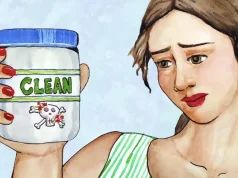
Walk into any beauty retailer today and you’ll find entire shelves organized around the idea of clean beauty. The problem is that nobody not the FDA, not any international regulatory body has a binding legal definition for what “clean” actually means in cosmetics. Brands define it themselves. One company’s “clean” excludes parabens. Another’s excludes synthetic fragrance. A third focuses on sustainability and says nothing about ingredient safety at all.
This isn’t a minor technicality. It means that when you reach for something marketed as clean or non-toxic, you’re trusting the brand’s own self-imposed standards, not an independent benchmark. And those standards are often shaped more by what sounds alarming to consumers than by what the scientific literature actually says about harm.
Parabens are a good example. They became public enemy number one in the mid-2000s after a small study found traces of them in breast tumor tissue. The clean beauty world ran with it. But subsequent research, including a formal assessment by the European Scientific Committee on Consumer Safety, concluded that the most commonly used parabens methyl and ethyl are safe at the concentrations used in cosmetics. That hasn’t slowed the “paraben-free” marketing machine at all. The fear persists because it’s commercially useful, not because the science supports it.
Natural Ingredients Can Be Genuinely Aggressive
There’s a deeply embedded cultural logic that equates botanical origins with gentleness. It’s intuitive, even poetic the idea that what grows from the earth must be in harmony with human skin. But chemistry doesn’t negotiate with aesthetics.
Essential oils are among the most sensitizing ingredients in modern skincare. Lavender, eucalyptus, citrus oils, rose, peppermint these are all common in products positioned as natural or soothing. They’re also among the most documented causes of allergic contact dermatitis. The American Contact Dermatitis Society has repeatedly flagged fragrance including natural fragrance as one of the top allergens in personal care products. When a “clean” serum replaces synthetic preservatives with rosemary extract and tea tree oil, it may be solving a theoretical problem while creating a real one.
Then there’s the oxidation issue. Many plant-derived oils are rich in unsaturated fatty acids. Rosehip, argan, hemp seed they’re beloved for their skin-identical lipids and their feel on the skin. But unsaturated oils oxidize. Once a product’s packaging is opened, or if the formula lacks adequate antioxidant support, those oils can degrade into compounds that irritate skin and potentially promote inflammation. A lot of artisan and small-batch natural skincare operates without the stability testing that larger formulations go through. The romance of handcrafted products is real. So is the biochemistry of rancidity.
The Preservative Paradox
The backlash against preservatives has created one of the more quietly dangerous trends in the industry. Preservatives exist for a reason: to stop your water-based products from becoming a petri dish for bacteria, mold, and yeast. Contaminated cosmetics have caused eye infections, skin infections, and in documented cases, serious harm. A product that touches your face daily, sits in a warm bathroom, and gets opened and closed repeatedly is an ideal environment for microbial growth.
When brands capitulate to consumer demand and remove conventional preservatives without replacing them with equally effective alternatives, something has to give. Some products rely on anhydrous (water-free) formulas balms, oils, waxes which genuinely don’t need traditional preservation. That’s a legitimate approach. Others water down their preservation system to the point of inadequacy while still using marketing language that implies safety and purity.
Phenoxyethanol replaced parabens as the preservative of choice for many clean brands, and then it too came under fire, despite a safety profile that holds up under review. The cycle continues: identify a preservative, declare it suspect, force reformulation, repeat. What’s rarely asked is what happens to product safety in the meantime, and who bears the risk.
Concentration, Context, and the Illusion of the Ingredient List
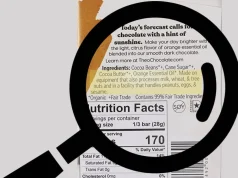
One of the most persistent misconceptions in skincare is that an ingredient list tells you what a product does. It doesn’t. It tells you what’s in the product, in descending order of concentration but the concentrations themselves are invisible to you. A vitamin C serum with ascorbic acid listed seventh, below three different humectants and a thickener, may contain so little active ingredient that it couldn’t meaningfully affect your skin either way. The word “serum” and the antioxidant glow of the marketing do more work than the formula does.
This matters especially for products making functional claims. Retinol, niacinamide, peptides, AHAs these ingredients work within specific concentration ranges, at specific pH levels, in specific formulation contexts. A retinol product that doesn’t disclose its percentage, uses a pH too high for retinoid activity, or pairs it with ingredients that counteract its function is still allowed to show up on a shelf and imply clinical results. You can read that ingredient list five times and still have no way to evaluate the product’s actual efficacy.
The irony is that many of the synthetic, “clinical” formulations that the clean beauty world rejects have more rigorous efficacy and stability data behind them than the botanical alternatives that replaced them. Research costs money. Large cosmetic manufacturers run clinical trials. A lot of smaller clean brands are making decisions based on tradition, intuition, and consumer-facing narrative rather than controlled testing.
When “Holistic” Becomes a Reason Not to Ask Hard Questions
There’s a spiritual dimension to clean beauty that doesn’t get discussed enough. For a lot of people, the switch to natural or holistic skincare is bound up with broader values sustainability, distrust of corporate science, a desire to live in closer alignment with something they consider authentic. Those values aren’t wrong. The problem is when they become a filter that screens out inconvenient information.
If questioning a natural ingredient feels like a betrayal of the lifestyle, that’s worth noticing. Science isn’t anti-nature. It’s just a method for finding out what’s actually true, and it works whether you like the answer or not.
Plenty of synthetic ingredients are genuinely safe, effective, and sometimes more environmentally stable than their botanical counterparts. Plenty of natural ingredients are sensitizing, unstable, or present at concentrations that make them meaningless. The category someone put a product in on the retail shelf doesn’t change its chemistry.
Your skin doesn’t read labels. It responds to molecules. And it has no particular loyalty to what you paid for them.