

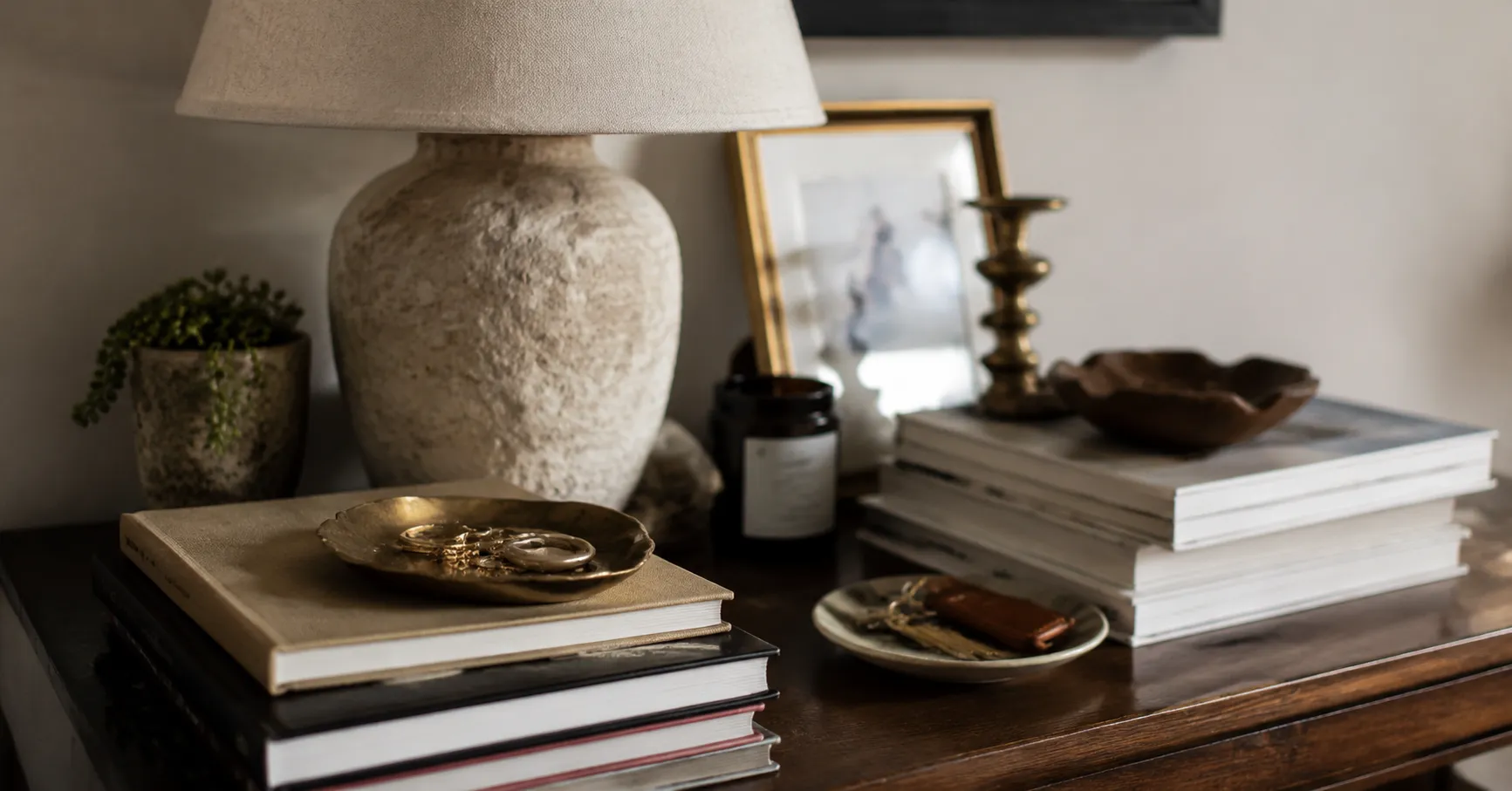
There’s a particular kind of frustration that comes from standing in a room you’ve cleaned genuinely cleaned and still feeling like something is off. The surfaces are clear. The floors are swept. And yet the space presses in on you, visually restless, somehow heavier than it should be. Most people assume the problem is stuff. Too much of it. But more often, the real culprit isn’t volume it’s design. Specific, fixable choices that trick the eye into reading chaos where there isn’t any.
Understanding these mistakes doesn’t require an interior design degree. It requires paying attention to how rooms actually feel, not just how they photograph.
You’re Using Too Many Small Decorative Items
A single ceramic bowl on a shelf reads as intentional. Seven small figurines, a few scattered candles, a couple of framed photos, and two plants reads as a yard sale. The problem isn’t any individual item it’s fragmentation. The eye has nowhere to rest because it’s constantly redirected from one small thing to the next.
This is one of the most common mistakes in homes that feel cluttered despite being relatively tidy. Swapping out a collection of small objects for one or two larger, more considered pieces immediately changes the visual temperature of a room. Scale matters. Negative space the empty area around an object is what gives that object presence.
Your Furniture Is Pushed Against Every Wall
It seems counterintuitive, but pulling furniture away from walls actually makes a room feel larger and more composed. When every piece is flush against a wall, the center of the room becomes an awkward void and the perimeter becomes a crowded border. The space loses its sense of intention.
Floating a sofa even eight inches from the wall creates a sense of depth. It signals that someone thought about the room as a whole rather than just fitting things in. That signal intentionality is what separates a room that feels designed from one that feels accumulated.
Every Surface Is Being Used as Storage
Coffee tables, kitchen counters, entryway consoles, bathroom ledges when every horizontal surface becomes a landing zone, the room stops breathing. Surfaces need some portion of emptiness to function visually. A counter with a few purposefully placed items feels styled. A counter covered edge to edge feels like overflow.
The fix isn’t always to own less. Sometimes it’s to designate specific surfaces as display areas and route everything else out of sight. A single drawer or basket can absorb the functional clutter keys, mail, remote controls that quietly overwhelms a space.
Your Color Palette Is Working Against You
Too many competing colors create visual noise even when a room is physically clean. A space with five different accent colors, mismatched throw pillows, and walls that don’t relate to the furniture will always feel busier than it is. The eye reads color as information, and too much of it becomes static.
This doesn’t mean every room needs to be white. It means the colors present should feel like they’re part of a conversation rather than a debate. Choosing one or two accent colors and letting them repeat throughout a space in a pillow, a piece of art, a small object creates cohesion that immediately reads as calm.
Your Lighting Is Flat and Uniform
Overhead lighting that illuminates every corner equally flattens a room. It removes shadow, and shadow is what gives a space dimension. Without it, everything sits at the same visual plane, which paradoxically makes a room feel more crowded there’s no depth to retreat into.
Layering light changes this completely. A mix of ambient, task, and accent lighting creates pools of warmth and areas of soft shadow. The room gains dimension. It feels larger, and more importantly, it feels considered.
You Have No Consistent Visual Rhythm
Clutter isn’t always about excess sometimes it’s about randomness. When objects in a room have no relationship to each other in terms of height, material, or weight, the space feels unresolved. A bookshelf where items are crammed without any visual grouping, a gallery wall where frames are hung without a clear logic, a dining table centerpiece that doesn’t acknowledge the scale of the table all of these create a kind of visual stuttering.
Grouping objects in odd numbers, varying heights intentionally, repeating materials across different parts of a room these aren’t decorator tricks, they’re ways of giving the eye a path to follow. When a room has rhythm, it feels complete rather than in progress.
Your Rugs Are Too Small
An undersized rug is one of the most reliable ways to make a room feel disjointed and, by extension, cluttered. When a rug is too small, furniture floats disconnected from it, and the room breaks into competing fragments rather than reading as a unified space.
The standard advice front legs on therug, back legs off exists for good reason. The rug should anchor the seating arrangement, not sit in the middle of it like an island. In a dining room, all chair legs should remain on the rug even when pulled out. Getting this right is often the single most impactful change a room can absorb.
You’re Ignoring Vertical Space
Rooms that keep everything at eye level and below feel denser because all the visual weight is concentrated in one zone. Using height tall bookshelves, artwork hung higher than expected, plants on elevated stands distributes that weight and draws the eye upward. It creates the impression of more space by using space that was already there and being ignored.
This is especially true in smaller rooms, where every square foot of floor space feels precious. A tall, narrow shelving unit occupies less floor space than a wide, low one and does significantly more to make the room feel open.
Your Storage Is Visible But Not Considered
There’s a difference between storage that’s been styled and storage that’s just present. Open shelving stacked with a random assortment of objects, a coat rack overwhelmed with jackets and bags, a bathroom cabinet with the door left open these are technically functional, but visually they register as unresolved.
Containers, baskets, and boxes do something simple but powerful: they give a boundary to things that would otherwise sprawl. A shelf of matching boxes reads as organized. The same shelf with the same number of objects but without containers reads as messy. The volume hasn’t changed. The visual boundary has.
The Room Lacks a Clear Focal Point
When a room has no hierarchy no single thing the eye naturally settles on first everything competes for attention equally, and the result feels relentlessly busy. A fireplace, a piece of art, a statement piece of furniture, even a well-styled window can serve as an anchor. Everything else in the room should, in some way, defer to it.
This is why rooms with too many “focal points” are exhausting. A large television, an elaborate gallery wall, a dramatic light fixture, and a bold area rug all shouting at once creates the same cognitive overload as physical clutter. Choosing where you want the eye to go and committing to that choice lets the rest of the room exist more quietly.
The rooms that feel most effortlessly calm tend to share one quality: they look like someone made decisions. Not perfect decisions, not expensive ones just decisions. What belongs here. What doesn’t. Where the eye should rest. How the light should fall. The absence of that decisiveness is what most people mistake for having too much stuff. The stuff is often fine. The design, occasionally, needs a conversation.