

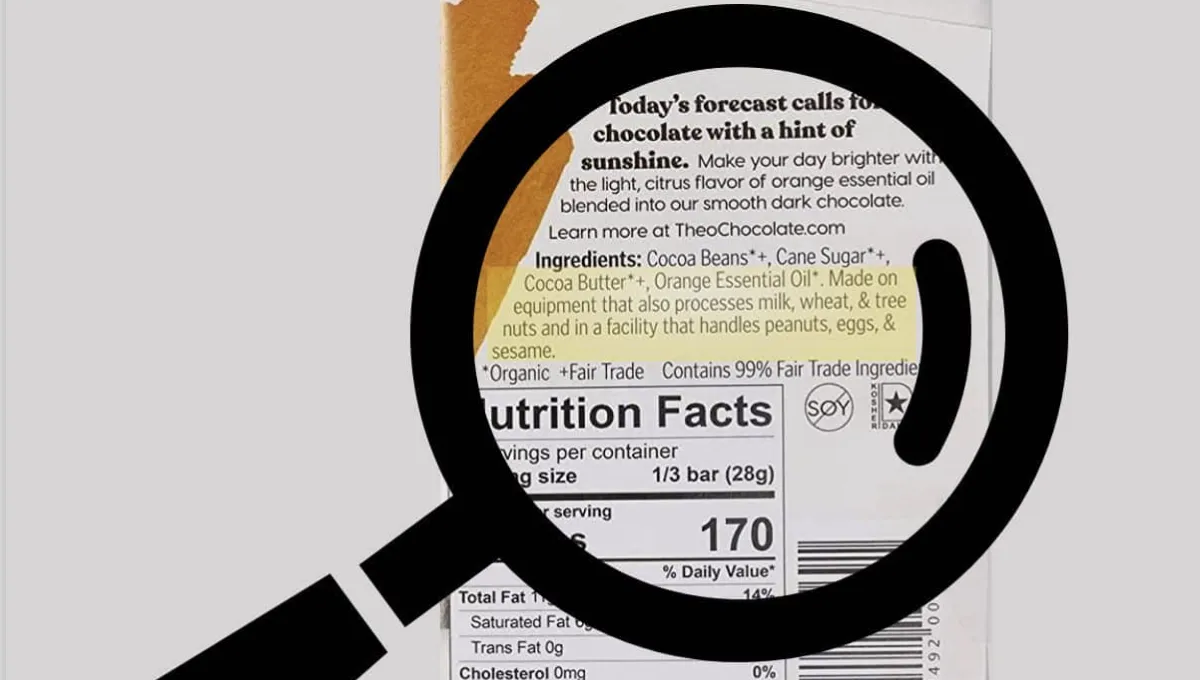
Most of us have stood in a grocery store aisle, squinting at the back of a package, genuinely unsure what we’re looking at. The list is long. The words are unpronounceable. The font is small enough to require reading glasses you didn’t bring. So we do what most people do we flip the package over, check the calorie count, and move on. That habit, harmless as it seems, leaves a lot of information on the table. The ingredient label is one of the most honest documents a food company is legally required to produce. Learning to read it properly changes how you shop, how you eat, and frankly, how much you trust certain brands.
The Order Is the Message
Here’s the single most important thing to know: ingredients are listed by weight, in descending order. Whatever appears first is present in the greatest quantity. This sounds simple, but its implications are enormous.
Take a “blueberry muffin mix” where the first three ingredients are enriched flour, sugar, and partially hydrogenated oil. Blueberries appear eighth on the list, sandwiched between “natural flavor” and “citric acid.” That product is not, in any meaningful sense, a blueberry product. The label tells you this you just have to know to read it that way.
The same principle exposes a lot of marketing language. “Made with whole grains” can be technically accurate even if whole wheat flour is the fourth ingredient and refined white flour is the first. Regulators require truthfulness, not prominence. The label won’t lie to you, but it won’t volunteer the full picture unless you look for it.
Sugar Has Many Aliases
Food manufacturers are keenly aware that consumers have learned to scan for “sugar” near the top of an ingredient list. The workaround is as old as modern processed food: split the sugar across multiple ingredient names so each individual form appears lower on the list.
Cane sugar, brown rice syrup, high-fructose corn syrup, dextrose, maltose, evaporated cane juice, agave nectar, corn syrup solids these are all sugar. A product might contain five different sweeteners, each appearing in the middle of the list, while the combined sugar content would have landed near the very top if listed as a single ingredient.
This is worth a pause in the cereal aisle. Some popular breakfast cereals contain three or four separate sugar variants. Individually, each looks modest. Collectively, you’re eating something closer to dessert than breakfast. The nutrition facts panel will show total sugars in grams, which is useful, but the ingredient list reveals the intent whether a company is being transparent or strategic.
What “Natural” Actually Means
Essentially nothing. The FDA does not have a formal regulatory definition for the term “natural” on food labels. The agency has historically allowed it when food doesn’t contain added colors, artificial flavors, or synthetic substances but that’s a loose interpretation, not a legal standard. High-fructose corn syrup, for instance, has been marketed as “natural” in certain contexts. So has a lot of highly processed material.
“Organic” is different. That term is regulated by the USDA and requires certified production standards. “Non-GMO” has its own verified certification processes. But “natural” on a label is largely marketing. When you see it, treat it as texture, not information.
The Preservative Question
Not all preservatives are created equal, and the reflexive fear of anything ending in “-ate” or “-ite” deserves some nuance. Sodium benzoate, BHA, BHT, and TBHQ are synthetic preservatives that have attracted legitimate scrutiny some studies have linked certain of these compounds to cellular damage and potential carcinogenic effects, though the evidence remains contested and context-dependent. The FDA considers them safe at the levels present in food. You can disagree with that assessment. Many food scientists do.
What’s worth knowing is how to spot them. They typically appear near the end of the ingredient list preservatives are used in small quantities and they’re usually labeled with their full chemical name. Phrases like “to preserve freshness” or “to maintain color” often follow in parentheses. That’s the manufacturer’s way of contextualizing their presence, which is more transparency than you get from most ingredients.
On the other side of the ledger: vitamin E (tocopherol) and vitamin C (ascorbic acid) are also preservatives. Natural ones, used in quality products to prevent oxidation. The word “preservative” carries a stigma that isn’t entirely deserved. Function matters more than category.
Parsing the Filler Language
“Spices.” “Natural flavors.” “Flavor.” These terms are legal placeholders for proprietary formulations that companies aren’t required to disclose. “Natural flavors” is particularly expansive it can include anything derived from plant or animal sources through any number of processing methods. A natural vanilla flavor might be a complex mixture of dozens of compounds, none of which came from a vanilla bean.
This isn’t necessarily alarming. But it does mean that ingredient lists have structural opacity built into them. When a product is important to you say, you’re managing an allergy, following a specific diet, or simply trying to understand exactly what you’re eating “natural flavors” is a wall, not a window. The only path past it is contacting the manufacturer directly, which companies are surprisingly responsive to when asked plainly.
Length as a Proxy
There’s a rough but reliable heuristic: shorter ingredient lists tend to come from less processed products. Whole almonds have one ingredient. Almond-flavored crackers with “real almond pieces” might have twenty-two. Neither is inherently wrong, but the length of the list tells you something about the distance between raw material and finished product.
This doesn’t mean long lists are always bad. A high-quality multigrain bread might have fifteen ingredients because it actually contains multiple whole grains, seeds, and a natural preservative or two. A five-ingredient product could still be full of refined flour and sweetener. Length is a starting point for scrutiny, not a verdict.
The Fine Print on Serving Size
Technically part of the nutrition facts rather than the ingredient list, but impossible to ignore: serving sizes are often set strategically. A “single serving” of chips might be listed as eleven chips. A bottle of juice described as “2.5 servings” is designed to be drunk in one sitting. The ingredient list doesn’t change based on serving size, but the nutritional values do and the gap between listed serving and actual consumption is where a lot of confusion lives.
Reading the ingredient label in isolation from the rest of the panel misses this. They’re meant to be read together.
Building the Habit
The first time you read ingredient labels with this framework in mind, it takes effort. The second time, slightly less. After a few weeks of deliberate practice, it becomes fast a ten-second scan that tells you the most important things about what you’re holding.
What you’re really developing is a kind of fluency. Not paranoia about food, not orthorexic hypervigilance about every compound, but a calm ability to know what you’re choosing. The label is there. It’s regulated. It’s the most unfiltered communication a food company has with its customers. Most people never read it properly.
That gap between available information and actual awareness is where a lot of quietly poor food decisions get made not out of ignorance exactly, but out of habit. The back of a package holds more than most people ever look for.