
What “Clean” Actually Means and Why the Definition Is Still a Mess
Walk into any Sephora or scroll through a wellness brand’s Instagram, and you’ll see the word “clean” plastered everywhere. On serums. On foundations. On baby-soft lip balms. But here’s the thing nobody tells you upfront: “clean beauty” has no legal definition in the United States. The FDA doesn’t regulate the term. Brands self-certify. Retailers set their own standards. What Credo Beauty considers clean and what Target’s “clean” badge approves can be two entirely different things.
That ambiguity isn’t a reason to dismiss the movement. It’s a reason to get smarter about it.
The real shift clean beauty asks of you isn’t about memorizing a blacklist of chemicals. It’s about developing a purchasing philosophy one that’s informed, flexible, and honest about tradeoffs. Because yes, there are tradeoffs. Some of the most effective active ingredients in dermatology occupy a gray zone. Some “natural” alternatives are potent allergens. Clean beauty, done thoughtfully, means navigating all of that without slipping into either blind trust or unnecessary fear.
This checklist is designed to help you do exactly that.
Start with Your Skin, Not the Label
Before you evaluate any product, the most important data point is your own biology. Your skin barrier, your hormonal sensitivities, your history with fragrances these are the filters everything else should pass through first.
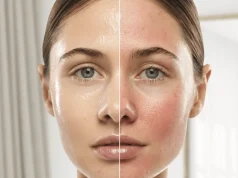
People with reactive oreczema-prone skin often find that “natural” botanical extracts trigger flares that a bland, synthetic moisturizer never would. Lavender essential oil, citrus extracts, eucalyptus beloved in the wellness world, genuinely problematic for sensitized skin. So the first question on your checklist isn’t “is this clean?” It’s “does this work for me?”
Keep a simple log when you introduce new products. Not a spreadsheet, just a note in your phone. Date, product, any reaction within 72 hours. Over time, you’ll start to see your personal patterns and those patterns are worth more than any influencer’s recommendation.
The Ingredient List Is the Product
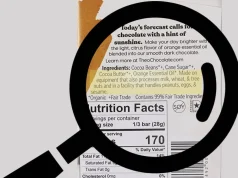
A gorgeous amber bottle with a hand-lettered label tells you nothing. The ingredient list tells you everything.
Cosmetic ingredients in the U.S. are listed by INCI (International Nomenclature of Cosmetic Ingredients) in descending order of concentration. The first five to seven ingredients typically make up 80to 90 percent of the formula. Everything at the bottom especially below 1 percent, usually signaled by the appearance of preservatives or fragrance is present in trace amounts.
When you’re evaluating a product through a clean beauty lens, focus your scrutiny where concentration is highest. A product that leads with water, glycerin, and niacinamide, then lists a small amount of phenoxyethanol as a preservative near the bottom, is a very different conversation than one that leads with synthetic fragrance and alcohol.
A few categories worth understanding:
Parabens are preservatives. The concern around them relates to weak estrogenic activity detected in lab studies, though the evidence in actual human use remains contested. If avoiding them matters to you, they’re easy to spot methylparaben, propylparaben, butylparaben.
Formaldehyde-releasing preservatives are a separate category worth more caution. DMDM hydantoin, diazolidinyl urea, imidazolidinyl urea these slowly release small amounts of formaldehyde over time, which is a known allergen and carcinogen. Their presence in products that sit on your skin all day, particularly in high humidity, is a reasonable thing to avoid.
Synthetic fragrance is listed simply as “fragrance” or “parfum” and can represent a cocktail of dozens to hundreds of undisclosed compounds. For fragrance-sensitive individuals, this opacity is the problem not necessarily the fragrance itself.
Certifications Worth Trusting (and Some That Aren’t)
Because the regulatory landscape is so thin, third-party certifications become genuinely useful signals with the caveat that not all seals are equal.
EWG Verified is issued by the Environmental Working Group and requires full ingredient disclosure, screening against their database of flagged chemicals, and manufacturing transparency. It’s one of the more rigorous consumer-facing certifications available.
COSMOS Organic and COSMOS Natural are European standards covering both organic content and manufacturing processes. Products bearing these marks have gone through external auditing. They’re particularly meaningful for skincare and haircare.
Leaping Bunny is the gold standard for cruelty-free. Not to be confused with the PETA bunny logo, which is self-certified. Leaping Bunny requires audit and supplier accountability.
“Dermatologist tested,” “hypoallergenic,” and “non-comedogenic” are not certifications. They’re marketing language with no standardized testing requirement behind them. A product can be tested on one person with no reaction and technically carry that claim.
The Checklist Itself
Before you add anything to your cart, run through this:
Does the brand publish a full ingredient list online, not just on the physical packaging? Transparency here is a baseline expectation, not a bonus.
Is the product free from the ingredients on your personal avoid list the ones you’ve identified through your own skin log, not just from a general “dirty dozen” article?
If fragrance is listed, does the brand disclose what’s in it? Some clean brands now voluntarily list fragrance components. Those that do are demonstrating a level of transparency worth rewarding.
What’s the preservative system? Products with water need preservatives. Full stop. A “preservative-free” claim on a water-based product should prompt questions, not reassurance.
Does the packaging protect the formula? Jars expose product to air and fingers repeatedly. For anything with active antioxidants or retinoids, pump dispensers or airless packaging actually extend the efficacy of the product which means your “clean” serum in a jar may be oxidizing faster than you think.
What’s the brand’s supply chain story? Where are botanicals sourced? This matters both for ingredient integrity and for the environmental considerations that often travel alongside genuine clean beauty values.
Does the price make sense for what’s in it? Clean beauty has a well-documented luxury pricing problem. Some brands charge a premium for simple, well-formulated products. Others use the clean label to obscure very thin formulations at high margins. Cross-reference the ingredient list with what you’re paying. A $90 moisturizer with water, glycerin, and shea butter deserves scrutiny.
Where to Actually Shop
Credo Beauty maintains one of the strictest retail standards in the U.S. market, with a published “Dirty List” of over 2,700 banned or restricted ingredients and required transparency from brand partners.
The Detox Market curates with an emphasis on efficacy alongside ingredient standards useful if you’ve been burned by clean products that simply don’t perform.
For mainstream access, Ulta’s “Conscious Beauty” and Target’s “Clean” programs are more permissive but still useful as a first filter, especially if you’re earlier in the process and want to learn without overpaying for entry-level products.
Online, Think Dirty and CosDNA let you scan or search products and review ingredient-level data. Neither is perfect Think Dirty’s scoring has been criticized for overweighting ingredients with weak evidence but they’re useful for building pattern recognition over time.
The Tension Nobody Talks About
Clean beauty has an uncomfortable relationship with efficacy. Retinoids among the most evidence-backed ingredients in anti-aging skincare exist in a strange position within the clean world. Prescription tretinoin is synthetic. Over-the-counter retinol is synthetic. Bakuchiol is the plant-derived alternative many clean brands champion, with growing (though not equivalent) evidence behind it.
This is where the movement asks you to make a values-based decision rather than a purely scientific one. For some people, reducing synthetic load across their routine is a priority even if it means accepting slightly less aggressive results. For others, the clinical evidence behind a synthetic ingredient outweighs the theoretical concerns about long-term exposure. Neither position is irrational.
What becomes irrational is refusing to acknowledge the tension pretending that “natural” is automatically safer, or that synthetic is automatically suspect. Arsenic is natural. So is poison ivy. Hyaluronic acid, one of the most skin-compatible hydrating ingredients in modern formulation, is typically synthesized in a lab.
Building a Routine That Actually Holds
The goal of a clean beauty checklist isn’t to audit every product you own and throw half of it away in a panic. It’s to build a slower, more intentional relationship with what you buy one product decision at a time.
Start with the products that stay on your skin longest: moisturizers, serums, sunscreens. These have the highest absorption potential and are worth the most scrutiny. Products that rinse off quickly cleansers, shampoos have less exposure time and can reasonably sit lower on your priority list.
Replace products as they run out rather than all at once. This gives you time to research, to test, and to actually notice whether your skin responds differently. It also prevents the clean beauty switch from becoming an expensive overhaul that collapses under its own financial pressure.
The most durable version of a clean beauty routine is one you’ve built yourself, based on your skin, your values, and your honest assessment of the evidence not one assembled from a stranger’s flatlay on the internet. The checklist is a tool. What you do with it is entirely your own.