
The Moment You Realize Something Went Wrong
You spent twenty minutes on your eye look. You blended, layered, and stepped back and then it hit you. Instead of the smoky, dimensional eye you had in mind, you’re staring at a gray-brown smudge that looks less like makeup and more like you rubbed your eyes after a long flight. It’s frustrating in a deeply specific way, because muddy eyeshadow doesn’t just look off it makes the entire face look tired, undefined, and somehow older.
Here’s the thing: this happens to everyone, from beginners to people who’ve been doing their makeup for years. Muddy eyeshadow isn’t a skill failure. It’s almost always a technique or product issue, and once you understand what’s actually causing it, fixing it feels less like magic and more like logic.
What “Muddy” Actually Means
Before diagnosing the problem, it helps to understand what muddiness really is. When eyeshadow looks muddy, what you’re seeing is color contamination shades bleeding into each other and neutralizing. Think of it like paint mixing. If you swipe a warm orange over a cool brown over a purple, you’re not building depth. You’re making gray. The colors cancel each other out instead of layering, and the result is a flat, indistinct wash that reads as dirty rather than dimensional.
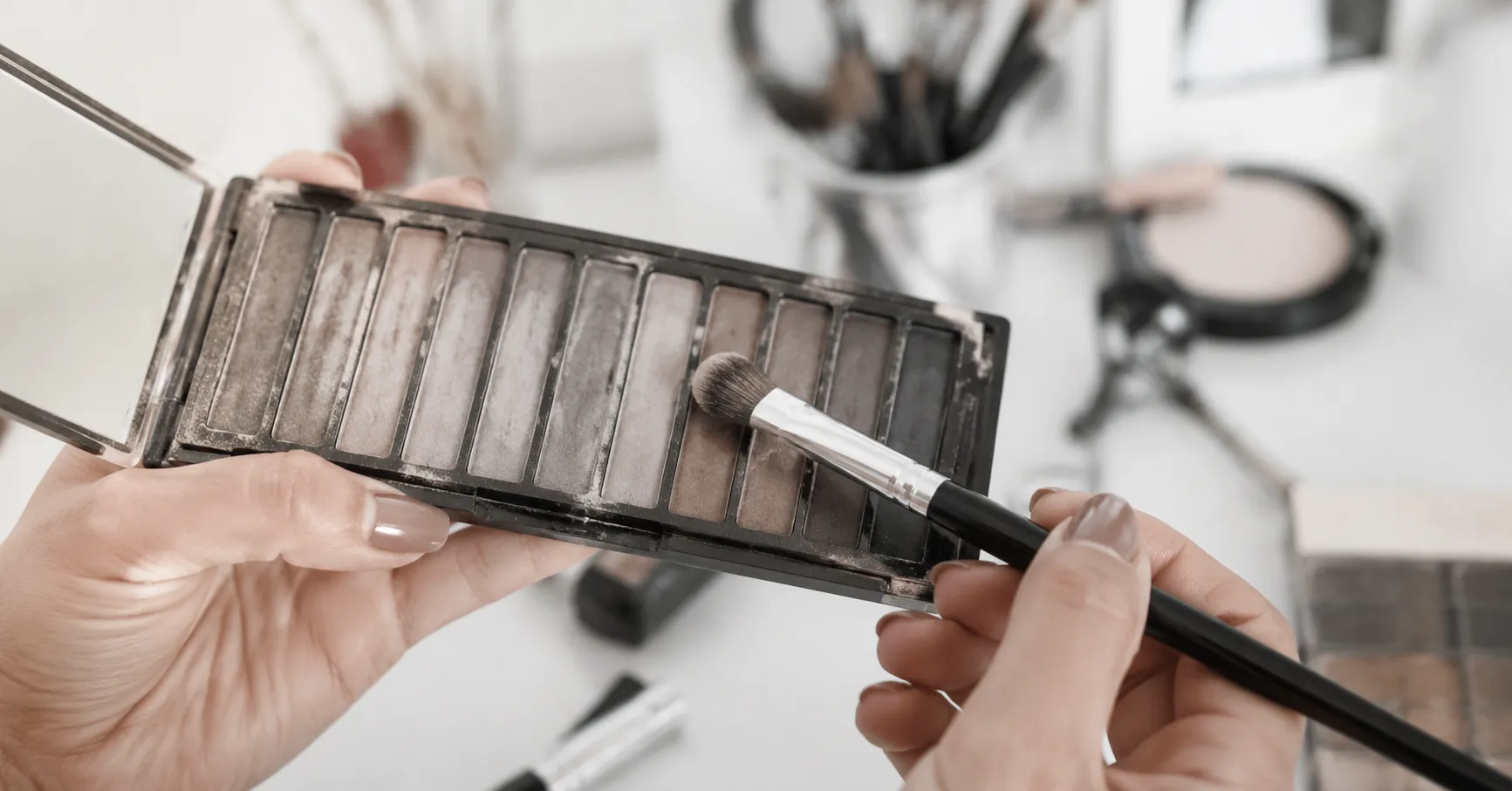
Muddiness also happens when too much product accumulates in the crease without proper diffusion. The pigment piles up, dries, and turns chalky. Or and this one surprises people when you use a brush that hasn’t been cleaned, transferring ghost colors from a previous use directly into your current blend.
The Primer Problem Most People Skip Over
Walk into almost any makeup forum and ask why eyeshadow looks muddy, and primer will come up immediately. But it’s not just whether you use primer it’s what kind and how you apply it.
A tacky or overly wet primer base can actually make muddiness worse. When the base is too sticky, pigment grabs hard and fast wherever it lands, making it nearly impossible to blend transitions smoothly. The shadow sits in clumps rather than diffusing. A good eyeshadow primer should feel almost like a dry skin finish once it’s set tacky enough to grip pigment, but not so grabby that the shadow won’t move at all.
Color also matters. If you’re applying warm shades over a strongly pink or overly peachy primer, there’s already a color cast working against you before you’ve picked up a single brush. A neutral, skin-tone primer or a light matte base shadow in a buff or cream tone gives you the most workable canvas.
Apply primer, let it set for thirty to sixty seconds, and don’t skip this wait. Blending shadow into wet primer is one of the fastest routes to the muddy look.
Why Your Brush Matters More Than Your Palette
This is where most makeup tutorials lose the thread. Peopleagonize over which palette to buy, spend hours watching swatches on YouTube, and then pick up whatever brush is within reach. The brush does most of the work.
Two brushes cause almost all muddy eye looks: brushes that are too large for the transition zone, and brushes that have been used for too many colors without cleaning.
A transition brush that’s too wide will deposit your blending shade across the entire lid rather than in the targeted crease area. When every shade is spread everywhere, there’s no separation, and separation is what creates dimension. Use a smaller, more tapered brush something shaped almost like a pencil tip at the ferrule for actual blending in the crease. Save the wider, fluffier brush for diffusing edges after the fact.
Dirty brushes are a quieter problem. You use a brush to apply a warm brown, then pick up a cooler mauve without cleaning. You blend. Now you have a warm-cool mixture sitting on your lid before you even intended to mix those colors. Do a quick clean between shades using a dry brush cleaner or even a clean cloth. It takes five seconds and changes everything.
Color Pairing Is Its Own Science
No amount of technique will save a color combination that’s working against itself. Complementary colors those opposite each other on the color wheel neutralize when mixed. Orange and blue. Red and green. Purple and yellow. When these appear in the same look without intentional separation, they mix in the transitions and go gray.
This doesn’t mean you can’t use contrasting colors. It means you need to think about where they touch. Keep true complements separated by a neutral shade a soft taupe, a warm beige, or a matte brown that acts as a buffer zone. That neutral transition shade is not a supporting character. It’s the thing that lets your actual colors exist next to each other without destroying one another.
Also, consider temperature consistency. Warm and cool shades in the same look can absolutely work, but leaning all-warm or all-cool in your base and midtones before introducing contrast gives you more control over the final result. A fully warm crease with a single cool shimmer on the lid reads as intentional. A 50/50 warm-cool crease just reads as brown.
The Fallout Factor
Something nobody talks about enough: fallout. When loose or highly pigmented shadows drop onto the lower lid during application, they mix with whatever’s already there or create a base that your subsequent blending has to fight against. If you’re applying dark shades on the outer corner or crease before you’ve done anything else, you’re setting yourself up for difficult cleanup later.
A practical fix do your eye makeup before foundation and concealer. This way, fallout dusts onto bare skin and wipes off cleanly. You can also tap off excess product from your brush on the back of your hand before touching it to your eye. The amount of pigment on a brush matters enormously. More is not more in eyeshadow. More is muddy.
Instant Fixes When It’s Already Gone Wrong
Sometimes you’re already fifteen minutes in and the damage is done. Here’s how to pull it back without starting over.
A matte transition shade in a neutral beige or light brown applied with a clean brush over the entire lid will visually lift and unify the mess. Think of it as adding a reset layer you’re not covering the colors so much as tying them together and diffusing the edges. Work in small, circular motions and keep the brush moving.
If the look has gone flat and gray, a pop of concentrated pigment on the center of the lid a metallic, a foil, or an intensely pigmented matte will draw the eye and create a focal point that makes the blended area read as intentional backdrop rather than accident.
Setting spray applied lightly over a finished look can also help, but mist with a light hand. Heavy application on a muddy look just makes everything move again.
The Real Culprit Is Usually Patience
There’s a speed at which muddy looks happen, and it’s fast. Rushing through blending, not letting primer dry, loading too much product at once, not cleaning brushes between shades all of these decisions are made when someone is in a hurry or trying to skip steps.
Eyeshadow blending rewards slow, deliberate movement. That doesn’t mean it has to take forever. It means each layer should be built with intention, checked in the light, and adjusted before the next shade goes on. The difference between a muddy look and a blended one is often two extra minutes and a clean brush.
There’s also something worth acknowledging about lighting. Most bathrooms have warm, overhead light that flatters skin but obscures how colors are actually interacting. If you’ve been doing your makeup under a single bathroom bulb and wondering why it looks different in daylight the colors are mixing in ways you can’t see until you step outside. A daylight mirror or a ring light with a neutral color temperature will show you what’s actually happening during application, not a warm-filtered approximation of it.
Once you understand why the muddiness happens, you start to see the look before it’s finished. You catch it early, make small corrections, and the whole process shifts from reactive to intentional. That’s when eyeshadow stops being frustrating and starts being genuinely enjoyable to work with.