
The Noise We Carry Outside
There’s a particular kind of exhaustion that no amount of sleep fixes. You know the one where your body is rested but your mind is still running tabs, still composing emails at 2 a.m., still processing a conversation that happened three days ago. Most of us have learned to live inside this low hum of overstimulation. We’ve normalized it so thoroughly that silence, actual silence, has started to feel uncomfortable.
So when people talk about “getting outdoors” as an antidote, the instinct is to treat it the same way we treat everything else: optimize it, schedule it, document it. Pack the gear. Plan the route. Track the miles. Post the summit photo. The outdoors, for a lot of us, has become just another arena for performance another space where we’re supposed to be doing more, going further, proving something.
That’s not slowing down. That’s just relocating the treadmill.
What Simplicity Actually Looks Like in Practice
A few years ago, a colleague of mine gave up weekend hiking trips for what she called “purposeless walks.” No destination, no fitness goal, no podcast playing in her ears. Just her neighborhood, her feet, and whatever she happened to notice. She felt slightly embarrassed about it at first like she was somehow wasting the outdoors. But within a few weeks, she started seeing things she’d walked past for years. A fig tree growing out of someone’s front yard. The way afternoon light hit a particular stretch of fence. A family of sparrows that had colonized a broken drainage pipe.
None of this is extraordinary. That’s the point.
Slowing down outdoors doesn’t require wilderness access or expensive gear or even a hiking trail. It requires a different relationship with your own pace and a willingness to let experience be small. The natural world doesn’t need to be dramatic to be nourishing. A backyard, a park bench, a ten-minute walk before dinner can carry more restoration than a weekend expedition if you show up with the right quality of attention.
The Tyranny of the Highlight Reel
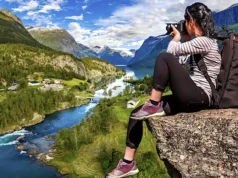
Social media has done something strange to outdoor culture. It’s made visible the most cinematic version of time in nature granite peaks, glowing sunsets, turquoise lakes that look like screensavers and quietly suggested that this is what outdoor life is supposed to look like. The result is a kind of aspirational disconnect. People either overextend themselves chasing those images or they opt out entirely, feeling like their modest local park doesn’t count.
But the science doesn’t bear this out. Research consistently shows that even brief, low-key exposure to natural environments a walk through a tree-lined street, twenty minutes in a garden measurably reduces cortisol, lowers heart rate, and improves mood. The restorative effect doesn’t scale with altitude or drama. It scales with presence.
What matters isn’t where you are. It’s whether you’re actually there.
Friction as a Feature, Not a Bug
One thing that slowing down outdoors demands is tolerance for a certain kind of friction. When you strip away the headphones and the fitness tracker and the carefully curated playlist, you’re left with the raw material of experience: boredom, discomfort, your own wandering thoughts, the occasional mosquito. This is not a flaw in the plan. This is the plan.
There’s a reason so many contemplative traditions from Thoreau’s two years at Walden Pond to the Japanese practice of shinrin-yoku, or forest bathing involve deliberate reduction rather than addition. The goal isn’t to fill natural spaces with more stimulation. It’s to remove enough stimulation that the quieter frequencies of experience can finally be heard.
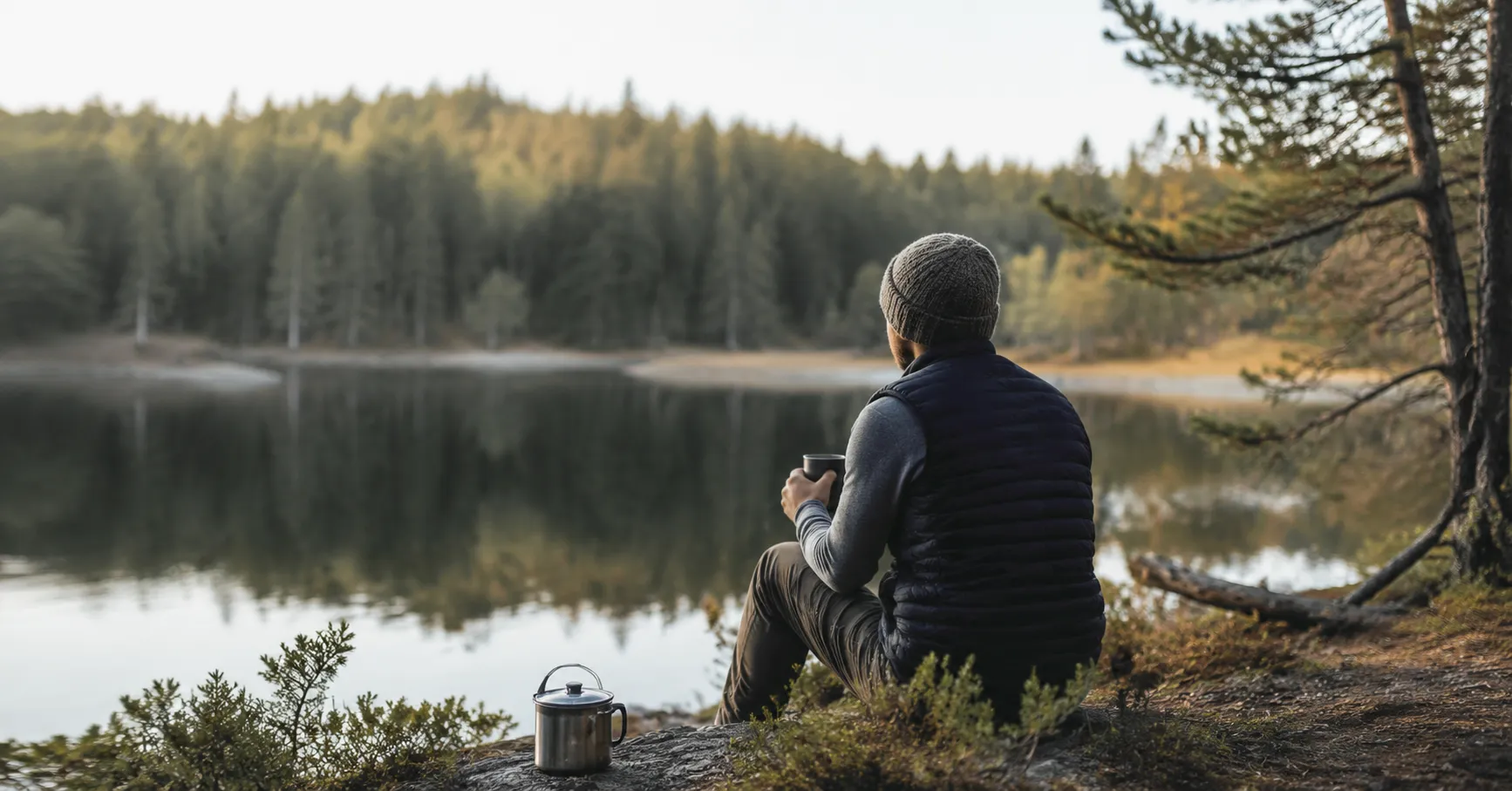
That might mean sitting by a creek for forty minutes doing nothing in particular. It might mean gardening without listening to anything. It might mean taking the long way home and leaving your phone in your pocket the whole time. The friction is what makes it real what separates genuine presence from another form of consumption.
Rethinking What Counts as Outdoor Life
There’s also a class dimension worth naming here. The “slow outdoor life” aesthetic, when it gets packaged and sold, tends to look like a certain type of person in a certain type of setting linen shirt, wood-fired coffee, remote mountain cabin, lots of golden hour. This version isn’t wrong exactly, but it’s narrow. And it implicitly excludes a lot of people who relate to outdoor spaces very differently.
For a lot of families, outdoor life means a concrete stoop, a community garden plot, a patch of grass at a city park where the kids can run. For farmers and agricultural workers, it means hours in weather they didn’t choose, doing work that’s physically demanding in ways that have nothing to do with wellness culture. These relationships with the outdoors are just as valid arguably more honest than the curated retreat version.
Slowing down doesn’t belong to any one aesthetic. It’s a shift in orientation, not a lifestyle category. You can practice it in a suburb, on a fire escape, in a parking lot with a single tree at its edge. The geography matters far less than the decision to actually pay attention.
The Patience That Grows Back
Something happens to your internal tempo when you spend enough time outside without an agenda. It takes a while weeks, maybe longer but a kind of recalibration begins. You start to notice that you’re less reactive. That you can sit with uncertainty a little more easily. That you’ve stopped needing every moment to be productive or documented or justified.
This isn’t mystical. It’s neurological, and it’s behavioral. When you repeatedly expose yourself to slower rhythms the pace of a growing plant, the arc of a shadow across an afternoon, the gradual shift in bird calls as seasons change your nervous system takes notes. It learns that not everything is an emergency. It starts to settle.
The writer Robert Macfarlane once described what he called “the literacy of landscape” the idea that attentive time in natural places teaches a kind of reading, a way of noticing that eventually shapes how you see everything else. You bring that quality of attention back with you. Into your work, your relationships, your mornings.
An Invitation Without Itinerary
The irony of writing an article about slowing down is that it still arrives at your screen as a thing to be consumed, processed, and moved past. So maybe the only honest ending is this: go find somewhere outside, even if it’s just a rectangle of sky visible from where you’re sitting, and stay there a little longer than feels comfortable. Don’t take a photo. Don’t frame it as self-care. Don’t make it mean anything yet.
Just let it be a place, and let yourself be in it.
See what that turns into.