
The Truth About “Clean Beauty” No One Told You
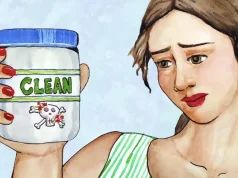
The word “clean” is doing a lot of heavy lifting these days. Walk into any Sephora, scroll through a wellness influencer’s feed, or pick up a jar of moisturizer at Whole Foods, and you’ll see it everywhere stamped on packaging in soft sage fonts, whispered in marketing copy that sounds more like a meditation retreat than a skincare line. Clean. Natural. Pure. Free from. As if the opposite of clean beauty is dirty beauty, and anyone still using a drugstore face wash is quietly poisoning themselves one pump at a time.
It’s a seductive idea. And like most seductive ideas, it survives largely because no one has agreed on what it actually means.
There Is No Legal Definition of “Clean”
This is where the whole conversation falls apart or should, anyway. In the United States, the FDA does not regulate the word “clean” as it applies to cosmetics. Neither does the EU, despite its famously stricter cosmetics laws. Any brand can print “clean beauty” on a label without meeting a single standardized criterion. There’s no governing body, no third-party verification system that all brands subscribe to, no universal ingredient blacklist that defines the category.
Retailers have tried to fill the gap. Sephora’s Clean at Sephora seal excludes over 50 ingredients. Target has its own list. Credo Beauty maintains a “Dirty List” of over 2,700 banned substances. These are well-intentioned efforts, but they’ve created a fragmented ecosystem where a product can be “clean” at one retailer and disqualified at another. The label tells you something about a brand’s marketing strategy. It tells you almost nothing objective about safety.
The “Natural” Fallacy and Why It Keeps Working
There’s a cognitive shortcut most of us take without realizing it: natural equals safe, synthetic equals suspect. It’s an intuition that predates chemistry education and probably predates civilization. We evolved in a world where novel, synthetic things were genuinely worth fearing.
But the natural world is absolutely full of things that will kill you. Arsenic is natural. So is botulinum toxin the most acutely lethal substance known to science. Poison ivy, hemlock, certain wild mushrooms, the venom of dozens of insects and reptiles. Meanwhile, some of the most thoroughly tested and demonstrably safe ingredients in modern cosmetics are synthetic: niacinamide, retinol esters, hyaluronic acid (when lab-produced), certain peptides.
The toxicological principle that clean beauty quietly sidesteps is this: the dose makes the poison. Parabens, one of the most frequently vilified preservative families in cosmetic chemistry, have been studied extensively. The research consistently shows that the concentrations used in skincare products are several orders of magnitude below any level associated with harm. The panic around them originated largely from a single2004 study that detected parabens in breast tumor tissue but detecting a substance in tissue is not the same as proving it caused the tumor, and subsequent research has not supported the original alarm. The science moved on. The marketing fear did not.
When “Free From” Becomes Its Own Problem
Here’s the irony that doesn’t get enough airtime: removing an ingredient doesn’t automatically make a product better. It often just shifts the formulation challenge to someone else’s problem.
Parabens, for instance, are preservatives. They exist in formulas for a very specific reason to prevent microbial growth, including mold, bacteria, and yeast, in products that contain water. When you remove them, you need something else to do that job. The alternatives that most clean beauty brands turn to phenoxyethanol, benzyl alcohol, sodium benzoate, various plant-derived extracts have their own potential sensitivities, their own shelf-life limitations, their own debates in dermatological literature.
Some “preservative-free” products that skew heavily toward water achieve their safety not through better ingredients but through product design: single-use packets, anhydrous formulas, products that live in a pump or airless container that limits oxidation and contamination. That’s genuinely thoughtful formulation. But it’s a packaging and engineering solution, not an ingredient purity story, and clean beauty rarely frames it that way.
The same dynamic plays out with silicones. Brands that ban dimethicone often replace it with plant-based oils and waxes that feel heavier on the skin, oxidize faster, or are more likely to trigger breakouts in acne-prone users. For some people, that trade is worth it texture preference is personal, and if the product performs well for your skin type, the ingredient list is almost beside the point. But the swap is being sold as a safety upgrade when it’s really an aesthetic pivot.
The People Who Actually Need to Pay Attention
None of this means ingredient awareness is worthless. For specific populations, it genuinely matters.
People with fragrance allergies or sensitivities and fragrance is one of the most common contact allergens in cosmetics benefit enormously from reading labels and choosing fragrance-free products. This is a real, measurable, clinically documented issue, and it’s one area where the clean beauty movement’s attention to ingredient lists has arguably done some good, simply by making consumers more label-literate.
Pregnant women navigating uncertain ingredient categories, like high-dose retinoids or certain chemical sunscreen filters, are right to be cautious given the limited research in that specific population. Uncertainty is a legitimate reason for caution, even if it’s not proof of harm.
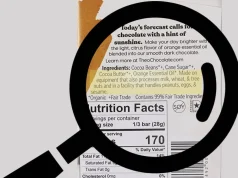
People with compromised skin barriers, chronic eczema, or known contact dermatitis histories have dermatologist-level reasons to track what goes on their skin. For them, “fewer ingredients” often is genuinely better not because synthetic ingredients are dangerous, but because a shorter formula means fewer variables when a reaction occurs.
What all three of these groups share is that their attention is targeted, specific, grounded in an actual mechanism. It’s different from a general, ambient fear of “chemicals” which, incidentally, is a word that refers to every substance in the universe, including water.
The Cost Nobody Mentions
Clean beauty is expensive. This isn’t incidental it’s structural.
Smaller batch production, premium packaging, higher-cost alternative ingredients, and the marketing infrastructure required to sustain a values-forward brand all translate into price points that are out of reach for a significant portion of consumers. The industry has, in effect, created a wellness hierarchy: those who can afford to participate in “clean” are implicitly safer, more informed, more responsible. Those still buying drugstore products because that’s what the budget allows are left to feel vaguely negligent, even though the standard skincare products they’re using have been formulated within regulatory frameworks and, for the most part, have decades of safe use behind them.
There’s also an environmental angle that cuts against the clean beauty narrative’s self-presentation. The pivot toward natural-origin ingredients has increased demand for certain plant extracts, some of which require significant land use, water, and supply chain complexity. “Sustainable” and “natural” are doing the same definitional gymnastics as “clean” evoking a feeling rather than meeting a standard. A synthetic ingredient manufactured in a controlled lab environment can have a substantially lower environmental footprint than a botanical ingredient harvested at scale from biodiverse regions. The story is complicated. The packaging is not.
What Rigorous Looks Like
If you actually want to make informed decisions about what goes on your skin not fear-driven ones, not marketing-driven ones the tools exist. The Environmental Working Group’s Skin Deep database is widely cited, though its risk scores have been criticized by toxicologists for not adequately weighting dose and exposure. CosDNA, the International Journal of Cosmetic Science, and the work of board-certified dermatologists who write publicly about formulation chemistry are more rigorous starting points. Paula Begoun’s decades of work dissecting cosmetic ingredients, whatever one thinks of her specific recommendations, models the kind of evidence-based skepticism the category needs more of.
The question worth asking of any product isn’t “is this clean?” but “is this appropriate for my skin, at these concentrations, given what I know about my sensitivities?” That’s less satisfying than a sage-green seal. It requires more patience. It doesn’t fit on a label.
But it’s the question that actually has an answer.