
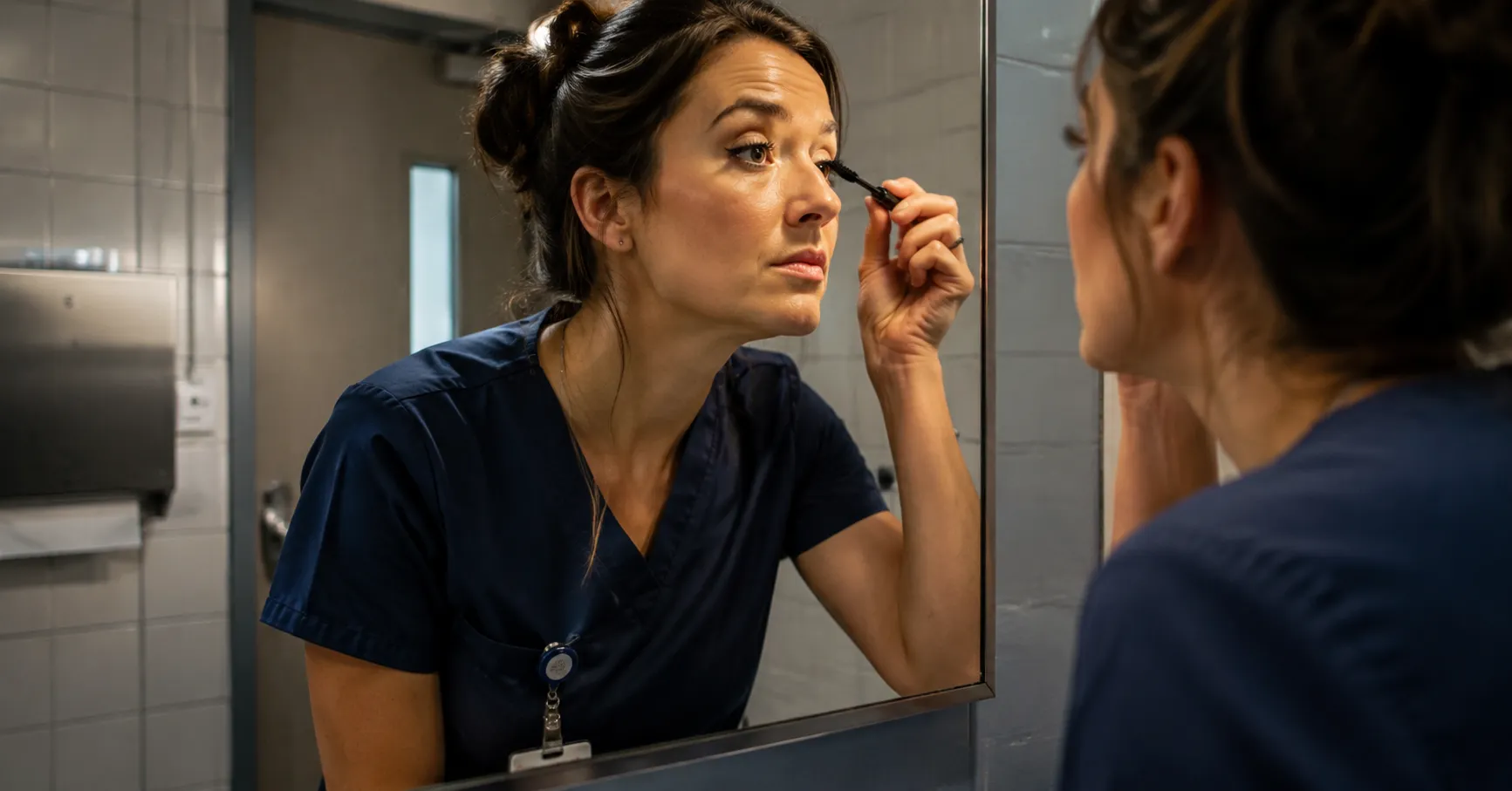
There’s a particular kind of defeat that every nurse, teacher, retail worker, and event planner knows intimately. You catch your reflection at hour nine and the person staring back barely resembles the one who left the house that morning. Foundation has migrated into fine lines. The careful contour has melted into a general impression of tiredness. And the lipstick whatever hopeful shade you chose is a ghost of itself.
This isn’t a vanity problem. For a lot of people, looking presentable through a long shift is tied to confidence, professionalism, and the quiet psychological armor that a good face can provide when the day gets hard. So the question isn’t whether it matters. The question is why most makeup fails, and what actually works.
The Real Reason Your Makeup Doesn’t Last
Most people treat makeup longevity as a product problem wrong foundation formula, cheap setting spray, drugstore primer that doesn’t cut it. The reality is more structural than that.
Makeup breaks down through a combination of oil production, friction, humidity, and time. Your skin is constantly doing its job: producing sebum, sweating in response to temperature and stress, regenerating surface cells. Makeup isn’t designed to stop any of that. It sits on top of a living, dynamic surface, and that surface doesn’t pause for a twelve-hour shift.
The reason even expensive products fail on long days comes down to preparation and layering logic, not ingredient quality alone. You can spend a fortune on a foundation and still watch it slide by noon if the surface underneath wasn’t properly managed. Understanding that changes your whole approach.
Skin Prep Is Where the Day Is Won or Lost
The work that actually determines how your makeup holds up happens before any color touches your face.
Start with a clean, balanced canvas. Skin that’s been stripped by a harsh cleanser will compensate by overproducing oil, which means you’re setting yourself up for breakdown before you’ve even opened your foundation. A gentle, pH-balanced cleanser followed by a lightweight moisturizer gives the skin what it needs without triggering that reactive spiral.
Hydration is counterintuitive here. A lot of people with oily skin skip moisturizer thinking it’ll make things worse, but dehydrated skin actually produces more oil, not less. The goal is balance, not elimination. Let your moisturizer absorb completely ten to fifteen minutes, minimum before you do anything else. Rushing this step is one of the most common ways a well-intentioned routine falls apart.
Then comes primer, which genuinely earns its reputation when chosen correctly. The key is matching the primer to your specific concern rather than using whatever came with a kit. Silicone-based primers create a smooth, pore-blurring layer that helps foundation adhere and stay put. Water-based primers work better if you prefer a more natural finish or have sensitive skin. For anyone dealing with significant oil production, a mattifying primer applied specifically to the T-zone can make an outsized difference over a long day.
The Way You Apply Foundation Changes Everything
There’s a common assumption that more product means more coverage and more longevity. The opposite tends to be true. Thick layers of foundation are heavier, more likely to crease, and more vulnerable to transferring throughout the day. A thin, well-adhered application lasts considerably longer than a generous one.
The tool matters too. Damp beauty sponges press product into skin rather than sitting it on top of it, which creates a more seamless bond. A brush gives more coverage control. Your fingers, while convenient, transfer warmth and oils that can start breaking down the formula immediately. None of these is categorically wrong, but knowing what each does helps you make intentional choices.
For a twelve-hour shift, consider setting each section of the face immediately after applying foundation rather than doing your whole face and then setting it all at once. This technique, sometimes called baking in stages, allows the setting powder to work more actively before it’s dusted away. It sounds fussy, but it takes perhaps thirty extra seconds and the difference in hold is noticeable.
Eyes and Lips Deserve Their Own Strategy
Eye makeup failure on a long shift usually comes from one of two sources: no eyeshadow primer, or waterproof mascara that’s being asked to perform in conditions it wasn’t built for.
Eyeshadow primer is non-negotiable if you want color to stay true for more than a few hours. The skin of the eyelid is thin, oily, and constantly moving. Without something to grip to, even the most pigmented shadow creases and fades. A thin layer of primer changes the entire calculus. It doesn’t need to be elaborate even a dab of concealer set with powder can work in a pinch.
Waterproof mascara is worth the slightly more difficult removal process on any day that involves heat, humidity, or the possibility of tears which is most long workdays, honestly. Tubing mascaras, which wrap each lash in a polymer tube rather than coating it with wax, are particularly resilient and come off easily with warm water, making them a good middle-ground option.
For lips, the layering method is more reliable than any single long-wear formula. Start with a lip liner that matches your lip color, applied not just to the outline but filled in across the entire lip. This creates a base that holds pigment even as the product on top wears off. Then apply your lipstick or gloss. What you’re left with when it fades isn’t bare lips but a softened, still-intentional version of the original color.
Setting Spray: The Step Most People Either Skip or Misuse
A good setting spray is one of those products that sounds like marketing until you actually use it correctly. The mistake most people make is treating it like a finishing mist a few cursory spritzes held at arm’s length. That barely does anything.
For real longevity, hold the bottle about eight to ten inches from your face and apply in an X and T pattern, letting each layer dry slightly before the next. The goal is to create a light, even film over the entire face that essentially melds the layers of makeup together and helps them move with your skin rather than cracking or separating from it.
Setting sprays formulated for oily skin often contain ingredients that help control sebum production throughout the day. For dry skin, a hydrating setting spray does double duty locking in makeup while preventing the tight, flaky look that powder-heavy routines can produce by late afternoon.
The Midday Question
Even with the best preparation, a twelve-hour shift will ask something of your makeup that a standard day doesn’t. Knowing how to touch up without making things worse is its own skill.
The single biggest touchup mistake is applying fresh foundation over the existing layer. By midday, whatever foundation remains has bonded with your skin. Dabbing more on top creates an inconsistent, cakey effect that looks worse than the underlying wear. Instead, blot with tissue or a blotting paper to remove excess oil, dust lightly with loose setting powder, and add a targeted pass of setting spray.
For under-eye concealer, which tends to crease in the inner corner, a tiny amount of translucent powder pressed not swept into the crease with a small brush resets it without requiring a full reapplication.
Carrying a small emergency kit blotting papers, a travel-sized setting spray, a lip liner, and a neutral eyeshadow stick for touching up lids weighs almost nothing and makes a meaningful difference on the kind of day that doesn’t give you a mirror until hour ten.
There’s something quietly powerful about walking into hour twelve looking like you’ve got it together, even when the shift has been anything but. It’s not about performance or pretense. It’s about maintaining the version of yourself you showed up as which, on a long day, takes a little more intention than most people realize.