
Style Is a Language, Not a Uniform
There’s a particular kind of person you’ve probably noticed at some point in a coffee shop, at a gallery opening, or just crossing the street. They’re not wearing anything obviously expensive. No logo is screaming for your attention. And yet something about the way they look stops you for half a second. You can’t quite name what it is. That’s not an accident. That’s craft.
The myth we’ve been sold is that effortless style is either innate or expensive. That some people are just born knowing how to put things together, and the rest of us are doomed to cycle through trends without ever quite landing. Neither is true. What those people have figured out consciously or not is a set of underlying principles that make clothes feel like an extension of the person wearing them rather than a costume thrown on top.
Proportion: The Invisible Architecture
Before color, before fabric, before anything else, proportion is doing the heavy lifting in every outfit that works. It’s the reason a slightly oversized blazer over slim trousers feels intentional while two oversized pieces together can look like you borrowed someone else’s wardrobe. The body moves through space, and clothing frames that movement. When the volumes relate to each other in a way that creates visual balance not perfect symmetry, but balance the eye reads the whole picture as harmonious.
This is where a lot of well-meaning style advice goes wrong. “Wear what flatters your body type” is a tired instruction built on the idea that the goal is to approximate some ideal silhouette. But proportion isn’t about disguising anything. It’s about creating a coherent visual conversation between pieces. A wide-leg trouser isn’t just for tall people; it’s for anyone who pairs it with something that gives the upper body a clean line. The math changes depending on what you’re working with, but the underlying logic stays the same.
Pay attention to where hems fall, where waistlines sit, where sleeves end. These aren’t arbitrary details. They’re punctuation in a sentence and bad punctuation makes even good words confusing.
The One-Thing Rule and Why It Actually Works
Stylish people rarely wear more than one statement piece at a time. This sounds like a restriction, but it’s actually an act of editing which is most of what good style is. When one element in an outfit is doing something interesting (an unusual color, a strong texture, a sculptural cut), the rest should recede and let it speak.
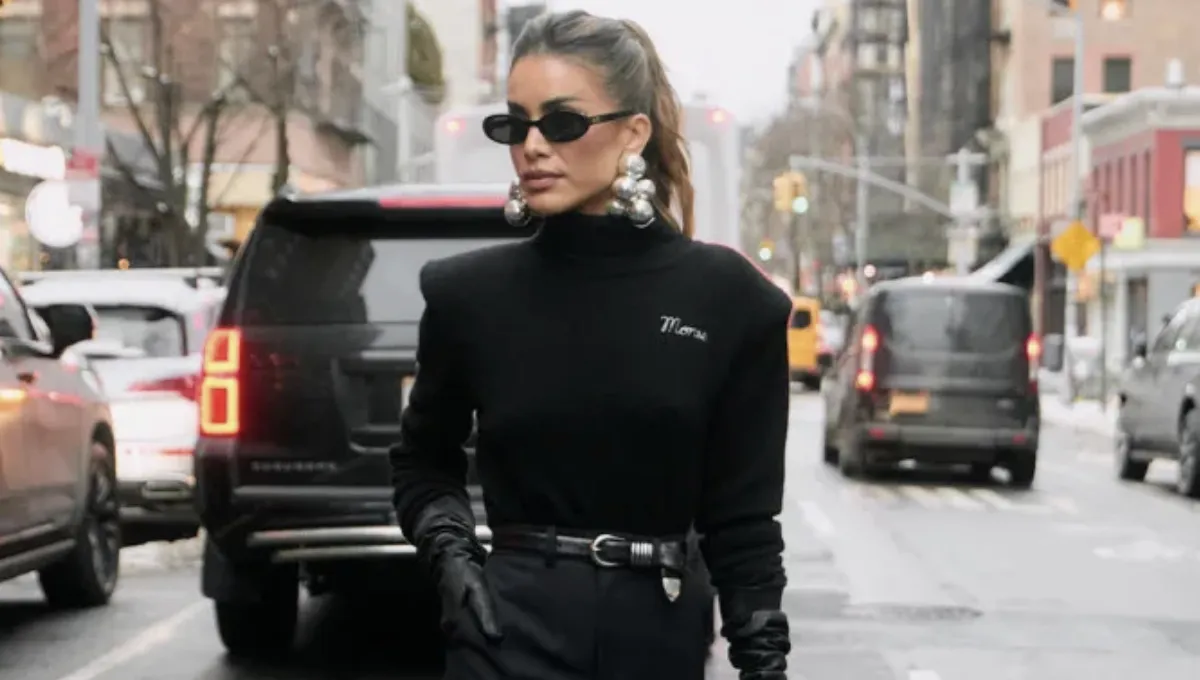
Think about it visually. If you’re wearing a coat with architectural shoulders, a printed blouse, and bold earrings simultaneously, each one is fighting for the same square inch of attention. Nothing wins. The outfit reads as busy, not bold. But pull the coat over a simple white shirt with minimal jewelry, and suddenly the coat becomes the entire story. You’ve given it room to exist.
This isn’t minimalism for minimalism’s sake. It’s the same instinct a good editor uses when cutting a paragraph not because the sentences are bad, but because together they’re louder than they need to be. The art is knowing which thing to keep.
Fit, But Not the Kind You’re Thinking Of
We’ve all heard that fit is everything, and it’s true but “fit” in the stylish-outfit sense isn’t about clothes being tight or perfectly tailored to every curve. It’s about clothes looking like they were meant to be on a human body, specifically yours, in this configuration.
Some of the most compelling outfits involve deliberately relaxed or oversized pieces. But there’s a difference between intentionally oversized and accidentally ill-fitting, and the difference is almost entirely in the details. A shirt that’s meant to be loose will have a collar that sits right, sleeves that end at a deliberate point, a hem that falls where it’s supposed to. An accidentally ill-fitting shirt will gape, bunch, or drag in ways that read as unresolved.
This is where a tailor is quietly one of the most underrated tools available to anyone who cares about clothes. Not to make everything fitted but to resolve the small things that don’t quite work. Taking in the waist of a blazer by an inch, shortening a hem by two centimeters, adjusting a shoulder seam: these are small interventions that change how the whole piece sits in the world. The garment stops looking like it’s from a rack and starts looking like yours.
Color as Architecture, Not Decoration
Color theory in the context of fashion gets either overcomplicated or oversimplified. On one end, you have elaborate seasonal palettes and color wheel diagrams. On the other, you have the reflexive “just wear neutrals” advice that makes half the population dress like they’re trying to disappear.
What actually matters is something closer to tonal coherence the idea that the colors in an outfit exist in a consistent emotional and visual register. Warm tones with warm tones, cool with cool, muted with muted, saturated with saturated. An outfit can break these rules brilliantly, but it has to do so on purpose, and with enough internal logic that the contrast reads as intentional rather than accidental.
There’s also the question of how color distributes across the body. Wearing a color as an accent a warm red shoe against an otherwise neutral outfit works differently than wearing it as a large field, like a full red trouser. Neither is wrong, but they create completely different energy. Stylish dressers intuitively understand how much real estate a color is occupying and whether that feels right for the effect they’re after.
The Role of Restraint (And When to Abandon It)
Here’s the tension at the center of all of this: the principles above can be internalized so deeply that they become a cage. Proportion, the one-thing rule, fit, tonal coherence followed rigidly, they produce outfits that are correct but lifeless. Style that feels truly alive has something unruly in it somewhere. A color that shouldn’t work but does. A proportion that breaks the expected logic. An accessory that seems like too much until it’s suddenly the only thing that makes sense.
The difference between someone who follows style rules and someone who has genuinely good style is that the second person understands why the rules exist and therefore knows exactly when to violate them. They’ve done enough repetitions, made enough mistakes, paid enough attention, that they can feel when the system needs disrupting.
Which brings everything back to the person crossing the street. They’re not lucky. They’re not operating on instinct that came from nowhere. They’ve been paying attention to their own body, to what they love, to how different combinations feel when they move through the world. The formula is real, but it only becomes effortless after it stops feeling like a formula at all.