

Your Skin Is a Receipt
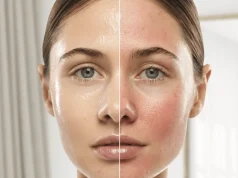
Think of your skin as a printout of everything that’s happened inside your body over the past few weeks. Not a mirror a receipt. It doesn’t lie, and it doesn’t care about your skincare shelf. You can layer on serums and retinoids and SPF 50every morning, and your skin will still find ways to tell the truth about what you ate, how you slept, and whether your gut is quietly inflamed.
This is the part nobody wants to hear. Because it’s easier to buy something than to change something. But the people who genuinely have clear skin and lean bodies not the filtered version, the real version almost always eat a certain way. Not perfectly. Not obsessively. But consistently, and with an understanding of what food actually does once it gets past your lips.
Inflammation Is the Common Enemy
Here’s the thread that connects breakouts and belly fat: inflammation. Chronic, low-grade inflammation is the biological state that makes your skin reactive and your body hold onto fat, particularly around the midsection. It’s not dramatic. You don’t feel it the way you feel a sprained ankle. But it’s there, running in the background, and your diet is one of the biggest switches that controls it.
Refined sugar is the clearest example. When blood sugar spikes rapidly from white bread, sweetened drinks, candy, most breakfast cereals your body releases a surge of insulin. Insulin then triggers a cascade that raises levels of IGF-1, a growth factor that stimulates oil glands and promotes the kind of skin cell behavior that leads to clogged pores. Simultaneously, that same blood sugar volatility activates inflammatory pathways that make fat storage easier and fat burning harder. The two problems share a root.
Processed seed oils the kind found in chips, fast food, packaged dressings compound this. They’re high in omega-6 fatty acids, which aren’t inherently bad, but when they’re wildly out of proportion to omega-3s, the ratio shifts your body toward an inflammatory state. For most people eating a modern Western diet, that ratio is somewhere between 15:1 and 20:1 omega-6 to omega-3. It should be closer to 4:1. That gap alone explains a lot.
What to Actually Eat
The framework isn’t complicated, even if the biochemistry behind it is.
Fatty fish salmon, sardines, mackerel are anti-inflammatory in a way that’s hard to replicate with supplements. The EPA and DHA they contain are the actual structural fatty acids your skin uses to maintain its barrier. A compromised skin barrier is what makes skin look dull, dry, and prone to redness. Eating fish two or three times a week is one of the most direct nutritional interventions for skin quality. The omega-3s also support fat metabolism and reduce cortisol-driven fat storage. It’s genuinely one food category doing two jobs at once.
Leafy greens spinach, arugula, kale,chard bring a different set of tools. They’re high in antioxidants like lutein and zeaxanthin, which protect skin cells from oxidative damage. They also contain folate and vitamin C, which are involved in collagen synthesis. And because they’re high in fiber and low in calories, they keep blood sugar stable, which brings you back to the inflammation conversation. A salad isn’t a punishment. It’s mechanically useful.
Eggs get dismissed in certain circles, but the yolk contains choline, biotin, and zinc three nutrients that show up repeatedly in the research on skin clarity and healthy body composition. Zinc in particular is worth noting. It regulates sebum production, supports wound healing, and plays a role in testosterone metabolism (relevant for both men and women when it comes to hormonal acne). People with low zinc levels tend to have both worse skin and more difficulty building or maintaining lean muscle.
Berries blueberries, raspberries, strawberries are high in polyphenols that reduce oxidative stress and support insulin sensitivity. They’re sweet enough to satisfy a sugar craving without spiking blood sugar the way processed sweets do. That’s not a small thing. Managing the craving-to-spike cycle is one of the practical challenges of eating this way long-term.
The Gut-Skin Axis Is Real
This connection used to be considered fringe. It isn’t anymore. There’s a well-documented relationship between the health of your gut microbiome and the condition of your skin. Dysbiosis an imbalance in gut bacteria is associated with acne, rosacea, eczema, and psoriasis. The mechanism involves intestinal permeability. When the gut lining is compromised, bacterial byproducts can leak into the bloodstream and trigger systemic inflammation that manifests, among other places, on your face.
Fermented foods yogurt with live cultures, kefir, kimchi, sauerkraut, miso support a diverse microbiome. So does eating a wide variety of plant foods, which feed different bacterial strains. The people who eat the same five things every week are often the same people whose gut diversity is limited and whose skin is perpetually reactive.
Dairy is worth a separate mention here because it’s genuinely complicated. Conventional milk particularlyskim milk has a fairly strong association with acne in the research, likely because of its effect on IGF-1 and because it contains hormones that influence sebum production. Full-fat dairy, fermented dairy (cheese, kefir, Greek yogurt), and grass-fed options seem to be much less problematic for most people. If your skin flares after milk, that’s meaningful information. It doesn’t mean all dairy, forever. It means pay attention.
Hydration Does What Moisturizer Can’t
Water is boring to talk about and critical to everything. Skin that’s chronically under-hydrated looks older, duller, and shows texture more prominently. But beyond aesthetics, hydration affects how efficiently your kidneys and lymphatic system clear metabolic waste including the waste products associated with fat metabolism. People who are consistently dehydrated often have sluggish digestion, more visible puffiness, and skin that responds poorly to other interventions.
The goal isn’t drowning yourself in water. It’s consistency. Starting the day with water before coffee, drinking between meals rather than just with them, and being conscious of alcohol and caffeine as net dehydrators these are the habits that compound quietly.
The Pattern Matters More Than the Day
One good meal doesn’t clear skin. One bad meal doesn’t ruin it either. What skin and body composition respond to is the pattern what you eat most of the time, over weeks and months. This is genuinely reassuring if you let it be. It means you don’t have to be perfect. It means a birthday dinner or a vacation week doesn’t undo anything. It means the pressure isn’t on any single choice.
What you’re building is a metabolic environment. One where inflammation stays low, blood sugar stays relatively stable, nutrients are available for skin repair and muscle maintenance, and your gut has what it needs to function. That environment shows up on your body and your face over time not in a before-and-after sense, but in the way people start to notice that you just look healthy. The kind of healthy that isn’t obviously explained.
That’s usually when someone asks what products you’re using.