
Your Skin’s Reset Plan with Clean Beauty Principles
When Your Skin Stops Cooperating
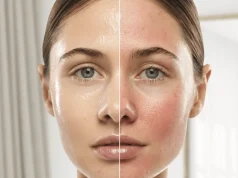
There’s a particular kind of frustration that comes from doing everything right or at least everything you were told was right and still watching your skin spiral. Breakouts that won’t quit. A dullness that no amount of sleep seems to fix. Sensitivity that appeared out of nowhere and now flinches at products you’ve used for years. If any of this sounds familiar, you’re not alone, and more importantly, you’re not broken. Your skin is just overwhelmed.
The modern skincare aisle is a paradox. It promises clarity while delivering complexity. Twelve-step routines. Layering serums with conflicting pH levels. Active ingredients stacked on top of active ingredients until your moisture barrier doesn’t know what hit it. We’ve been sold the idea that more is better more steps, more potency, more innovation. But the skin, for all its resilience, has limits. And when those limits are crossed repeatedly, it starts to show.
This is exactly why the concept of a skin reset has gained so much traction, not as a wellness trend but as a genuine physiological necessity. And clean beauty, properly understood, gives you the most intelligent framework for doing it.
What “Clean” Actually Means Here
Let’s get one thing out of the way: clean beauty isn’t about moral purity or fear-mongering over every synthetic molecule. That version of clean beauty has done real damage it’s driven people toward “natural” products that irritate, sensitize, and underperform, while vilifying ingredients that decades of research have proven to be safe and effective.
The cleaner framework worth adopting is simpler and more pragmatic. It means formulations with minimal unnecessary ingredients, a focus on skin function over sensory experience, and transparency about what’s actually in the bottle. It means choosing products that support the skin’s own biology rather than working against it. That distinction matters enormously when you’re trying to reset.
A genuinely clean product doesn’t need a ten-ingredient fragrance blend to feel luxurious. It doesn’t need PEG-heavy emulsifiers that strip lipids with every wash. It doesn’t need preservatives that double as hormone disruptors, not because all preservatives are bad, but because better options exist and there’s no reason not to use them. Clean beauty at its most useful is about informed restraint.
The Reset Protocol: Starting With Subtraction
Most people approach a skin reset the wrong way. They swap one complicated routine for another complicated routine, just with different labels. “Clean” swapped in for “clinical.” The problem isn’t the products themselves it’s the accumulated burden of using too many things at once.
A real reset starts with subtraction. Strip your routine down to three things: a gentle cleanser, a barrier-supporting moisturizer, and SPF in the morning. That’s it. Nothing active, nothing exfoliating, nothing targeting. For two to three weeks, your only job is to stop demanding things from your skin and start letting it repair.
This phase is uncomfortable for a lot of people. Without the tingle of an acid or the tightness of a clay mask, it can feel like you’re doing nothing. But that feeling is actually the point. The skin’s repair mechanisms ceramide synthesis, natural moisturizing factor production, the slow rebuilding of a compromised barrier are not dramatic. They’re quiet and steady and they need space to work. Every additional active you layer on top is essentially interrupting that process.
During this phase, look for a cleanser with a pH between 4.5 and 5.5that doesn’t foam aggressively. Foaming feels satisfying but often signals the presence of harsh surfactants that disrupt the acid mantle. A moisturizer with ceramides, fatty acids, and glycerin as core ingredients will support the barrier without overwhelming it. Brands that prioritize these fundamentals over elaborate botanical cocktails tend to perform better here not because botanicals are inherently bad, but because simplicity is the whole point.
Reading Your Skin’s Response
One of the most valuable things a reset teaches you is how to actually read your skin. When you’re using twelve products, it’s nearly impossible to know what’s working and what’s causing problems. Introduce something new and have a reaction? Could be anything. Strip it back to three products for three weeks, and your skin becomes legible again.
Pay attention to texture changes rather than appearance alone. Is the surface smoother? Are you feeling that tight, stripped sensation less often? Are you waking up with skin that doesn’t immediately feel reactive? These are signs the barrier is repairing. Congestion and breakouts may actually increase slightly in the first week, especially if your skin has been over-exfoliated the cell turnover normalizing can push things to the surface. Don’t panic and reach for a spot treatment. Stay the course.
What you’re watching for over two to three weeks is a baseline. How does your skin behave when it’s not being managed, pushed, or corrected? That answer is more useful than any skin type quiz, because it tells you what your skin actually needs versus what you’ve been told it needs.
Reintroducing With Intention
Once you have that baseline once your skin feels calm, hydrated, and no longer reactive you can start adding back in. And here’s where clean beauty principles become genuinely strategic rather than just philosophical.
Reintroduce one product at a time with a two-week window between each addition. This isn’t about being precious. It’s about maintaining the legibility you just worked to create. If you add a vitamin C serum and your skin starts reacting within ten days, you know exactly what caused it. If you’d layered in three new things simultaneously, you’d be back to guessing.
Prioritize function over trend when choosing what to reintroduce. A well-formulated niacinamide serum addresses tone, barrier support, and sebum regulation without the sensitization risk of higher-strength acids. Bakuchiol offers retinol-like cell turnover benefits with a gentler profile not a replacement for everyone, but worth considering if your skin has historically been intolerant of traditional retinoids. Azelaic acid sits in an underrated middle ground: anti-inflammatory, lightly exfoliating, and effective for hyperpigmentation without the irritation threshold of chemical exfoliants.
None of these are magic. But they’re considered, functional choices that align with what the reset was trying to achieve. You’re not starting over from scratch you’re building back deliberately.
The Ingredient Audit You’ve Been Putting Off
The reset is also an invitation to look honestly at the products you own. Open your cabinet and read labels. Not for the purpose of catastrophizing over unfamiliar chemical names, but for coherence. Are you using a fragrance-heavy toner followed by an antioxidant serum that degrades in the presence of fragrance compounds? Are you using two different products with the same high-concentration active, effectively doubling your exposure without meaning to?
Fragrance both synthetic and natural is the ingredient category most worth scrutinizing during a reset, not because it’s universally dangerous, but because it’s the most common culprit in sensitization reactions and offers no functional benefit to the skin. Essential oils fall into this category too. Lavender, peppermint, and citrus oils smell wonderful and carry genuine wellness associations, but they’re potent sensitizers with no barrier-supporting properties. If your skin has been reactive, fragrance is often the first place to look.
The audit isn’t about throwing everything out. It’s about building a coherent, intentional collection where every product earns its place.
What Clean Beauty Gets Right About the Long Game
There’s something worth sitting with in the underlying philosophy of a clean beauty approach to skincare, which is that the skin doesn’t need to be conquered. It needs to be supported. The most effective routines are boring ones the same gentle cleanser, the same ceramide moisturizer, the same SPF used consistently over months and years rather than cycling through whatever the algorithm is promoting this week.
Skin responds to consistency the way any biological system does: with predictability. Give it the same building blocks at the same intervals and it stops acting out. The irony is that the reset, which feels like doing nothing, is often the most active intervention you can make.
Your skin has been trying to tell you something. The reset is just the moment you finally get quiet enough to listen.