
The Long Hangover of Sameness
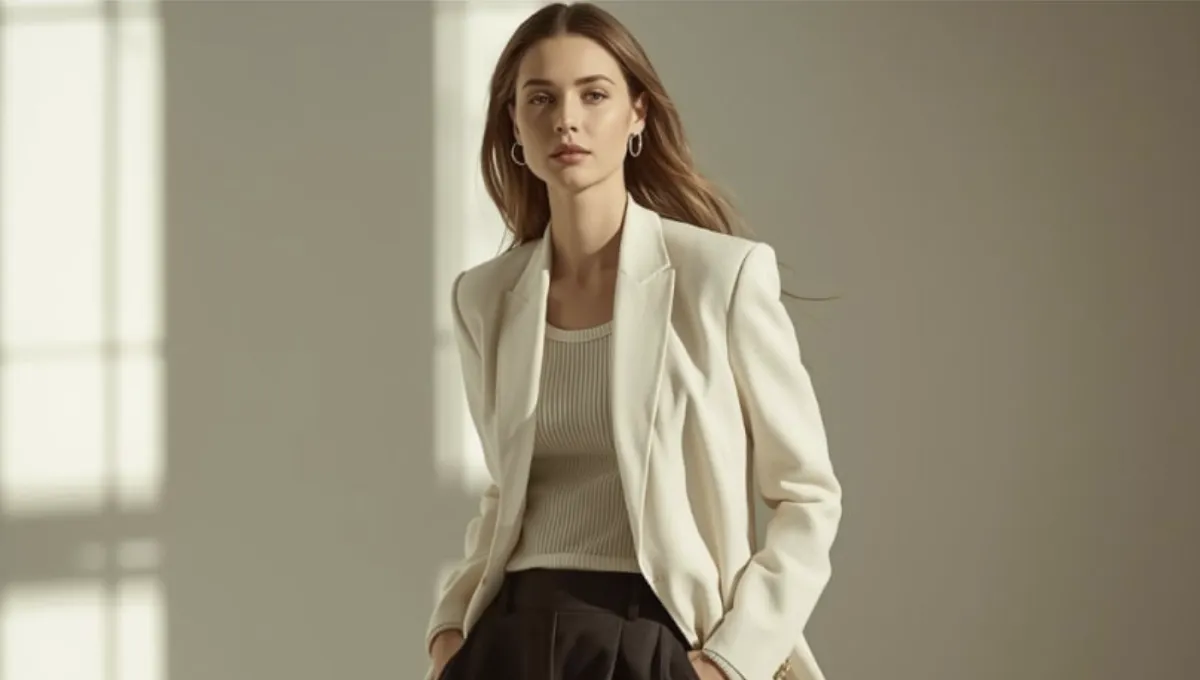
For a while there, it felt like everyone was dressing from the same invisible mood board. Neutral tones. Minimalist silhouettes. A kind of studied blankness that passed itself off as sophistication. Walk through any major city between 2015 and 2022 and you’d see it everywhere the oatmeal palette, the oversized blazer worn with white sneakers, the careful absence of anything too specific, too personal, too loud. Fashion had become a performance of not trying too hard, which was, of course, its own exhausting form of trying.
It wasn’t purely aesthetic laziness. There was a logic to it. Social media had trained people to dress for the algorithm for the flat lay, the GRWM, the outfit grid that needed to be visually cohesive across twelve posts. Personal style got quietly replaced by personal brand, and personal brand required legibility above all else. You needed to read clearly at thumbnail size. Anything eccentric, anything that resisted easy categorization, was a liability.
But something started cracking. And once it cracked, it cracked fast.
When Dressing Became Personal Again
The clearest sign that the tide had shifted wasn’t a runway moment or a trend report. It was something subtler: people started dressing like themselves again. Not like a version of themselves optimized for digital consumption, but like someone with actual history, actual obsessions, actual feelings about color and texture and proportion.
You started noticing it in the thrift stores first, then in the streets, then eventually on the runways catching up. People were mixing decades without irony a1970s suede jacket over a 1990s slip dress, worn with boots that belonged to some entirely different aesthetic universe. The look didn’t have a name. That was the point.
This shift tracks with something larger happening in the culture. After years of digital everything, there’s been a slow but unmistakable hunger for the analog, the handmade, the individual. People started cooking from scratch, collecting vinyl, growing plants in their apartments. Fashion was just another surface where this hunger expressed itself. Clothes became a way of saying: I exist in three dimensions. I have a past. I made a choice this morning that didn’t come from a Pinterest board.
The Quiet Rebellion of Specificity
What’s interesting about the current moment is that the personality returning to fashion isn’t loud in the way personality used to be loud. This isn’t the maximalism of the early 2010s, where more was always more and the goal was to be impossible to ignore. The specificity showing up now is quieter, stranger, more personal. It’s a woman in her fifties wearing an acid green coat she bought in Milan in 1998and has never stopped loving. It’s a twenty-three-year-old who buys all his shirts from dead men’s wardrobes at estate sales. It’s someone who has strong, inexplicable feelings about a very particular shade of brown.
These choices aren’t made for an audience. Or at least, they’re not made primarily for an audience. That’s what distinguishes them from the performative quirkiness that passed as individuality during the peak influencer era the calculated hat, the one unexpected accessory meant to signal creativity while the rest of the outfit remained safely conventional. Real personality in fashion is harder to decode. It doesn’t come with a caption explaining itself.
Designers have felt this shift and responded to it in ways that are genuinely interesting. Certain labels have moved away from the idea of a “look” a head-to-toe directive that tells the customer exactly how to appear toward something more like offering ingredients. Pieces that are strong enough to hold their own but unruly enough to resist combination into a single correct outfit. The implicit message is: figure it out yourself. Which sounds like an abdication but is actually a form of respect.
What Killed the Aesthetic Era
Part of what’s driving this return to genuine personal style is simple fatigue with the aesthetic labeling that dominated the early 2020s. Cottagecore. Dark academia. Coastal grandmother. Every mood, every reference point, every visual sensibility got taxonomized and hashtagged into a pre-packaged identity. You didn’t have to do the work of figuring out who you were aesthetically you just had to pick from the menu.
For a while, this was genuinely useful for a lot of people, especially younger dressers who hadn’t yet developed a visual language for their own taste. But the ceiling was low. Once you’d fully inhabited your chosen aesthetic, there was nowhere to go. The internal logic was too tight. A dark academia person couldn’t suddenly love a neon yellow windbreaker not without a crisis of identity, or at least a very long Reddit thread.
Real personal style doesn’t work like that. It’s not a closed system. It’s accumulative and sometimes contradictory and it changes as you change. It carries evidence of where you’ve been. The person you were at twenty-two leaves residue in your wardrobe, sitting alongside what you love at thirty-five and what you’ve recently become obsessed with and what you wear on days when you feel fragile. No aesthetic label can hold all of that.
The Body Comes Back Too
There’s another dimension to this that doesn’t get discussed enough: the return of personal style is also, quietly, a return of the body. The body with actual proportions, actual idiosyncrasies, actual physical history. For years, fashion’s relationship to the body was either one of erasure the blank, neutrally sized vessel or one of performance the aggressively displayed, carefully curated physical self. Neither left much room for the body as something you simply inhabit and dress around.
What’s changing is that more people are making choices that serve their actual physical experience of wearing clothes, rather than the visual outcome in a photo. Comfort has been part of the conversation for years, but this is something different from comfort. It’s about fit as a form of self-knowledge. Understanding what actually feels like you, on your body, on a random Tuesday not what looks impressive in a mirror, not what photographs well, but what you reach for because it makes the day feel more like yours.
This sounds small. It’s not small. It’s the entire thing.
Style as Autobiography
The most compelling dressers you encounter the ones you find yourself watching on the street, the ones whose wardrobes you’d actually want to spend an afternoon in almost never look like they’re following something. They look like they arrived somewhere through a long process of accumulation and editing and accident. There’s a quality of sediment to it. The look has layers.
That’s what the minimalist moment couldn’t manufacture, no matter how well-curated the pieces were. You can’t fake a wardrobe that’s been lived in. You can’t perform the easy confidence of someone who isn’t dressing for anyone’s approval because they sorted that out a while ago and moved on. The clothes become autobiographical. They carry information about time and taste and change in a way that a perfectly assembled capsule wardrobe simply cannot.
Fashion has always been a form of communication, but what it’s communicating right now feels more honest than it has in years. Less about signaling membership in a tribe, less about projecting a fantasy version of the self, more about the kind of low-key declaration that says: this is actually what I like. I’ve thought about it. I’m not performing anything.
There’s something almost quietly radical about that in a culture that has spent the better part of a decade turning personal expression into content.