

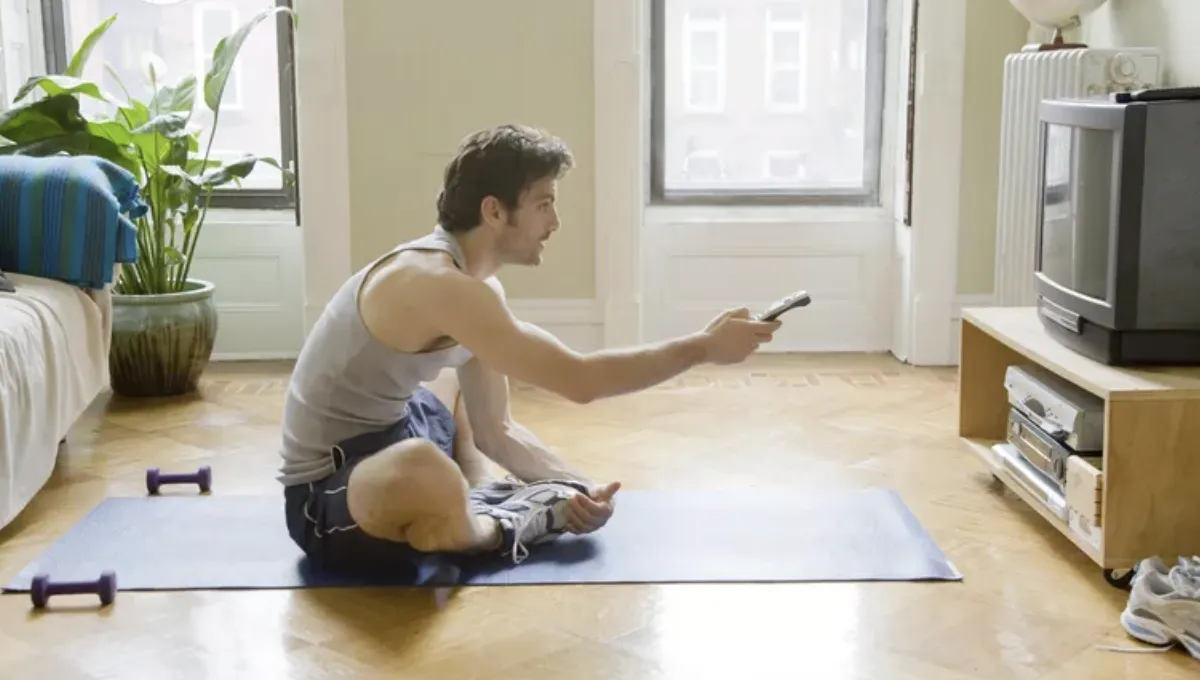
The Lazy Person’s Guide to Staying Fit Daily
There’s a certain kind of person who has, at some point, owned a gym membership they never used. Maybe it lasted three months. Maybe the card is still in your wallet right now, slightly bent, serving mostly as a reminder of good intentions that dissolved somewhere between the morning alarm and the first cup of coffee. If that sounds familiar, this isn’t a lecture. This is actually for you.
The fitness industry has a strange relationship with laziness. It treats it like a character flaw to be conquered, a psychological defect standing between you and a better body. Entire product lines are built on shame. But here’s what the industry doesn’t want to admit: most people who struggle to stay active aren’t lazy by nature. They’re just human beings trying to preserve energy in a world that already demands too much of it. The problem was never motivation. The problem was the model.
The Myth of the Fitness Lifestyle
Somewhere along the way, staying fit became synonymous with a particular kind of identity the 5am runner, the meal-prepper, the person who actually enjoys burpees. This framing did enormous damage. It convinced millions of people that if you weren’t willing to adopt the whole lifestyle, there was no point starting at all.
The science tells a different story. Research consistently shows that small, fragmented movement throughout the day carries substantial health benefits, sometimes comparable to structured exercise. A 10-minute walk after lunch. Standing up every hour. Taking the stairs not because you’re disciplined, but because the elevator was slow and you got impatient. None of these feel like fitness. That’s exactly why they work for lazy people because they don’t ask you to become someone you’re not.
Working With Your Inertia, Not Against It
Inertia gets a bad reputation, but it’s actually a tool. Once something is in motion, it tends to stay in motion. The trick is engineering conditions where movement is the path of least resistance, not the heroic alternative to it.
Think about where friction lives in your current routine. Getting to a gym requires a bag, a commute, finding parking, navigating equipment, and the minor social performance of being seen working out. That’s a lot of steps. Each one is a potential exit point for someone whose willpower is being taxed elsewhere. Strip the process down instead. Keep a resistance band on thecouch. Put a pull-up bar in a doorframe you walk through daily. Set your running shoes directly in front of the bathroom door at night.
None of this feels dramatic because it isn’t. But environment design is genuinely one of the most evidence-backed behavior change strategies available, and it requires zero motivation to set up once it’s done. James Clear has written extensively about this, and the behavioral economists at various universities have confirmed what anyone who’s ever placed fruit at eye level in the fridge already knew intuitively: you eat what you see, you do what’s convenient.
The Two-Minute Rule Has a Cousin No One Talks About
You’ve probably heard the two-minute rule if something takes less than two minutes, do it now. Fitness has its own quiet version of this, and it lives in the concept of movement snacks.
A movement snack is exactly what it sounds like: a brief burst of physical activity inserted into an otherwise sedentary day. Ten squats while the coffee brews. A set of calf raises while brushing your teeth. Pacing during a phone call instead of sitting. Individually, these feel almost absurdly minor. Accumulated across a full day, they add up to something real.
A 2022 study published in Nature Medicine found that three to four one-minute bouts of vigorous incidental physical activity per day were associated with significantly reduced risk of cardiovascular disease and all-cause mortality in people who otherwise described themselves as non-exercisers. One minute. Repeated a few times. That’s a remarkably low bar for a meaningful health outcome.
What makes movement snacks particularly powerful for the chronically unmotivated is that they don’t require a decision to exercise. They attach to existing behaviors the coffee routine, the phone call, the bathroom trip. Behavioral psychologists call this habit stacking, and it’s one of the most reliable ways to change behavior in people who don’t want to change.
Redefining What Counts
One of the most counterproductive things about mainstream fitness culture is its obsession with metrics. Steps tracked, calories burned, heart rate zones hit. For people who respond well to data, this is motivating. For everyone else, it turns something that should feel natural into a kind of ongoing performance review.
Walking to the corner store counts. So does gardening, dancing alone in your kitchen to something embarrassing, chasing a kid around a park, doing a slow lap of the office because you needed to get away from your desk. None of these are typically counted in workout logs, but they all move the body, activate the cardiovascular system to some degree, and contribute to what researchers call non-exercise activity thermogenesis the energy your body expends doing anything that isn’t deliberate exercise, sleep, or eating.
NEAT, as it’s abbreviated, accounts for a surprisingly large portion of daily calorie expenditure in active people. And unlike exercise, it’s not something you have to carve time out for. It happens in the texture of ordinary life, if you stop actively working against it.
Sleep Is Doing More Heavy Lifting Than You Think
Any honest guide to staying fit without much effort has to mention sleep, because sleep is quietly the highest-leverage health behavior most people are still not taking seriously enough. The research is almost aggressive in its consistency: insufficient sleep degrades athletic performance, increases appetite (particularly for high-calorie foods), impairs muscle recovery, disrupts hormones that regulate metabolism, and erodes the prefrontal cortex function you need to make good decisions the next day.
This matters for lazy fitness specifically because sleep affects how hard everything else feels. Getting seven to nine hours doesn’t feel like exercise, doesn’t require going anywhere, and can be done while lying completely still. And yet it is doing genuine work on your body’s ability to maintain muscle mass, regulate weight, and sustain energy for the incidental movement that keeps you functional. If you’re only willing to make one change, and you’re currently sleeping six hours or fewer, fixing that first is probably the highest return investment available.
The Case for Never Pushing Through
Traditional fitness advice tends to worship the push-through ethos: when it hurts, keep going. When you don’t want to, go anyway. For athletes with specific goals, this makes sense. For everyone else, it’s a recipe for burnout and eventual abandonment.
Lazy fitness real lazy fitness is built on the opposite philosophy. Never push through. Instead, lower the bar until pushing through isn’t required. If a30-minute walk feels daunting, do10 minutes and stop. If you’re too tired to stretch properly, do two poses while sitting on the edge of your bed. The goal is to maintain a relationship with movement, not to optimize every session. Athletes peak and recover in cycles. The rest of us just need to avoid long stretches of complete inactivity.
The body is more forgiving than the fitness industry implies. You don’t lose everything in a week off. You don’t need to earn rest by suffering first. A body that moves a little, most days, without hating the experience, is doing something genuinely valuable.
You Already Know What Works
Here’s the uncomfortable part: almost nobody who struggles with fitness lacks information. You know vegetables are good for you. You know sitting for eight straight hours probably isn’t ideal. You know sleep matters and walking helps.
What’s actually missing isn’t knowledge it’s a system that matches your real life rather than an aspirational version of it. One that doesn’t require you to love waking up early, or enjoy pain, or find an identity in athletic performance. One that treats your limited willpower as a finite resource to be conserved rather than a weakness to be overcome.
The lazy person’s guide isn’t really about being lazy. It’s about being honest. About what you’ll actually do on a Wednesday when you’re tired and the couch is right there. Build around that version of yourself, not the one you imagine you should be. That version has been letting you down for years. The real one with the gym card in their wallet is still entirely capable of staying fit. Just not the way anyone’s been telling them to.