
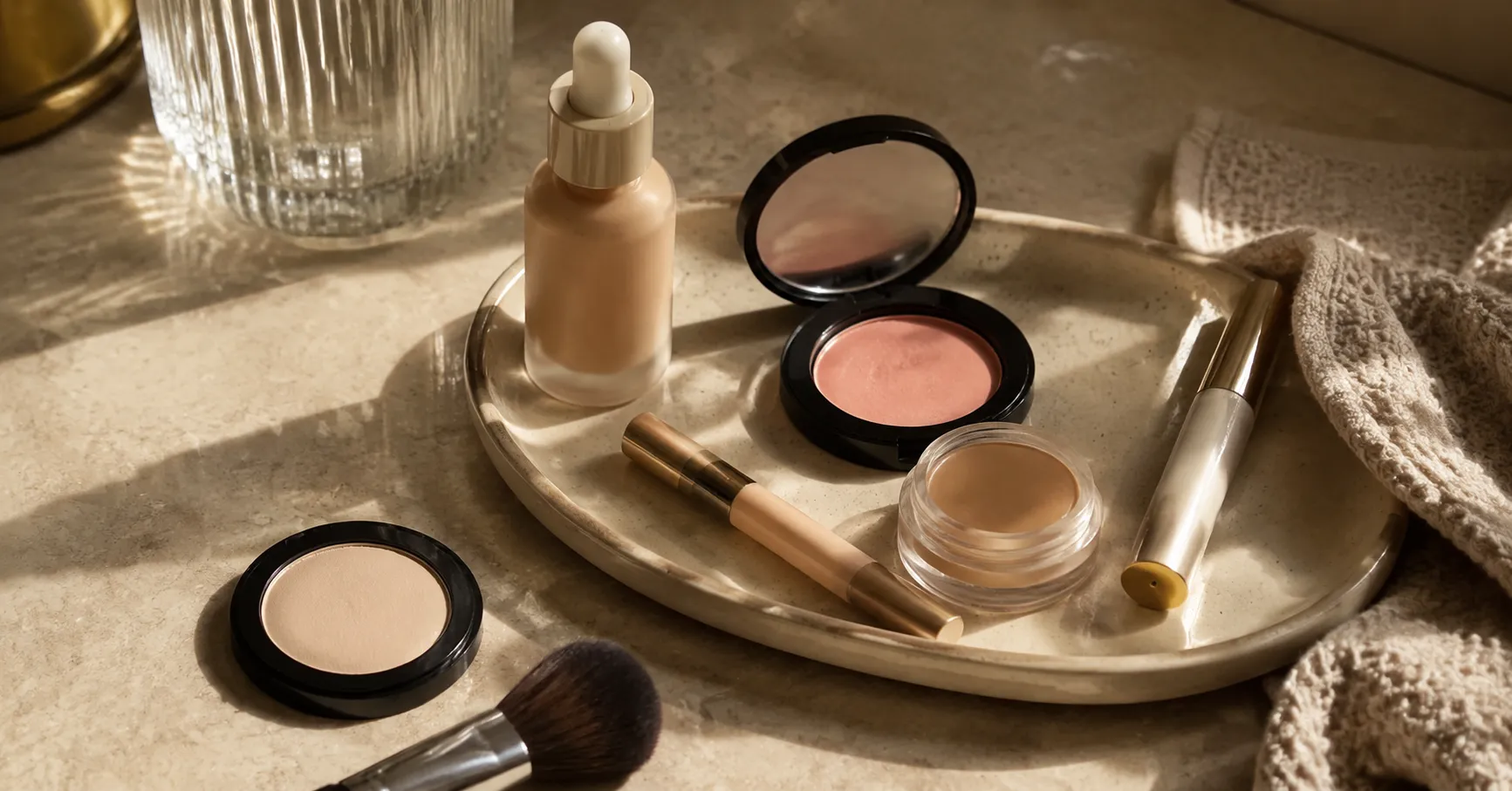
There’s a particular kind of confidence that comes with walking into a room looking effortlessly put-together skin glowing, features softly defined, the whole effect reading as “I just woke up like this.” It’s one of beauty’s most enduring illusions, and also one of its most technically demanding. The no-makeup makeup look sounds like a contradiction, but it’s really a philosophy: the goal isn’t to erase your face but to edit it. To quiet what distracts and illuminate what already works.
What makes it hard to pull off isn’t a lack of product. It’s a lack of understanding about why each step matters. Most tutorials hand you a shopping list. What you actually need is a framework four precise moves that, taken together, make the final result feel like skin rather than surface.
Step 1: Build the Foundation Before You Touch Foundation
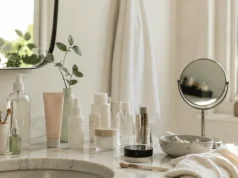
Skin prep is where most people lose the game before it even starts. You can own every “your skin but better” product on the market, and if you’re applying them to a dehydrated, uneven canvas, they’ll emphasize texture instead of erasing it.
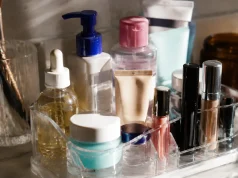
The prep window those ten minutes between skincare and makeup matters more than most people realize. A hydrating toner or essence gives the skin something to drink before you start layering. A thin application of moisturizer, fully pressed in rather than wiped on, changes the way everything that follows adheres. If you’ve been skipping a facial mist after moisturizer, try it once. The difference in how skin-like your base looks is hard to overstate.
Primer, when used correctly, isn’t about creating a blank plastic surface. It’s about targeted smoothing. A silicone-based primer on enlarged pores, a blurring formula on fine lines, a hydrating primer everywhere else if your skin leans dry. The mistake is using one primer formula across the entire face when different zones have different needs.
One thing worth noting: if your skincare is genuinely doing its job if your skin is hydrated, calm, and reasonably even in texture you can often skip foundation entirely and just use concealer where needed. That realization alone shifts the whole approach.
Step 2: Color Correction Is the Secret Nobody Talks About Enough
No-makeup makeup lives and dies by the illusion of even skin tone. If that’s not present, you compensate with more coverage, more layers, and suddenly the whole look tips from “natural” into “trying very hard.”
Color correction is the shortcut. A tiny amount of peach or salmon concealer on blue-toned undereye circles neutralizes them before you apply skin-toned concealer and the result is that you need far less of the latter to achieve the same effect. The undereye area looks like skin instead of a concealed patch. On redness around the nose or cheeks, a drop of green-tinted corrector, tapped in and not rubbed, calms things down before foundation even enters the picture.
The reason most people avoid color correction is that it looks alarming in the mirror mid-application. A peach stripe under your eyes before blending is not a flattering image. But this is exactly the kind of intermediate-stage mess that results in the most seamless finish. Trust the process.
For deeper skin tones, the corrector shades shift. Orange and red correctors work for hyperpigmentation and dark circles on brown and deep skin, where peach would be invisible. The principle is the same you’re neutralizing before you cover, rather than piling one skin-toned product on top of the problem.
Step 3: The Technique Gap Between “Covered” and “Natural”
Assuming you’ve done the prep work and any necessary color correction, the application itself is where the no-makeup look either clicks or collapses. And here’s where the conversation almost always gets muddled, because beauty content tends to focus obsessively on products and pay very little attention to method.
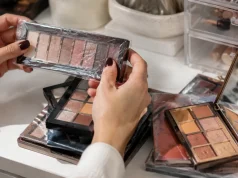
A light-coverage foundation or tinted moisturizer applied with fingertips body heat warms the product, and the friction of skin on skin sheers it out in a way that no brush or sponge replicates looks different from the same product applied with a dense brush. One looks like skin. The other looks like skin that’s been covered. For anything heavier than a tinted moisturizer, a damp beauty sponge pressed in a stippling motion (not wiped, not buffed in circles) is the gold standard because it deposits product without dragging or building up edges.
Concealer under the eyes should be patted in using the ring finger, which exerts the least pressure. The area around the eye is thinner and more delicate than the rest of the face, and aggressive blending there does damage over time and also creates creasing almost immediately.
Blush placement deserves more attention than it gets. For a natural flush, the color should be highest on the apples of the cheeks and fade toward the hairline the way real blood rises to the surface of skin. A cream blush worked in with fingertips before setting powder goes underneath any translucent powder and therefore stays locked against the skin rather than sitting on top of it.
Setting matters, but lightly. A translucent powder pressed into the T-zone and under the eyes is enough. Anywhere you powder heavily, the skin stops looking like skin and starts looking like a photograph of skin.
Step 4: Define Without Drawing
The final step is about features and this is where restraint is genuinely the hardest skill to develop. The instinct, even for people who consider themselves light-handed with makeup, is to add a little more than the look actually needs.
For eyes, the no-makeup approach means enhancing what’s structurally there. A single coat of brown or black mascara on the upper lashes only. Tightlining drawing a very fine line along the waterline of the upper lid with a dark pencil or shadow makes lashes appear denser without creating a visible liner stroke. The difference between tightlining and a visible liner flick is the difference between eyes that look naturally defined and eyes that look made up.
Brows are probably the single feature most responsible for whether a no-makeup look reads as polished or unfinished. They don’t need to be dramatically filled in, but they do need to be brushed and shaped. A clear or tinted brow gel, used after combing the hairs upward, is often enough. If there are sparse patches, a fine-tip brow pencil used in short, hair-like strokes not a solid fill closes the gaps without looking drawn on.
Lips in this context usually mean a tinted lip balm, a sheer gloss, or at most a lip tint. The goal is color that looks like your lips after you’ve been outside for an hour, not a separate beauty statement. Lining the lips with a flesh-toned pencil before applying anything else prevents feathering and makes even a sheer product look intentional.
There’s something almost paradoxical about how much precision it takes to look imprecise. Every step in a no-makeup look is quietly doing heavy lifting the foundation is there but invisible, the color is present but indistinguishable from your actual skin, the features are defined but only barely more than they already were. The whole architecture disappears on purpose.
Which is exactly what makes it satisfying to execute well. Not because anyone will notice. Because they won’t.