
The Routine I Was Proud Of
For about four years, I had a skincare routine I genuinely believed in. Cleanser, toner, vitamin C serum, moisturizer, SPF. Every morning, without fail. I’d researched the products. I’d read the ingredient lists. I cross-referenced Reddit threads and watched dermatologist YouTube videos at midnight like they were episodes of a show I was binge-watching. I felt, honestly, a little smug about it.
My skin wasn’t perfect, but I told myself that was just genetics, or stress, or the particular cruelty of my thirties. I never once considered that I might be the problem.
Then I had a single conversation with an esthetician during what I thought would be a routine facial, and she dismantled the whole thing in about twelve minutes.
What She Actually Saw
She didn’t lecture me. She just started asking questions. How long have you been using this vitamin C? Do you store it near sunlight? Are you waiting between your layers? Are you using a physical or chemical exfoliant, and how often?
I answered confidently. And with every answer, her expression got a little more careful not judgmental, but the kind of careful a doctor gets when they’re about to tell you something they know you don’t want to hear.
The vitamin C I’d been using had oxidized. You can tell by the color it turns amber or brown and mine had been doing that for months. I’d noticed the color change and assumed it was just how the product looked. I didn’t know that oxidized vitamin C doesn’t just stop working. It can actually generate free radicals instead of neutralizing them, meaning I had been applying something mildly counterproductive to my face every single morning for the better part of a year.
She also pointed out that I was layering my niacinamide serum directly on top of my vitamin C without any wait time. There’s a long-running debate about whether these two ingredients cancel each other out, and the science is more nuanced than the internet often makes it sound but at very least, I was giving neither ingredient a real chance to absorb before I was already moving on to the next step.
I had been speed-running my skincare like it was a task to complete rather than a process that required actual patience.
The Application Problem Nobody Talks About
Here’s the thing that genuinely humbled me: most skincare content online focuses almost entirely on what to buy and almost nothing on how to use it. The industry has a financial incentive to sell you more products, so the conversation stays at the level of ingredients, formulations, and new launches. Technique is boring. Technique doesn’t have affiliate links.
But technique is almost everything.
The esthetician showed me how I’d been applying my moisturizer basically pressing it into my face in a downward motion out of habit, the way you’d wipe something off rather than press something in. Small thing. But over years, directional pulling on skin matters. She showed me how to use upward, outward strokes, or better yet, a gentle pressing motion that encourages absorption without unnecessary mechanical drag.
She also asked about my pillowcase. I was using cotton. Cotton is absorbent, which sounds like a good quality until you realize it’s absorbing your night cream and serums right off your face while you sleep. I’d spent real money on a retinol I applied faithfully every other night and then promptly transferred a meaningful percentage of it to the fabric I was sleeping on.
I switched to silk. I tell everyone to switch to silk now. I have become insufferable about it.
The SPF Illusion
The hardest part of the conversation was about sunscreen. I used SPF 30 every day. I was proud of this. A lot of people don’t wear SPF daily, and I did, and I had been mentally awarding myself points for this for years.
She asked how much I applied. I showed her, roughly a quick squeeze, the way you’d apply any other moisturizer.
She explained that SPF ratings are based on applying two milligrams of product per square centimeter of skin. Almost nobody does this. The average person applies about a quarter to a third of the recommended amount, which means your effective SPF 30 is functioning closer to SPF 10 in real-world conditions. If you’re not applying a full quarter-teaspoon just for your face, you’re not getting the protection on the label.
I had been under-protected every single day for years. And because I thought I was covered, I was probably less careful about other behaviors lingering in direct sun, skipping reapplication than I would have been if I’d known the truth.
This is the particularly insidious thing about skincare misinformation, or incomplete information, or whatever you want to call it. It doesn’t just fail to help you. It sometimes makes you complacent in ways that actively work against you.
The Exfoliation Trap
Around two years into my routine, I’d added a glycolic acid exfoliant because my skin had started looking a little dull and a beauty editor I follow online used one and her skin looked incredible. I started using it three times a week. My skin got brighter for about a month, and I felt vindicated.
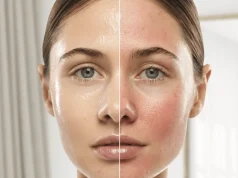
Then it got sensitive. I developed a kind of low-grade redness that I attributed to everything except the obvious cause. I thought it was seasonal. I thought it was my diet. I tried adding more moisturizer to compensate for the dryness, and the moisturizer would pill on top of my already-compromised barrier, and I would feel frustrated and confused and vaguely betrayed by skincare as a concept.
The esthetician looked at my skin and said, very gently, that it was over-exfoliated. My barrier was irritated. I needed to stop the glycolic entirely for at least six weeks and focus on repair ceramides, barrier-supportive ingredients, nothing active.
The counterintuitive cruelty of over-exfoliation is that it makes your skin look worse in ways that feel like they need more exfoliation to fix. Dullness, rough texture, congestion these can all be symptoms of a damaged barrier, and if you interpret them as signs that you need to exfoliate more, you enter a loop that’s hard to recognize from the inside.
I had been in that loop. I just hadn’t known what it was called.
Learning to Slow Down
What changed after that conversation wasn’t really my product lineup. I swapped out the oxidized vitamin C, yes, and I adjusted my SPF application, and I eventually reintroduced exfoliation at once a week rather than three times. But the deeper change was more about pace and attention.
I had been treating my skincare routine as something to optimize and complete, the way you’d optimize a morning workflow. The efficiency mindset made me fast and slightly careless. I wasn’t watching for signs from my own skin because I’d already decided I knew what my skin needed. I had a system, and the system was correct, and incoming information that didn’t fit the system got quietly filtered out.
That’s a comfortable way to be wrong. You feel informed and disciplined right up until someone who actually knows what they’re looking at spends twelve minutes with your face.
There’s something almost embarrassing about realizing you’ve been diligently doing the wrong thing. But I think it’s also worth sitting with because the embarrassment points at something real. Confidence without feedback loops isn’t expertise. It’s just a routine.