
There’s a particular kind of morning where you catch yourself in the bathroom mirror and think: I look exhausted. Not sick, not sad just worn. Like the color has been quietly drained out of you overnight. Most of us reach for the same products we always use, layer them on in the same order, and hope for the best. But freshness in makeup isn’t really about how much you apply. It’s about understanding why certain things make the face read as awake, and others make it sink further into itself.
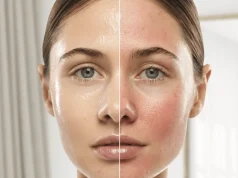
The difference between a face that looks fresh and one that looks done is almost architectural. Fresh skin appears to have dimension light catching some areas, shadow naturally falling in others. Done skin lookscoated. So before any product even touches your face, it’s worth asking: what am I trying to create here? A surface, or an impression of life?
Start With the Skin, Not the Coverage
The single most overlooked step in a morning routine is hydration not moisturizer as an afterthought, but as a deliberate primer for everything that follows. When skin is even slightly dehydrated, foundation settles into fine lines, pores look more prominent, and the overall effect turns flat within an hour. Pressing a damp beauty sponge against bare skin before any base product dramatically changes how makeup sits and moves throughout the day.
Some people swear by facial mists. Others use a light hyaluronic acid serum and let it absorb for ninety seconds before continuing. The specific product matters less than the principle: give your skin something to drink before you start painting over it.
If you’re someone who skips foundation most days which, honestly, more people probably should a tinted moisturizer or skin tint applied with your fingers rather than a brush creates something that looks genuinely skin-like. The warmth of your hands blends product in a way no tool quite replicates. It’s not perfect coverage, but freshness was never about perfection.
The Color Correction Nobody Talks About Enough
Redness and dullness are two of the most common culprits behind a tired-looking face, and neither responds particularly well to just layering on more foundation. A small amount of peach or salmon color corrector under the eyes not a white or lavender brightener neutralizes the blue-gray tones that create that hollow, sleepless look. The peach family works for most medium and fair skin tones. Deeper skin tones typically need a deeper orange corrector.
Here’s the part most tutorials skip: you need almost none of it. A tiny amount, patted in with a finger and set with the lightest dusting of translucent powder, disappears under even minimal concealer. Use too much and you’ll swap one problem for another suddenly there’s a strange warmth radiating from underneath your eyes and you can’t figure out where it’s coming from.
Blush, relatedly, is probably the fastest way to change the entire mood of a face. Not bronzer blush. And not placed heavily on the apples of the cheeks in that rounded, doll-like application that dates back a few decades. Blush that creates freshness sits higher, closer to the outer corner of the eye, and is blended upward slightly toward the temple. It mimics the natural flush that comes from being warm or excited or recently outside. It reads as health rather than makeup.
Eyes That Look Rested (Even When You Aren’t)
Tight-lining applying eyeliner to the inner waterline is one of those techniques that divides people. A dark liner on the waterline makes the eyes look more dramatically defined, but it also makes them look smaller and, depending on your baseline, more tired. A nude or white liner on the lower waterline does the opposite: it enlarges the visible eye area and creates the illusion that the white of your eye extends further. On a dull morning, this alone can be transformative.
Mascara is worth reconsidering too. Most people curl lashes, apply mascara to both upper and lower, and call it done. But skipping the lower lash mascara entirely or applying only the lightest coat removes a lot of what makes eyes look heavy or shadowed. Lower lash mascara, especially when it smudges even slightly over the course of a day, drags the eye downward. Without it, there’s a cleanliness and openness to the eye area that a heavy lash look can’t achieve.
The other thing nobody mentions enough: eyebrows do enormous structural work. A slightly fuller, more defined brow frames everything below it. You don’t need to go bold or change your shape just filling in any sparse areas and brushing hairs upward creates lift that reads as youth across the whole face.
Glow Without Looking Like You Tried
Highlighter has had a complicated decade. It went from subtle to blinding to somewhere in between, and a lot of people aren’t quite sure what version of it still looks current and not overdone. The answer, for freshness specifically, is placement over intensity.
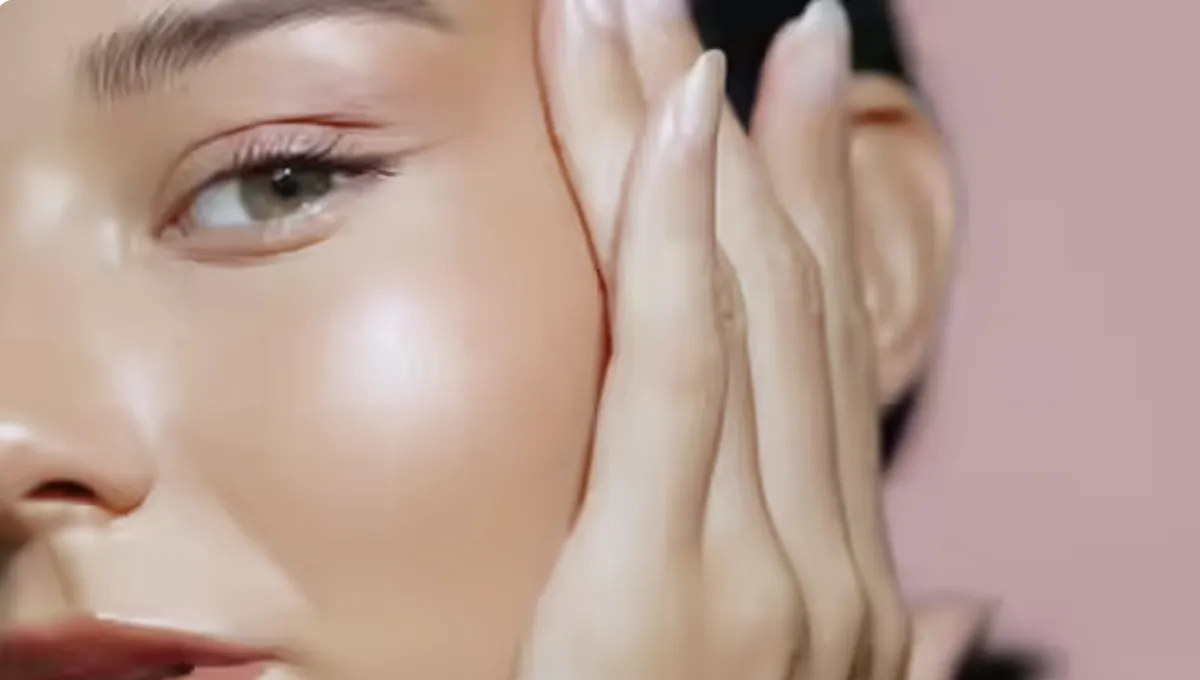
The high points of the face the top of the cheekbone, just below the brow bone, the very center of the upper lip naturally catch light when skin is healthy and hydrated. A light-reflecting product in those spots recreates that effect when your skin isn’t doing it on its own. But it works best when it’s almost invisible you see the light, not the product. A liquid or cream highlighter blended into foundation or skin tint reads more like inner radiance than something applied from outside.
Setting spray, often underestimated, changes the texture of everything it touches. Matte powder becomes skin-like again. Concealer stops sitting on top of the skin and starts looking like it belongs there. A few spritzes after your full routine holding the bottle about a foot from your face and letting the mist fall rather than spraying directly gives everything a cohesion it might otherwise lack. It’s the difference between a finished look and a polished one.
The Timing Problem Nobody Accounts For
There’s a physiological reality that cosmetics tutorials rarely acknowledge: the face changes over the course of the morning. You wake up slightly puffy. Eyes are often a little swollen. Skin is still settling into its daily oil production. Many people apply makeup in that window and are then confused when things look different sometimes better, sometimes worse an hour later.
Drinking a glass of water before you start, doing your skincare, and waiting even ten to fifteen minutes before opening foundation gives puffiness time to subside and skin time to normalize. It sounds tedious. It pays off in a way that no product can replicate. What reads as a foundation problem or a concealer problem is often just a timing problem.
And then there’s lighting. Almost everyone does their makeup in a bathroom with overhead or side lighting and then walks into natural daylight or office fluorescence and wonders why something feels off. If you have any way to position yourself near a window while applying at least your base and blush, you’ll catch what those products actually look like in the light you’ll be living in. It’s a small logistical shift, and the results feel almost unfair.
The Lip That Changes Everything
The mouth is an underrated freshness tool. A bare or nearly bare lip reads differently depending on the rest of the face sometimes natural, sometimes washed out. A lip color with just enough warmth to look like a slightly more saturated version of your natural lip color gives the face a completeness without announcing itself.
Lip liner used all over the lip before color rather than just around the border extends the wear of anything applied on top and, more importantly, gives the lip a definition that reads as structure. It makes lips look inherently more defined without adding visible volume or changing the shape.
The products that work best for a fresh look aren’t always the newest ones or the most expensive. They’re the ones that understand what the face is actually doing and work with it rather than over it. Freshness isn’t a formula it’s more like a conversation between what you’re working with and what you’re trying to say.