
If you’ve ever watched your carefully applied makeup turn into a greasy, pore-clogging disaster by noon or worse, woken up the next morning to a fresh breakout you can trace directly back to your setting powder you already know the particular frustration of having acne-prone skin and still wanting to look polished. The beauty industry spends a lot of time telling you what products to use, but not nearly enough time explaining why certain combinations betray you. That gap is where most people get stuck.
Setting your makeup when your skin is reactive isn’t just about choosing a “non-comedogenic” label and hoping for the best. It’s about understanding what your skin is actually doing underneath all that product, and working with it instead of smothering it.
Why Acne-Prone Skin Reacts Differently to Setting Products
Acne-prone skin tends to have a compromised barrier, excess sebum production, and a tendency toward inflammation. When you layer a setting product on top of that, you’re not just locking in your foundation you’re also locking in everything else: bacteria, dead skin cells, excess oil, and sometimes the very ingredients in your skincare that haven’t fully absorbed. The result is a sealed environment that’s practically a breeding ground for breakouts.
Most setting powders, for instance, are formulated with talc or silica, both of which are generally safe. But the issue isn’t always the star ingredient. It’s the fillers, the binders, the fragrance added to make the product smell expensive, or the bismuth oxychloride that gives pressed powders their silky finish a compound notorious for irritating sensitive, acne-prone skin. Reading a full ingredient list is genuinely non-negotiable if your skin breaks out easily.
Setting sprays introduce their own set of complications. Alcohol-heavy formulas can strip the skin’s barrier and trigger the exact kind of oil overproduction that leads to clogged pores. On the flip side, sprays that are too emollient can slide foundation into creases and pores rather than seal it in place. Finding the right texture for your specific skin type even within the acne-prone category takes some honest assessment.
The Role of Skin Prep in Whether Your Setting Step Works
Here’s something that rarely gets enough attention: what you do before you reach for the setting product determines a lot of what happens after. Skin that’s been properly prepped will hold product differently than skin that was rushed through a quick moisturize-and-go routine.
If you’re using an active ingredient a salicylic acid serum, a niacinamide treatment, a benzoyl peroxide spot treatment those need to be fully absorbed before anything sits on top of them. Niacinamide, in particular, needs time to sink in; applying foundation over it too quickly can create a layer of product that never fully adheres. That instability means it shifts, creases, and potentially migrates into your pores throughout the day.
A lightweight, oil-free moisturizer actually helps setting products work better, not worse. This runs counter to the instinct of many people with oily or acne-prone skin to skip moisturizer entirely, but dehydrated skin overproduces oil to compensate which means that matte finish you worked for disappears in an hour. Hydrated skin, paradoxically, stays less shiny longer.
Primer matters here too, and not every “pore-filling” primer is your friend. Pore-filling primers often work by using silicones to create a smooth surface, which feels great going on but can trap debris if the skin underneath wasn’t completely clean. If you’re going to prime, a thin layer of something with a gel or water-based texture is going to cause far fewer problems than a thick, silicone-heavy formula.
Choosing a Setting Method That Doesn’t Wage War on Your Skin
The pressing technique is genuinely underrated. Instead of dusting powder across your face in long strokes which distributes product unevenly and can push it into pores pressing a damp beauty sponge or a powder puff into the skin allows you to apply just enough product to mattify without overloading any single area. The pressure-based application also helps set product rather than just placing it on top.
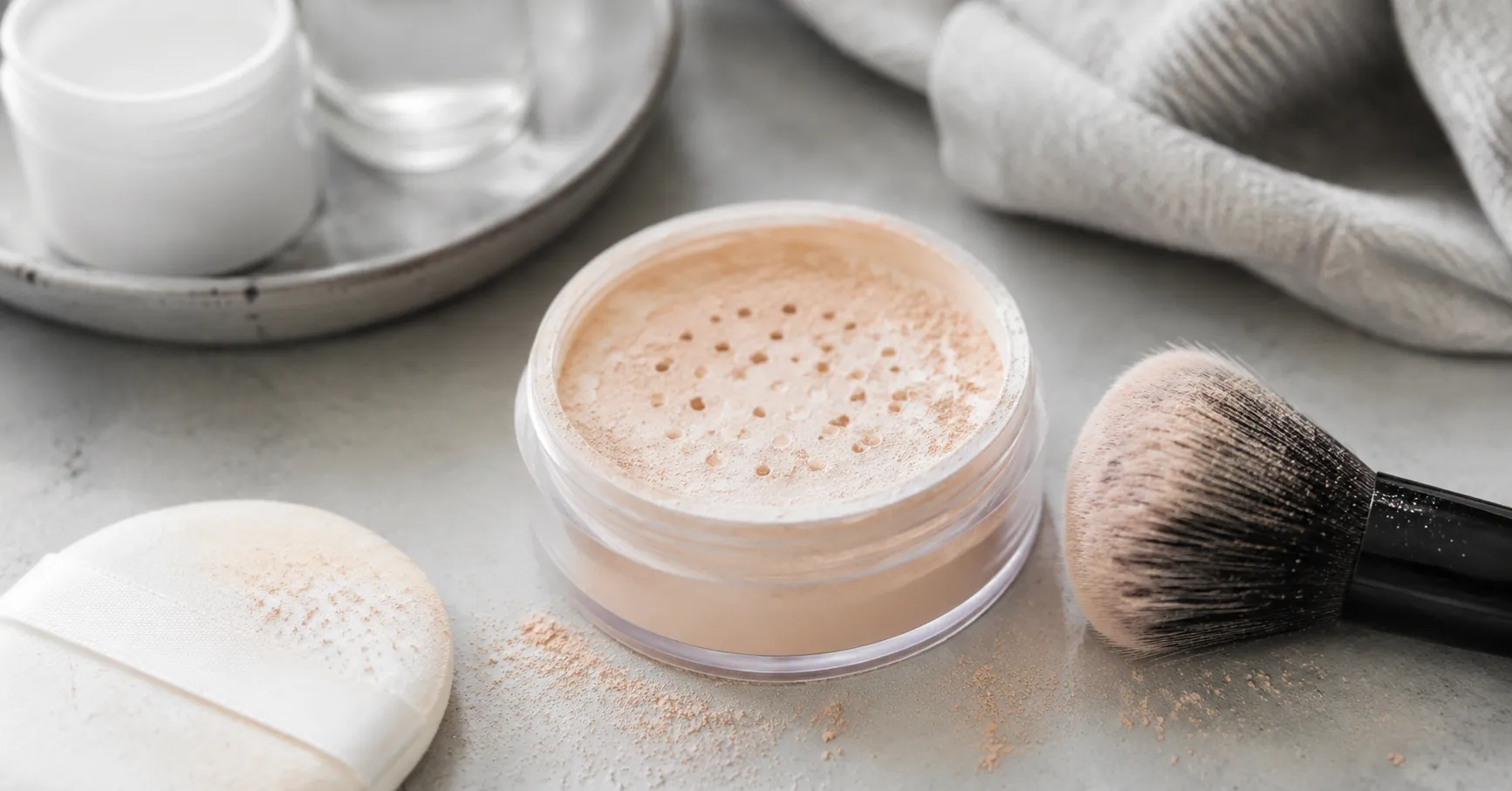
Translucent setting powders tend to be the gentlest option for reactive skin because they carry fewer pigments, fewer potential irritants, and often a shorter ingredient list than pressed powders with color. Loose formulas generally perform better for acne-prone skin than pressed ones because they don’t require binding agents to hold their shape and those binders are often where the pore-clogging potential lives.
Finely milled powders sit on the skin differently than coarser ones. You want something that feels almost imperceptible when applied not chalky, not heavy. Ingredients like rice starch or silica in a finely milled formula can absorb excess oil without sitting visibly on top of the skin or contributing to congestion.
For setting sprays, the formula should be water-based and ideally contain some skin-calming ingredients: aloe, glycerin, green tea extract. These don’t just lock in makeup they also contribute a layer of hydration that keeps the skin from compensating with excess sebum. Spraying from about eight to ten inches away and letting the mist fall rather than actively spraying it in ensures an even, non-saturating application that doesn’t disturb the product underneath.
What to Do When Your Skin Is Already Congested or Breaking Out
Setting makeup on skin that’s actively breaking out requires a lighter hand across the board. Inflamed skin is more permeable, which means products penetrate more easily including comedogenic ingredients that would normally just sit on the surface. On those days, less is genuinely more. A light mist of setting spray, maybe a small amount of powder only on the areas that get oiliest, and calling it done.
There’s also a case to be made for strategic placement setting only the T-zone or the areas that tend to break down fastest, rather than setting the entire face. Concentrated areas of application mean less total product exposure for skin that’s already stressed. If your forehead holds up but your chin tends to get shiny and congested, there’s no rule that says you have to treat both the same way.
One thing worth noting: breakouts that emerge after you start using a new setting product aren’t always allergic reactions. Sometimes they’re purging a process triggered by accelerated cell turnover, typically from active ingredients, that pushes congestion to the surface faster than it would normally clear. The difference between purging and breaking out is location (purging tends to appear where you already get acne) and timeline (it typically resolves within four to six weeks). If a breakout appears in new places or persists beyond that window, the product is the more likely culprit.
The Maintenance Layer Nobody Talks About
Setting makeup is one step, but keeping it set without reapplication methods thatundo your skin’s progress is its own discipline. Blotting papers are one of the few universally low-risk tools for oily, acne-prone skin: they absorb sebum without adding product, without disturbing foundation, and without introducing new potential irritants. Press, don’t rub.
Midday powder touch-ups, while tempting, are where people tend to stack layers and layering product on top of product on top of product is one of the most consistent ways to end up with congestion by the end of the week. If you’re going to refresh, remove what’s already there with a gentle blotting, then add the thinnest possible layer of powder only where you absolutely need it.
Your nighttime routine becomes the reset button. A thorough but gentle double cleanse an oil-based cleanser first to dissolve makeup and sunscreen, followed by a water-based cleanser for the skin itself removes everything that accumulated during the day before it has a chance to settle in overnight. This step is what allows you to run an involved makeup routine during the day without paying for it the next morning.
The skin is doing a lot of work, constantly. What setting your makeup really comes down to is giving it enough room to do that work keeping it protected, comfortable, and unobstructed while still getting the wear and finish you’re after. When those two things stop fighting each other, everything gets easier.