
There’s a particular kind of bag that lives in the back of every fashion lover’s closet the one that holds everything, carries the weight of an entire Tuesday, and somehow still manages to look intentional on the right days. The chunky tote is that bag. Structured or slouchy, leather or canvas, it is the workhorse of modern dressing. But there’s a reason so many people reach for it in the morning and then second-guess themselves in the mirror: carried wrong, it can swallow you whole.
The good news is that looking overwhelmed by your bag is almost never about the bag itself. It’s about proportion, balance, and a handful of styling decisions you probably haven’t thought to question yet.
Understanding What “Bulky” Actually Means
Before you can solve the problem, it helps to name it precisely. When a tote makes an outfit look bulky, one of two things is usually happening. Either the bag is visually competing with the rest of your silhouette adding mass where your body already reads as wide or the carry position is creating a line that flattens and broadens rather than lengthens and defines.
A chunky tote at the hip, for example, draws the eye sideways. Carry that same bag at the elbow with a slightly higher placement, and suddenly the line reads vertical. The bag hasn’t changed. Your proportions have.
This is the first shift in thinking that makes everything else possible: you are not fighting your bag. You are working with the geometry of your whole outfit to create the illusion you want.
The Silhouette Equation
Fashion people have talked about balancing silhouettes for decades, but it usually comes up in the context of tops and bottoms. The bag rarely gets included in that conversation, and it should be front and center.
A chunky tote has visual weight. It occupies space. So when you build an outfit around one, treat it like any other voluminous element and balance it accordingly. If you’re carrying something oversized, the rest of your outfit needs to be tight, tailored, or lean in contrast.
Wide-leg trousers plus an oversized tote plus a boxy jacket is a lot. Each individual piece might be beautiful, but together they compete for space. Swap the jacket for something fitted and the whole look settles. The tote stops being a problem and starts being the statement.
The same logic runs in reverse. If you prefer a relaxed, flowing silhouette, you can still carry a chunky tote but anchor the look with something that creates a defined line. A fitted mock-neck underneath a linen shirt dress. A belt over a relaxed blazer. Give the eye somewhere to land, and the bag becomes part of a balanced composition rather than a contributing factor to chaos.
Where You Hold It Changes Everything
Carry position is probably the most underestimated variable in bag styling, and it does more work than any outfit formula.
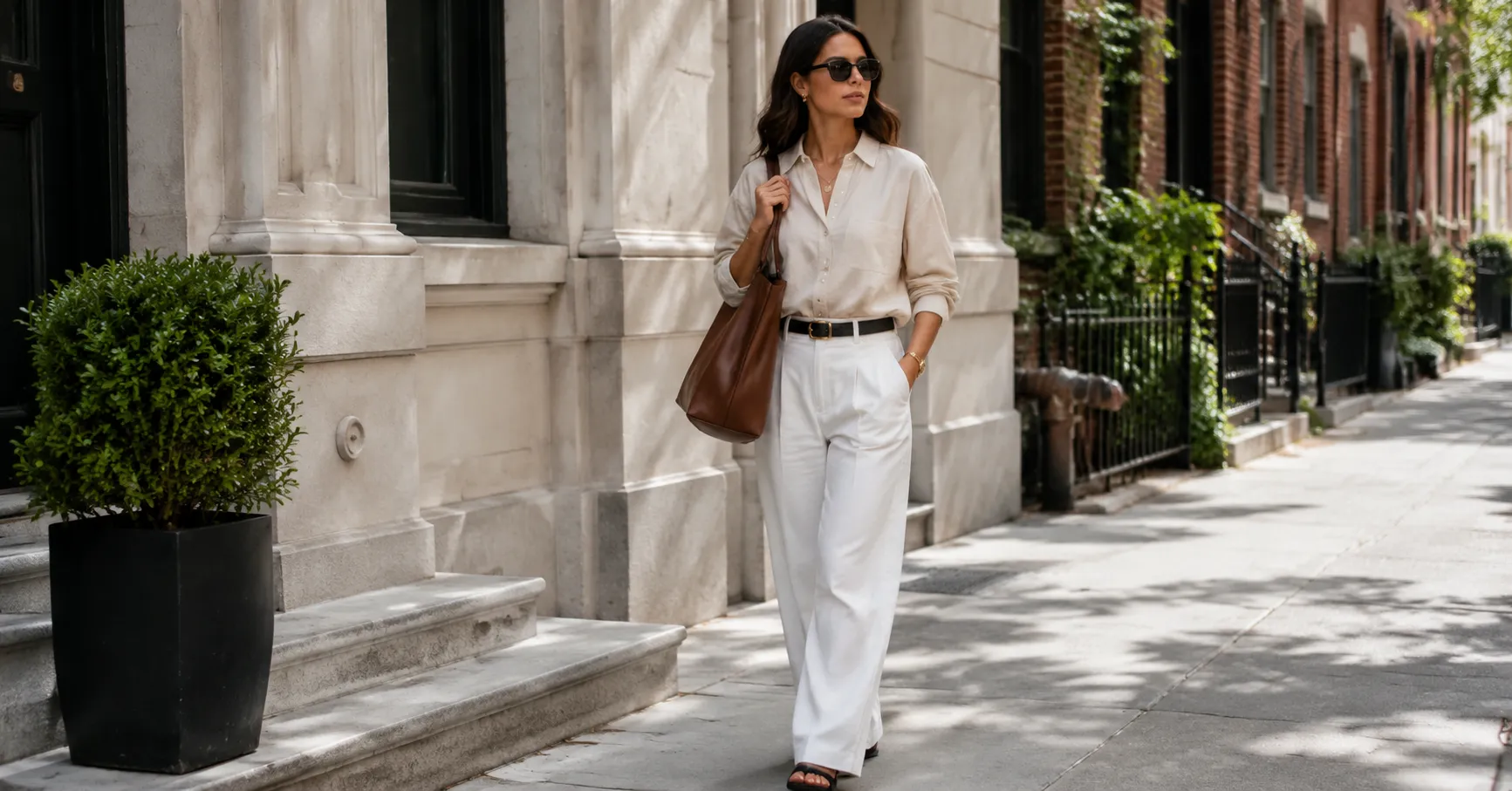
Short handles at the elbow create a slightly elevated, polished silhouette. The bag sits high against your body, which visually lifts your whole frame. This position works especially well with sleek, minimal outfits a straight-leg trouser, a crisp button-down, clean sneakers. The tote becomes structured punctuation.
Holding a tote by the straps in your hand rather than letting it hang at the elbow drops the visual weight lower. This can elongate the leg line, which is useful if your outfit already reads as top-heavy. But it also means the bag swings more freely, and a very large tote in this position can start to look like you’re carrying luggage. Keep your stride deliberate, let the bag rest naturally at your side rather than drifting forward, and it reads as intentional rather than effortful.
Then there’s the one-shoulder option, where the tote sits behind you slightly as you walk. This works beautifully with fuller skirts or wide-leg pants because the bag tucks away from the visual front of your body, reducing its perceived mass without making it disappear.
Color and Contrast as a Slimming Tool
This one surprises people. You might think a neutral tote beige, cognac, black would be the safest choice when you’re worried about looking bulky. And in many cases, you’d be right. But the more powerful principle isn’t about the bag’s color in isolation; it’s about how much contrast exists between the bag and your outfit.
High contrast draws the eye sharply to the point of difference. A black bag against a white outfit makes the bag visible, specific, clearly separate. That can be striking, but it also means the bag has a defined presence that adds to the visual weight of the look.
Low contrast, on the other hand, blends. A camel tote against a camel coat. A soft brown bag against rust-toned trousers. When the bag tones into the outfit, it doesn’t disappear it integrates. The look becomes monolithic and streamlined, and a large bag in that context reads as architectural rather than excessive.
Some of the most effortlessly chic street style images you’ll see involve a huge tote in a tone-on-tone outfit. The bag is enormous, but because it’s not fighting for visual separation, it reads as part of a unified whole.
What You Wear on Top Matters More Than You Think
The shoulder and upper arm area is where a tote lives. Which means whatever you’re wearing there directly affects how the bag reads against your body.
Anything that adds volume to the shoulder puffed sleeves, oversized shoulder seams, heavy knits will compete with the tote for that visual real estate. The result is a wide horizontal band across the top half of your body that can read as shapeless.
A fitted sleeve, a simple rib-knit, a structured blazer with clean shoulders these give the bag room to exist without crowding. Your silhouette stays defined, and the tote hangs from it naturally rather than merging with it.
This doesn’t mean abandoning volume at the top altogether. It means being selective about where that volume lives. A voluminous sleeve that tapers to the wrist can work beautifully; it gives shape to the arm and keeps the point of contact with the bag handle clean. A boxy sweatshirt that widens at the shoulder and the hem creates a boxy rectangle, and a boxy tote placed on top of that is a boxy rectangle on top of a boxy rectangle.
The Unexpected Power of Vertical Lines
One of the oldest styling tricks in the book still works because the eye genuinely follows lines. Vertical elements a long necklace, an open-button shirt worn over a tee, a long cardigan, even a scarf draped downward pull the gaze up and down rather than across. They make the body read as taller, leaner, and more defined.
When you’re carrying a chunky tote, a vertical line running through your outfit actively counteracts the horizontal mass the bag adds at your side. It reestablishes direction. The look doesn’t widen; it elongates.
A long pendant necklace is one of the simplest ways to do this. So is wearing a v-neck, which creates a natural downward arrow from the collarbone. Or consider a scarf knotted loosely at the neck and allowed to fall it’s casual, it’s textural, and it does structural work that most people wouldn’t expect from a scarf.
Scale Is Relative, Not Fixed
Here is the thing about chunky totes that nobody really says out loud: they don’t look bulky on everyone to the same degree, and that’s not about size or body type in the way you might assume. It’s about scale, which is a relationship, not a fixed property.
A petite person in a fitted pair of cigarette pants and a structured blazer can carry an enormous tote and look like she owns the room. A taller person in an oversized everything might carry a medium-sized tote and look overwhelmed. The bag is measured against everything around it.
Which means the solution is rarely “get a smaller bag.” It’s almost always “change the relationship between the bag and the rest of the outfit.” Fit something. Define a waist. Add a vertical line. Tone the color. Shift the carry position. These adjustments cost nothing and they work every time, because they’re not fighting the bag they’re making room for it.
A chunky tote that looks like it belongs stops the conversation about whether it’s too much. It just looks like you.