
Beginner’s Guide to Switching to Clean Beauty Products
There’s a moment a lot of people have standing in the shower, squinting at the back of a shampoo bottle, trying to pronounce something like “sodium laureth sulfate” or “butylated hydroxytoluene” and thinking: what exactly am I putting on my body? That moment of pause is usually where the clean beauty journey begins. Not with a grand declaration, but with a quiet, slightly unsettling question.
The clean beauty movement has been building for years, and it’s no longer a niche concern for wellness obsessives. It’s gone mainstream enough that major retailers now have dedicated clean beauty sections, and legacy brands have quietly reformulated products they swore were fine five years ago. But for someone just entering this space, the whole thing can feel overwhelming fast. There’s conflicting information everywhere, the word “clean” itself has no legal definition, and the marketing can be just as misleading as the ingredients you were trying to avoid.
So let’s slow down and actually think through what switching to clean beauty means practically, realistically, and without the fear-mongering.
What “Clean Beauty” Actually Means (And Doesn’t)
Here’s the uncomfortable truth upfront: there’s no regulatory body that certifies a product as “clean.” The FDA doesn’t define it. No government agency enforces it. When a brand slaps “clean” on its label, that claim is entirely self-defined. One brand’s clean might still include synthetic fragrances. Another might exclude a long list of ingredients that most dermatologists consider perfectly safe.
This isn’t a reason to dismiss the movement it’s a reason to understand it better. Clean beauty, in its most useful interpretation, refers to products formulated without ingredients that have credible associations with harm: hormone disruption, skin irritation, environmental toxicity, or bioaccumulation. The commonly flagged culprits include parabens, phthalates, formaldehyde-releasing preservatives, certain synthetic fragrances, oxybenzone in sunscreens, and PFAS compounds. Whether every one of these is definitively dangerous at the concentrations found in cosmetics is still debated in scientific literature but the precautionary logic holds weight, especially for products used daily over years.
What clean beauty asks you to do, at its core, is pay attention. That shift in itself has value.
Why the Ingredient List Is Your New Best Friend
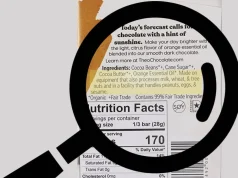
Most people have never read a full ingredient list on a beauty product. The packaging is designed to make sure of that compelling visuals, romantic copy about volcanic ash or Icelandic spring water, and a font size on the back that requires reading glasses. Flipping past all of that and actually reading what’s in the formula is the most important skill you’ll develop in this transition.
Cosmetic ingredients in the US are listed in descending order by concentration, followingINCI (International Nomenclature of Cosmetic Ingredients) naming conventions. That means the first five ingredients make up the bulk of what you’re actually applying. If the first ingredient in your moisturizer is water, the second is a silicone, and the third is a fragrance blend, you have a pretty clear picture of what you’re mostly putting on your skin.
A few ingredients worth learning to identify on sight: “fragrance” or “parfum” is a catch-all term that can legally conceal hundreds of undisclosed chemicals this is one of the biggest blind spots in conventional beauty. Parabens end in “-paraben” (methylparaben, propylparaben), making them relatively easy to spot. Formaldehyde releasers are trickier they go by names like DMDM hydantoin, imidazolidinyl urea, and quaternium-15. You don’t need to memorize all of this immediately. The Environmental Working Group’s Skin Deep database and the Think Dirty app both let you search products and individual ingredients for safety ratings, which is enormously helpful when you’re starting out.
The Case Against Doing It All at Once
One of the most common mistakes people make when switching to clean beauty is trying to overhaul everything immediately. They throw out all their existing products, spend a few hundred dollars on new ones, and then feel overwhelmed, broke, or disappointed when a “cleaner” product doesn’t perform as well as what they replaced.
A much more sustainable approach: replace things as they run out. When your current foundation is gone, that’s when you research a cleaner alternative. When your body lotion hits the bottom, take the time to find a replacement you feel good about. This approach is gentler on your wallet and gives you time to actually evaluate each new product how it feels, whether it works for your skin type, whether you’d buy it again.
There’s also a useful prioritization principle here. Some products stay on your skin all day (moisturizers, foundations, body lotion) while others are rinsed off quickly (shampoo, body wash, face wash). Extended-contact products arguably deserve more scrutiny than rinse-off ones. Similarly, products used on compromised or sensitive skin or on children warrant closer attention than occasional-use items.
Decoding the Certifications That Actually Mean Something
Since “clean” is unregulated, third-party certifications become a useful shortcut. They’re not perfect, but they add a layer of accountability that self-labeling doesn’t.
COSMOS and ECOCERT are European certification systems for organic and natural cosmetics that have fairly rigorous ingredient and manufacturing standards. The MADE SAFE certification, run by a US nonprofit, screens for known toxic chemicals using a comprehensive hazard list. EWG Verified means a product has met the Environmental Working Group’s standards, which are based on their Skin Deep database. The USDA Organic seal, when it appears on a beauty product, certifies that the plant-derived ingredients meet organic agricultural standards though it doesn’t speak to synthetic components.
None of these are magic stamps of perfect safety. But when you’re standing in a store trying to choose between two unfamiliar brands, a certification from one of these bodies is a reasonable tiebreaker.
Performance Is a Real Conversation
Let’s be honest about something the clean beauty world doesn’t always want to admit: some conventional formulas work exceptionally well because of the very ingredients being avoided. Silicones give skincare products that smooth, gliding texture. Certain preservatives extend shelf life effectively. Synthetic fragrances are consistent in a way that natural alternatives often aren’t. The gap between conventional and clean beauty performance has closed dramatically over the past decade, but it hasn’t fully disappeared in every category.
Sunscreen is the most discussed example. US-approved clean mineral sunscreens (zinc oxide and titanium dioxide) are genuinely excellent, but many people find them heavier or more likely to leave a white cast than their chemical counterparts. Waterproof mascara is another category where clean alternatives have historically underperformed. Long-wear foundation is getting better but remains a work in progress for many formulations.
The goal isn’t to convince yourself that every clean product is superior. It’s to make informed trade-offs where they matter most to you. If you have no interest in giving up your specific mascara, that’s a reasonable choice. If you’re most concerned about what’s on your skin for eight hours a day, that’s where you focus your energy.
The Bigger Picture You’ll Eventually Run Into
The further you go down this path, the more you start to notice that clean beauty is entangled with broader questions about environmental impact, about labor practices in ingredient sourcing, about packaging waste, about the economics of wellness being accessible only to people who can afford premium price points. A clean moisturizer in a single-use plastic tube, shipped in excessive packaging, produced from ingredients harvested by underpaid workers, starts to complicate the simple narrative of “clean is better.”
This isn’t a reason to feel paralyzed. It’s an invitation to hold the complexity lightly. You might start caring about ingredient safety, and six months later find yourself also reading about palm oil sourcing or reef-safe sunscreen formulations. The entry point doesn’t determine the whole journey.
What tends to happen for most people who stick with this shift is that their relationship to consumption changes not just in beauty, but more broadly. You start buying less, choosing more carefully, and being more skeptical of marketing language across the board. That quiet moment in the shower, squinting at the label, turns out to be the beginning of a much longer, more interesting conversation with yourself about what you actually want to put into the world and what you want the world to put on you.