
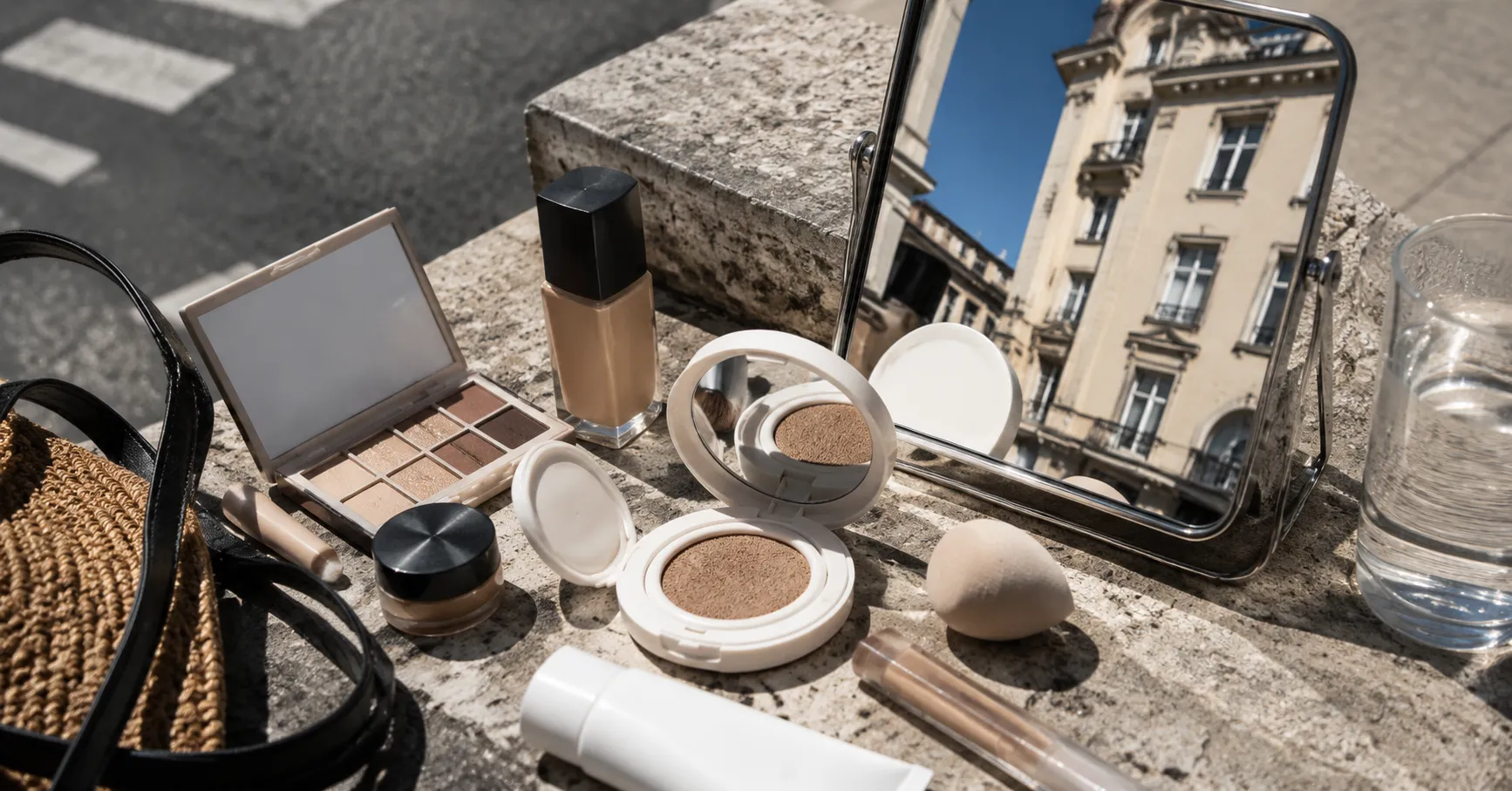
You walk outside and catch your reflection in a shop window and everything falls apart. Inside, your foundation looked seamless. Out here, it’s sitting on top of your face like a filter that didn’t quite load. Gray. Flat. Mask-like. You know that look. Most of us have been there.
Getting your base to actually look like skin not a surface that’s been painted to resemble skin, but real, alive, breathing skin is one of those things nobody teaches you properly. There are a million tutorials telling you which products to buy. Almost none of them talk about why it goes wrong in the first place, specifically in natural light.
So let’s start there.
Why Foundation Looks Different Outside
Sunlight is ruthless. It comes from above, hits at angles, bounces off surfaces, and shows texture the way indoor lighting simply doesn’t. A ring light in your bathroom is soft, forgiving, and directional. Daylight is none of those things.
Here’s the part that catches people off guard: it’s not always the formula that’s the problem. It’s the layercount, the finish, and this is the one people skip the way the foundation is sitting on your skin’s texture rather than with it.
Cakey base? Almost always too much product over unprepped skin. Flashback in photos? Your setting powder is reflecting UV light. That weird gray cast? You might be using a formula that contains too much silicone or white pigments that don’t photograph or, honestly, appear the way they do in the tube.
Prep Is Where the Real Work Happens
Before you open a single product, your skin needs to be ready to receive it. This sounds obvious. But I spent years treating skincare and makeup as two completely separate steps when they’re actually one continuous process.
The biggest mistake I made for a long time was applying primer over moisturizer that hadn’t fully absorbed. My skin felt fine. My base looked fine for about forty minutes. Then everything started sliding, and by the time I got outside, I had that distinctive creased-under-the-eyes situation that no amount of setting spray could save.
Give your moisturizer at least five minutes. If you’re using a serum underneath, give it ten. Your skin needs to stop being wet before you build anything on top of it.
Primer matters more than most people admit, but the wrong primer is worse than no primer at all. If you have dry skin, a silicone-based primer can sit in patches and cause your foundation to pill. If you have oily skin, a hydrating primer will cause everything to move by noon. Match the primer to your skin type, not to the brand that made your foundation.
How to Apply Foundation for a Skin-Like Finish
Less is actually less. And also more. Bear with me.
Using less product per layer and building gradually is the single biggest shift that changes how a base looks in natural light. One pump applied in a thin layer, buffed in with a slightly damp sponge that gets you to maybe50% coverage. A second layer, only where you need it, gets you to 80%. That remaining 20% can stay as-is, because real skin has variation.
That’s the counterintuitive part: people want to cover everything, and that’s exactly what makes foundation look fake. Skin has freckles, slight discoloration, texture, pores. When you erase all of it, the result stops reading as a face and starts reading as a mask especially outside, where nothing is forgiving.
Blend down your neck. Always. You would think this goes without saying in2026, but I still see the jawline line. It haunts me.
The Sponge vs. Brush Debate
A damp sponge tends to give a more natural result because it sheers out the product slightly as it presses it in. A brush gives more coverage and more control. Neither is wrong but outside, in daylight, the sponge finish usually reads more like skin. The stippling motion pushes foundation into texture instead of sitting on top of it.
That said, there are people whose skin genuinely looks better with a brush. Maybe I’m not entirely right about this. Your specific formula and skin type will tell you more than any blanket rule can.
Setting Without Killing the Skin Effect
Setting powder is where most bases go wrong in sunlight. Too much of it especially a white or translucent powder with any brightening agents picks up daylight and bounces it back. You end up looking like you applied dry chalk to your face.
Use a finely milled setting powder that’s color-matched, not white. Apply it only where you actually need it: the T-zone, under the eyes if you used a lot of concealer, the sides of the nose. Use a fluffy brush with a light hand. Press, don’t swipe.
Here’s something nobody tells you: you can skip setting powder on the outer thirds of your face entirely the cheeks, temples, jawline edges and let that skin breathe and move naturally. The contrast between the set areas and the un-set areas actually mimics the way real skin behaves. Some areas are drier. Some are more alive. That variation is what reads as skin.
What to Do When You’re Already Outside
So you’re at brunch let’s say you’re at a patio restaurant in late morning light, which is genuinely the most aggressive natural light there is and you can feel your base isn’t doing what you wanted.
A setting spray applied from about twelve inches away can help melt layers together and reduce that powdery, surface-sitting look. Not a drugstore spray that’s mostly water and smells like a swimming pool, but something with actual skin-conditioning ingredients. Mist, fan with your hand, done.
The other thing worth knowing is that skin care products applied under makeup can cause things to look worse by midday even if they looked great at 9 a.m. Heavy oils especially. If you’re consistently finding your base falls apart outside by late morning, look at what’s underneath, not just what’s on top.
One Thing That Changed Everything for Me
A makeup artist once told me not in a tutorial, just in conversation, which is where all the actually useful beauty information lives that she matches foundation shade not to the inside of her wrist, not to her jawline in store lighting, but to the back of her hand in direct sunlight, standing outside the door of the shop.
That sounds extreme. It changed everything.
Half of the “my foundation looks off outside” problem is a shade and undertone mismatch that only shows up in natural light. Pink-undertoned foundations go gray in sunlight on neutral or olive skin. Foundations that are slightly too light flatten the face in outdoor photos. The shade that matches inside a Sephora may be wrong for you outside in actual daylight and no amount of technique will fix a shade that’s working against your skin.
Does it take an extra five minutes to step outside and check? Yes. Is it worth it every single time? Also yes.
Getting your base to look like skin in sunlight isn’t about finding the magic product. It’s about understanding what sunlight does, learning how your specific skin behaves under it, and building with that in mind layer by layer, with intention, and with a little less product than you think you need.