
There’s something quietly powerful about a neutral outfit. The beige trench coat, the oatmeal linen trousers, the ivory silk blouse they carry a kind of visual restraint that reads as confident, composed, even a little mysterious. But at some point, every devotee of the neutral palette faces the same quiet crisis: the outfit is polished, yes, but it feels like it’s waiting for something. A spark. A reason to look twice.
That’s where the purse earns its title as the most underestimated tool in a wardrobe.
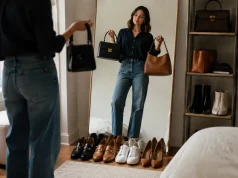
Unlike a statement necklace or a bold shoe, a colored bag doesn’t compete with your silhouette it completes it. It functions like the last brushstroke on a painting: small in proportion, decisive in impact. And yet so many people reach for the black tote out of habit, the tan crossbody out of safety, and miss the enormous creative leverage sitting right there in their closet.
Why the Purse Works Better Than You Think
Think about how the eye moves across an outfit. It scans, briefly, then settles. A well-placed accent color at the arm or hip exactly where a bag tends to live lands at a natural focal point. Designers know this. That’s why runway looks so often pair restrained clothing with an arresting accessory: the bag becomes the editorial punctuation.
The other reason bags work so well for color is risk tolerance. Shoes in a bold hue require you to commit your entire lower body to the idea. A colored statement blazer demands that your face and upper body hold their own against it. A bag? You can put it down. You can tuck it under your arm. You can pull focus toward it or away from it just by how you carry it. That flexibility makes it ideal for anyone who loves color in theory but gets nervous about it in practice.
Understanding the Neutral Base Before You Add Anything
Not all neutrals are created equal, and understanding your base is what separates an intentional look from an accidental one. Neutrals fall into two broad families: warm and cool.
Warm neutrals camel, ivory, sand, warm white, tan, blush carry yellow or orange undertones. Cool neutrals slate grey, icy white, charcoal, taupe with a purple cast lean toward blue or green. This distinction matters enormously when choosing your accent color.
A warm neutral base like a camel coat over cream trousers will harmonize beautifully with earthy, saturated pops: burnt orange, deep olive, warm cognac red, or even a rich terracotta. These colors feel native to that palette. They don’t look added; they look found.
On a cool neutral base the kind built around grey, navy-adjacent tones, or cool crisp whites you want your accent to match that temperature. Cobalt, forest green, burgundy, plum, and even soft lavender all do extraordinary things against cool grey or charcoal. They don’t clash; they vibrate.
Getting this wrong isn’t catastrophic. But getting it right makes the difference between an outfit that people notice and one that people remember.
Choosing the Right Color for the Right Effect
Once you’ve identified your neutral base, the next question is: what kind of effect do you want?
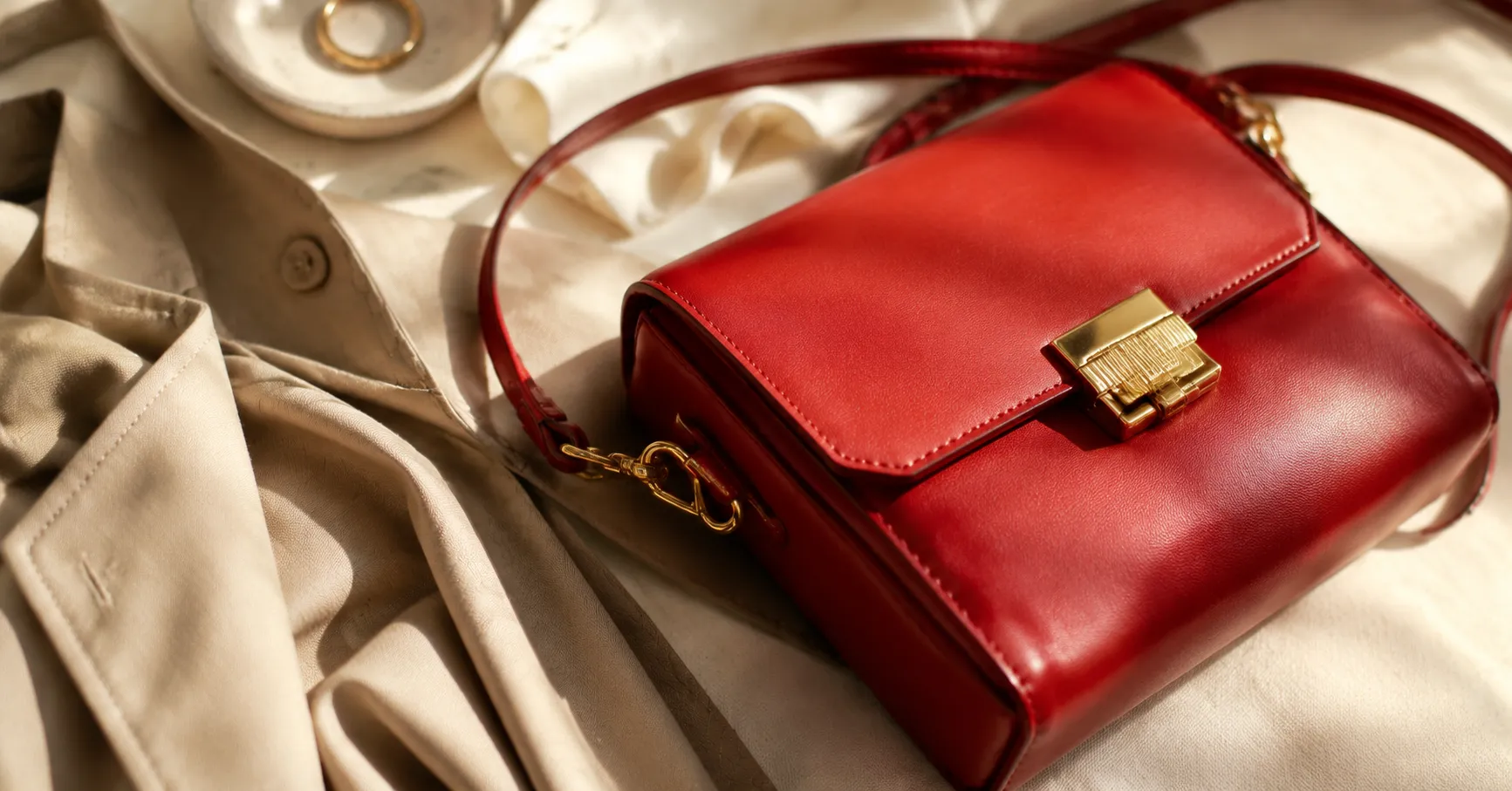
If you want energy without aggression, go for a warm red or a bright coral. These colors catch the eye immediately but don’t read as confrontational in the same way a neon or a cobalt can. Against oatmeal, cream, or camel, a tomato-red bag brings life to the look without overwhelming it. It’s the color equivalent of turning up the volume two notches noticeable but not jarring.
If you want polish and depth, reach for something jewel-toned. Emerald, sapphire, deep amethyst. These colors have weight. Against a sophisticated neutral base like greige or soft grey, they don’t read as playful they read as intentional and expensive. A structured emerald green tote over a grey cashmere sweater and stone-colored wide-leg trousers is the kind of combination that makes people assume you own a lot of art.
If you want to feel playful without fully committing to loud, try a bag in a color that sits close to your neutral on the color wheel but still registers as “different.” A dusty pink bag against a warm white outfit. A soft sage green against grey. These picks give you the freshness of color without the drama. They’re whispering, not announcing.
Yellow, it’s worth noting, deserves its own paragraph. Yellow is the most polarizing accent color in this space because it either illuminates a neutral outfit or makes it look jaundiced, and the gap between those outcomes is narrow. Against bright white or a clean ivory, mustard or marigold yellow can be extraordinary bold, modern, full of personality. Against warm beige or sand tones, however, yellow risks blending into the base or creating an uncomfortable clash of undertones. The rule here: trust the contrast. Yellow needs a crisp white or a deep neutral to sing.
Bag Shape as Part of the Color Conversation
Here’s something that often gets overlooked: the impact of a color changes depending on the shape of the bag carrying it. A boxy, structured bag in a bright color reads as controlled and fashion-forward. The rigidity of the form contains the color, makes it feel deliberate. A slouchy hobo or a soft bucket bag in the same color reads completely differently more effortless, more bohemian, like the color happened to you instead of the other way around.
Neither is better. But knowing the difference lets you use shape as a secondary dial in the same moment you’re choosing color.
A cobalt blue in a sleek, geometric mini bag over a grey suit is a very different statement from a cobalt blue in a supple leather tote carried against a linen shirtdress. Same color, almost entirely different energy. One is a museum opening; the other is a coastal lunch.
The size of the bag also shifts how prominent the color reads. A small crossbody in cherry red offers a subtle wink. A large tote in the same cherry red becomes the main event. If you’re new to bold bag color, starting smaller is a genuine strategy not timidity, just calibration.
When One Bag Isn’t Enough: Building a Color-Aware Wardrobe
Once you start using bags as color anchors, it’s difficult to stop. And at some point, the question shifts from “which bag do I carry today?” to “what colors should I invest in?”
The most versatile single purchase is almost always a bag in a warm, saturated red specifically something in the family of brick, tomato, or cherry rather than a cool, bluish red. This version of red works against nearly every neutral and reads as both classic and current. It’s the one bag that functions in spring, autumn, and winter with equal conviction.
After red, the most strategic second purchase is something in a jewel tone your personal preference, but with an eye toward your most-worn neutrals. If grey dominates your wardrobe, lean toward sapphire or plum. If your closet runs warm, emerald or deep teal will serve you across dozens of combinations.
Bright yellow and orange are wonderful but contextual. They work spectacularly when they work and they create genuine friction when they don’t. Think of them as the spices rather than the base ingredients of your bag collection.
The Subtle Art of Not Overdoing It
The one failure mode worth addressing is the instinct to double down. When you’ve committed to a bold bag, the temptation is to add another color element a scarf, a bright earring, a printed belt to “complete” the look. Resist this almost every time.
A single color accent against a neutral base is a conversation. Two color accents are an argument. The neutrals in your outfit are doing their job precisely by receding, giving your bag the room to breathe and be seen. Adding more color competes with that hierarchy rather than reinforcing it.
If you genuinely want to incorporate a second element, let it echo rather than amplify. A bag in warm red and a tiny sliver of that same red in a nail polish or a very small earring repetition, not addition. The look stays coherent.
Dressing well has always been about knowing which decisions carry weight. The colored purse, carried with intention against a quiet neutral backdrop, is one of those decisions that costs almost nothing in effort and returns something disproportionate in impact. Not because color is loud, but because restraint, when it finally breaks, says everything.