
There’s a particular kind of overwhelm that hits you the first time you walk into a beauty section with the intention of actually buying something. The fluorescent lights, the mirrored displays, the sheer number of lipstick shades that are basically the same but somehow twelve dollars apart it can make you want to turn around and go home with nothing. Most people who are new to makeup don’t have a clear-eyed guide standing next to them saying, “you don’t need half of this.” So they either overbuy, get intimidated and underbuy, or spend money on the wrong things entirely.
Building a makeup bag from scratch isn’t about accumulating products. It’s about making intentional choices that respect both your face and your budget. And that requires a completely different framework than the one most beauty marketing pushes on you.
Start With Your Skin, Not With What Looks Good on Someone Else
The single most expensive mistake beginners make is buying products without understanding their own skin first. Foundation that photographs beautifully on a dry-skinned influencer can look cakey and patchy on someone with oilier skin. A concealer that disappears beautifully under the eyes of someone in their thirties may crease heavily on someone younger with different texture around that area.
Before you spend a dollar, spend a week just observing your skin. Is it oily by midday? Does it get tight and flaky in winter? Do you have redness, hyperpigmentation, or pretty even tone? This isn’t vanity it’s research. Knowing whether you have warm, cool, or neutral undertones will save you from buying three foundations in the wrong shade family, which is one of the most common and quietly expensive beginner errors.
Most beautycounters at department stores will match your foundation shade for free. Take advantage of this. Even if you end up buying the drugstore version of what they recommend, you’ll at least know your number.
The Actual Essentials and Why This List Is Shorter Than You Think
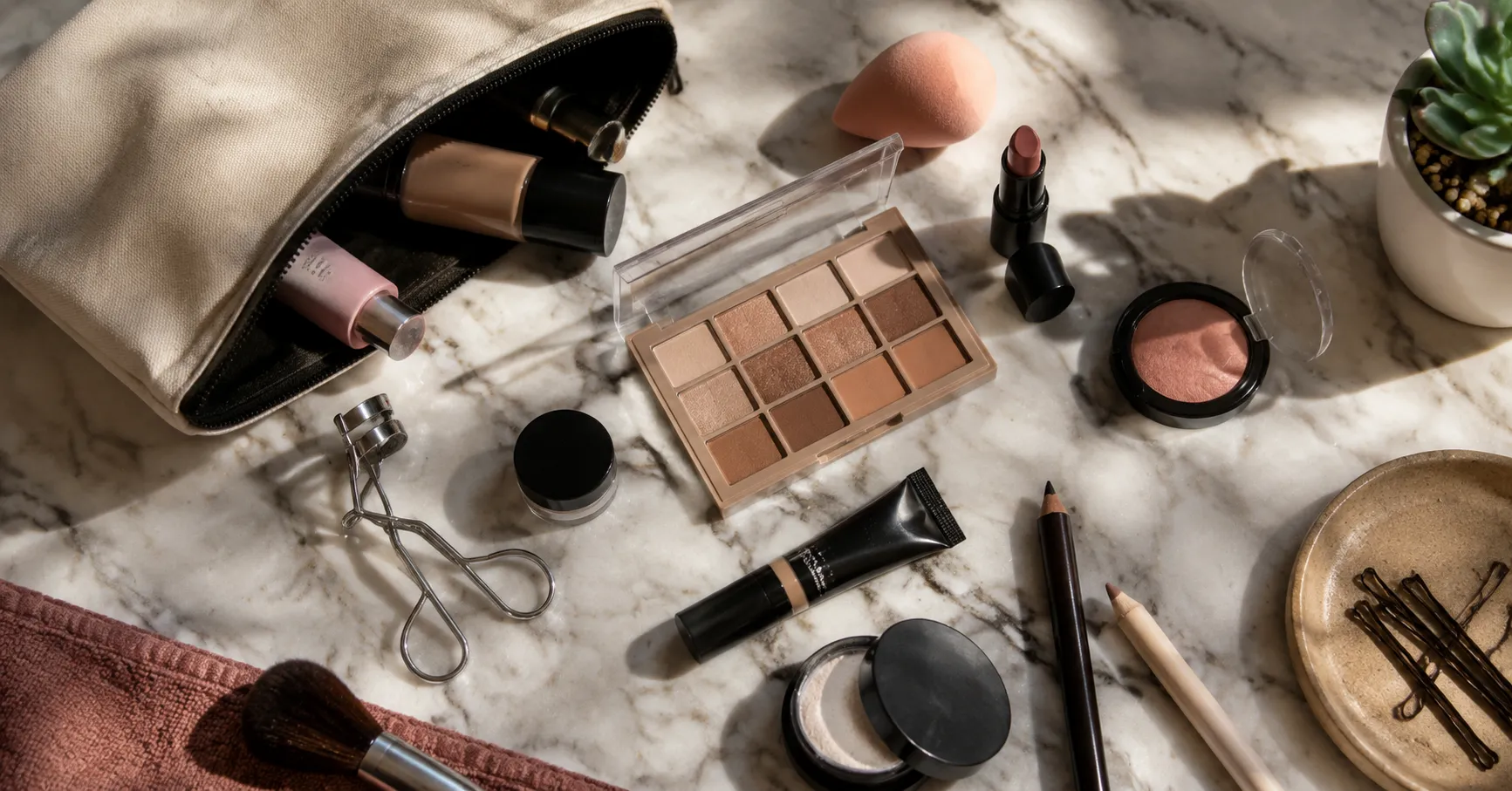
A functional beginner makeup bag doesn’t need thirty products. It needs maybe seven or eight done right. The goal isn’t a full face every day; it’s having the tools to enhance what you already have when you want to.
A tinted moisturizer or light-coverage foundation is the place most people want to start, and it’s also where they spend too much too fast. The drugstore has genuinely excellent options Maybelline’s Fit Me line and L’Oréal’s True Match have held their own against products that cost four times as much. You do not need to start at Sephora.
Concealer comes next, and it earns its keep. A good concealer under the eyes and over any spots can do more for a “put together” look than any other single product. Again, the drugstore delivers here. e.l.f. and NYX both have concealers that outperform their price tags.
A brow product is something most beginners overlook, and it’s one of the highest-impact additions to any routine. Brows frame everything. You don’t need a complicated kit a simple brow pencil or powder in a shade that matches your hair color will do.
Mascara is non-negotiable for most people, and it’s also one of the few categories where the drugstore consistently beats luxury. Dermatologists frequently point out that mascara should be replaced every three months anyway, so there’s little logic in spending thirty dollars on something you’ll throw away in twelve weeks.
A lip product rounds things out. This can be a tinted lip balm, a sheer gloss, or a lipstick depending on your preference. If you’re just starting out, a tinted balm pulls double duty it keeps your lips hydrated and adds color without requiring precision.
That’s it for a first bag. Blush, bronzer, eyeshadow those are wonderful, but they’re round two. Getting the base right first means you’ll understand your face better before you start adding dimension and color.
Where to Actually Shop (and Where Not To)
The beauty industry has an enormous incentive to make you believe that price correlates with quality. In some categories, it does. In most beginner categories, it doesn’t.
Drugstore brands like e.l.f., NYX, Wet n Wild, Maybelline, and L’Oréal have invested heavily in formulation over the past decade. e.l.f. in particular has become notorious in the beauty community for making dupes of high-end products at a fraction of the cost their Power Grip Primer, for instance, is widely compared to a primer that costs six times as much.
If you do want to invest in one higher-end product, make it something that sits on your skin all day, like foundation or skincare-hybrid products. Save on the fun stuff eyeshadow, gloss, nail color where the gap between drugstore and luxury is narrowest.
Discount beauty retailers like Ulta (especially during their21Days of Beauty sale) and online platforms like Amazon for drugstore brands can stretch your budget further. Be cautious about buying certain products especially anything liquid from third-party Amazon sellers, as counterfeits exist. Stick to reputable sellers or go directly to the brand’s website.
TJ Maxx and Marshalls often carry legitimate overstock from mid-range brands at steep discounts. This is an underrated option that doesn’t get talked about enough.
The Myth of the “Starter Kit”
Influencers and brands love selling the idea of a curated starter kit a neat bundle that promises to give you everything you need in one convenient purchase. Most of them are a bad deal. You end up paying a bundled price for products you might not need in shades chosen for no one in particular.
The exception is if a single brand offers a sampler or mini kit that lets you try their products before committing to full sizes. Those can be smart, especially for foundations and concealers where shade-matching is critical and returns are difficult.
What serves beginners better than a kit is a clear spending ceiling. Decide before you walk in or open a tab what you’re willing to spend total. Fifty dollars, thoughtfully allocated, can build a genuinely solid first makeup bag. A hundred dollars spread across the wrong products won’t.
Tools Matter, But Not the Way Brands Want You to Think
Brushes and sponges are the quiet multipliers in any makeup routine. A decent brush can make a mediocre product perform better; a bad tool can make an expensive product look terrible. Beginners often either skip tools entirely (relying on fingers, which can work for some things) or get upsold on a forty-dollar brush set they don’t know how to use.
The Real Techniques brand, widely available at drugstores and Target, offers reliable quality at accessible prices. You don’t need more than three or four brushes to start: a flat foundation brush or beauty sponge, a small concealer brush, a fluffy powder brush, and a blending brush if you plan to do any eye work.
A beauty sponge the Beautyblender being the famous version genuinely does create a different finish than a brush for foundation. But the branded version costs twenty dollars, and dupes from e.l.f. and other brands work comparably when dampened and used correctly. The technique matters more than the name on the packaging.
Caring for What You Buy
This part almost never makes it into beginner guides, which is why so many people end up with a graveyard of half-used products that expired or dried out before they could be finished. Makeup has a shelf life, and using products past their expiration especially anything near your eyes is a real hygiene issue, not a technicality.
Mascara, as mentioned, goes in three months. Foundation and concealer, once opened, typically last six to twelve months depending on formulation. Powders last longer. Lip products are somewhere in between.
Cleaning your brushes regularly keeps product application clean and prevents skin breakouts. A mild soap or dedicated brush cleaner once a week is enough. It also extends the life of the tools significantly.
The most expensive thing you can do is let products you paid for go to waste because they weren’t stored correctly or weren’t used before they turned. Keeping your bag small and intentional at the start isn’t just a money strategy it’s a sustainability one too.
There’s something quietly freeing about a makeup bag that only contains things you actually use. You stop spending minutes digging through products that don’t work for you. You start to understand your own preferences better. And then, when you do eventually want to expand try that blush, experiment with liner you’re spending from a place of knowledge instead of guessing.
The brands will always have a new launch. The “must-have” of last season is the clearance item of this one. Your face, on the other hand, is the one constant. Build around that.