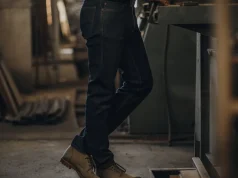


There’s a particular kind of frustration that lives in a full closet. You stand there in the morning, surrounded by clothes, and still feel like you have nothing to wear. Not because the clothes are bad, exactly but because nothing feels like you. Or rather, nothing feels like the version of you that you’re slowly becoming.
Style transformation doesn’t happen the way magazines promise. It’s rarely a single shopping trip or a dramatic before-and-after. It’s a quieter, more personal reckoning learning to see yourself clearly, then building a wardrobe that reflects that clarity rather than obscuring it.
The Problem With “Basic”
The word basic has been weaponized into an insult, but its original meaning is neutral: foundational, fundamental. A basic wardrobe isn’t a failure. It’s usually the residue of safe choices the navy crewneck that goes with everything, the black trousers you can wear anywhere, the white sneakers that match every mood. These aren’t mistakes. They’re just incomplete sentences.
The gap between basic and chic isn’t about price or brand. It’s about intention. A woman in a crisp white shirt and well-fitted straight-leg jeans looks effortlessly polished not because the clothes are expensive, but because they were chosen with deliberate attention. The hem sits right. The shirt is tucked in a specific, slightly asymmetrical way. The shoes carry just enough visual interest to anchor the whole thing. None of that is accidental.
What separates a basic outfit from a chic one is almost always a decision that someone consciously made.
Start With the Fit, Not the Fabric
If there’s one intervention that delivers the most dramatic return, it’s fit. Clothes that don’t fit properly regardless of how beautiful they looked on the hanger will always read as an afterthought. Oversized can be intentional and stunning. But oversized-by-default, because you grabbed your usual size without trying it on, is just baggy.
This is where a tailor becomes one of the best style investments you can make. Not for special occasion pieces alone, but for the workhorse items: the blazer that hits half an inch too low in the shoulder, the trousers with a rise that’s slightly off, the dress that pulls a little at the waist. Small alterations transform those pieces from fine to exceptional.
Many people skip this step because tailoring feels fussy or expensive. But consider that a $30 alteration on a $60 pair of trousers that you’ll wear fifty times is a better investment than a $200 pair that fits adequately but never quite right.
Color as a Tool, Not a Constraint
There’s a particular kind of style advice that tells women to “find their colors” usually accompanied by swatches and seasonal palettes. It’s not wrong, exactly, but it’s often applied as a set of rules rather than as the tool it actually is.
Color in dressing is less about what flatters your undertone and more about understanding how different tones work relationally how they sit next to each other on a body, what emotional register they signal, and which combinations feel alive versus flat.
Chic dressing often leans into unexpected color logic. Camel and off-white together. Burgundy with rust. Slate grey with a dusty lavender. These combinations feel sophisticated precisely because they resist the obvious. The brain registers them as considered.
That said, there’s no obligation to abandon a wardrobe built on neutrals. A tonal outfit all black, or all shades of cream and sand can be deeply chic when textures vary enough to keep the eye interested. A chunky-knit cream sweater over a silk cream blouse over straight-leg ivory trousers is a study in restraint that reads as anything but boring.
The Power of One Strong Piece
A practical and underused strategy: build each outfit around one piece that does the heavy lifting, and let everything else support it quietly.
This shifts the mental model away from “what goes with what” and toward something more compositional. If you’re wearing a sculptural ceramic earring, the outfit doesn’t need much else competing for attention. If your coat is architectural and striking, the rest can disappear into simplicity. The trench coat phenomenon exists for exactly this reason one well-made, beautiful layer can elevate whatever is beneath it to the point where it almost doesn’t matter what’s beneath it.
The corollary to this principle is learning to resist the urge to add one more thing. Over-accessorized outfits often betray a kind of insecurity a hedging against the possibility that the look isn’t interesting enough on its own. Chic often lives in the edit. What you leave out is as important as what you include.
Proportion and Silhouette: The Invisible Architecture
Proportion is the least discussed and possibly the most powerful element of style. It’s the reason an oversized blazer looks intentionally cool with slim-cut trousers, while the same blazer with wide-leg pants can either look brilliantly maximalist or visually chaotic depending on a millimeter of execution.
Understanding your own proportions where your waist sits, how long your torso is relative to your legs, where your shoulders land gives you a framework for making informed choices rather than guessing. It’s not about dressing to “correct” anything. It’s about learning which silhouettes create the visual effect you’re after, and then choosing them purposefully.
High-waisted bottoms lengthen the leg line. A cropped top worn over high-waisted trousers can create the illusion of height even on a petite frame. A belted midi dress defines structure where there might otherwise be none. These aren’t tricks or illusions in a pejorative sense they’re vocabulary. And like any vocabulary, the more fluent you become, the more clearly you can express yourself.
Quality Over Volume
The fast fashion economy has trained us to think of clothes as disposable, interchangeable, constantly refreshed. The side effect is wardrobes stuffed with pieces that individually cost very little but collectively cost a great deal in money, in decision fatigue, in environmental weight.
The shift toward fewer, better things is both a style strategy and something closer to a philosophy. A cashmere sweater that you’ve owned for seven years and still reaches for instinctively is worth more than seven synthetic sweaters you’ve cycled through and discarded. Not just economically, but aesthetically: quality pieces have a presence that cheaper construction simply cannot replicate. The way fabric drapes, holds color, responds to the body these things matter in ways that are easy to feel even if they’re difficult to articulate.
This doesn’t mean every piece needs to be luxury. It means being selective, buying less and buying better, and paying attention to construction and material even at accessible price points.
Confidence as the Actual Variable
Here’s the part that style guides rarely say plainly enough: the most transformative ingredient in any outfit is the person wearing it.
You’ve seen it someone in an objectively unremarkable outfit who somehow looks magnetic. And someone in an exquisitely assembled look who seems to be wearing it apologetically, shoulders slightly hunched, gaze uncertain. Clothes amplify what you bring to them. Chic is, in some essential way, a posture. It’s the willingness to take up space, to have made a decision and stand behind it without hedging.
This is why style transformation isn’t purely external work. Part of it is the slow accumulation of self-knowledge figuring out what you genuinely like versus what you’ve been told you should like, what makes you feel most like yourself versus what you reach for out of habit or safety. The wardrobe that emerges from that kind of honest self-assessment tends to be coherent and alive in a way that no amount of trend-following can manufacture.
The clothes, ultimately, are just the surface. What they’re expressing is already there.