
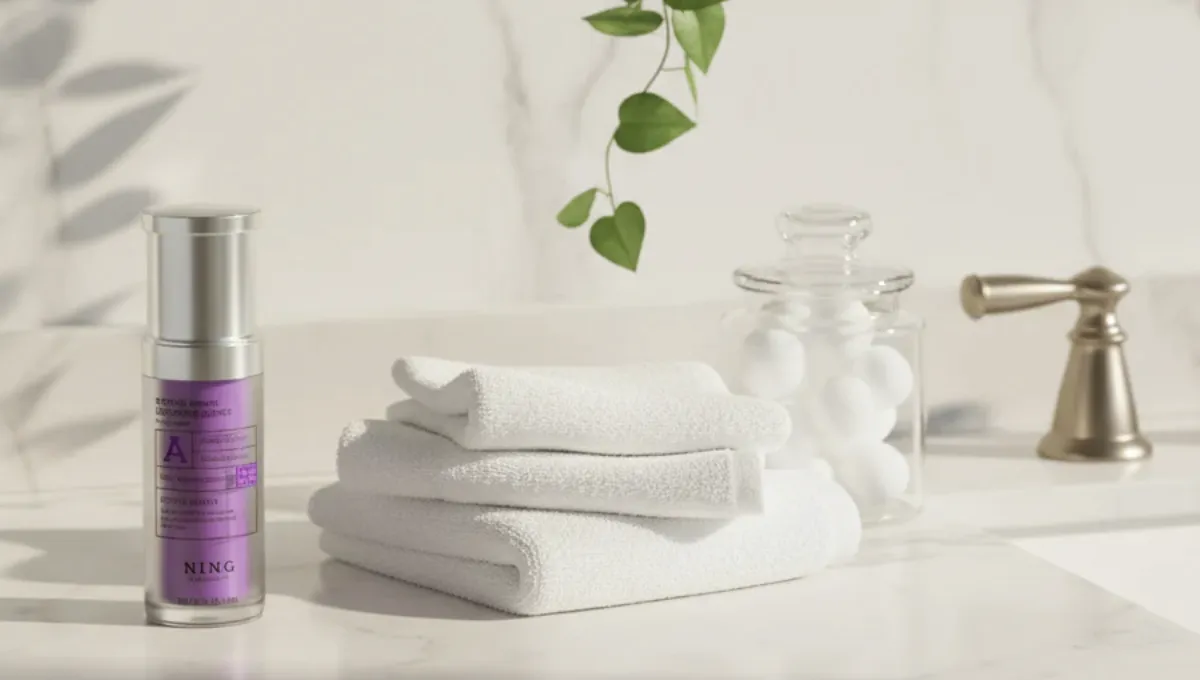
There’s a shelf in a lot of bathrooms right now maybe yours that looks like a small pharmaceutical lab. Vitamin C in the morning. Retinol at night. A hyaluronic acid somewhere in the middle. A niacinamide that someone on TikTok swore would change your life. A peptide complex that cost $89 and arrived in packaging that felt more luxurious than anything else you own. The ritual of it has become almost meditative. Apply, pat, wait. Layer, press, seal.
But at some point, a reasonable person has to ask: is any of this actually doing anything?
The Serum Industrial Complex
The global skincare market crossed $150 billion a few years ago and hasn’t looked back. A meaningful slice of that is serums concentrated actives suspended in a lightweight base, designed to deliver ingredients deeper and faster than a standard moisturizer. The pitch is compelling, and for certain ingredients, it’s genuinely backed by research. Vitamin C serums with stable L-ascorbic acid at the right pH have decades of peer-reviewed evidence behind them. Retinoids remain the gold standard for anti-aging, and a well-formulated retinol serum is one of the few OTC products that dermatologists consistently recommend withoutcaveats.
So the category isn’t a scam. The question is whether the sheer volume of products most people use is.
Walk into any Sephora and the logic of accumulation is baked into the merchandising. Each product solves a different problem this one for hyperpigmentation, that one for texture, another for barrier repair. The implication is that your skin has a dozen distinct issues that each require their own targeted intervention. Which may be true, technically. But the idea that you need a separate $60 bottle for each one is where marketing and biology start to diverge.
What Your Skin Actually Absorbs
Here’s something the industry doesn’t lead with: skin is really good at keeping things out. That’s literally its job. The stratum corneum the outermost layer is a remarkably effective barrier, and most molecules don’t penetrate it easily. The ones that do tend to be small, lipid-soluble, and present in formulations specifically engineered for absorption.
This doesn’t mean serums are useless. It means the gap between what a serum claims to do and what it can physically accomplish depends entirely on the formulation chemistry, the concentration of active ingredients, and the stability of those ingredients over time. A vitamin C serum that oxidizes in three weeks because it’s packaged in a clear glass dropper bottle isn’t delivering much to your skin regardless of how much it cost. A hyaluronic acid serum applied to dry skin in a dry climate pulls moisture from the dermis rather than the air, potentially making your skin drier. Context matters constantly.
What doesn’t get discussed enough is ingredient interaction. Some actives genuinely conflict vitamin C and niacinamide together can cause flushing in certain people, and layering a low-pH exfoliating acid over a peptide serum degrades the peptides before they’ve had a chance to do anything. When you’re running four or five serums in sequence, the actual benefit of each one gets murkier, not clearer. You’re not compounding results; you’re potentially canceling them out.
The Anxiety Economy of Skincare
There’s a psychological dimension here that’s worth sitting with. Skincare content online the kind that drives most serum purchases operates on a model of manufactured insecurity followed by product salvation. A creator points out a concern you hadn’t considered, or shows you a close-up of skin texture that looks alarming but is just, you know, skin. Then comes the recommendation. The loop is tight and effective and it has convinced a generation of people with perfectly normal skin that they’re one serum away from fixing a problem that was invented for them three weeks ago.
This isn’t cynical speculation. Dermatologists have been noting a rise in what some call “skintellectual” overload patients coming in with complex multi-step routines who have somehow developed more irritation, more sensitivity, and more problems than they started with. The skin barrier, it turns out, does not benefit from being inundated with actives every day. It needs some degree of recovery. Some degree of being left alone.
A stripped-back routine a gentle cleanser, a targeted active or two, a moisturizer, SPF in the morning will outperform a seven-product layering system for most people, most of the time. Not because the additional products are worthless in isolation, but because the cumulative load is too much for the skin to process without reacting.
The Case for Being More Boring
The interesting thing about really good skin, when you see it in person, is that it’s rarely the product of an elaborate regimen. Genetics play an outsized role that no one likes to admit because it’s not actionable and it doesn’t sell anything. Beyond that, the research keeps circling back to the same unsexy fundamentals: consistent sun protection, adequate sleep, hydration, not smoking, a diet that doesn’t chronically spike inflammation. These interventions are free or close to it, and they work at a systemic level rather than a topical one.
That doesn’t mean you should throw out everything on your shelf. If your retinol is working, keep using it. If a vitamin C serum has visibly evened your tone over several months, that’s real. The point isn’t minimalism for its own sake; it’s intentionality. Knowing what each product is supposed to do, whether it’s actually formulated to do that thing, and whether you’ve given it enough time and consistency to demonstrate results.
Most serums need8to 12 weeks of consistent use before any visible change occurs. Most people rotate in a new product after three. So the question of whether serums work often can’t be answered honestly because the experiment is never properly run.
So, Do You Need Them?
Probably not all of them. Maybe two. Maybe three if your skin has specific, documented concerns that a particular active has been shown to address. The ones with the strongest evidence retinoids, vitamin C, niacinamide, certain peptides, azelaic acid are worth understanding and potentially incorporating deliberately. The ones that promise to “redefine your skin’s future” or “activate cellular renewal” using proprietary complexes that aren’t disclosed in any meaningful way are probably doing a lot less than the packaging suggests.
The harder question is whether the ritual itself has value independent of the biochemistry. For some people, the ten-minute morning routine is a form of attention paid to oneself in a life that doesn’t offer much of it. That’s not nothing. But it’s worth knowing when you’re buying a product versus buying a feeling and whether the feeling is worth what it costs.
Your skin, in the end, is a remarkably resilient organ. It has survived every bad decision, every skipped SPF, every phase of your life. It doesn’t need to be fixed as urgently as the industry would like you to believe. What it mostly needs is to not be constantly disrupted by things trying to fix it.