
There’s a particular kind of frustration that comes from standing in front of a closet full of clothes and feeling like you have nothing to wear. You’ve got the pieces the pants, the tops, the layers but something about the whole picture just feels flat. Nine times out of ten, the culprit isn’t what you think. It’s not that you need a new jacket or a different pair of shoes. What’s actually missing is structure. A focal point. Something that pulls the eye and tells the outfit where to land.
A belt does that. One belt, worn right, can take the same outfit you’ve worn twenty times and make it feel intentional for the first time.
Why the Belt Gets Underestimated
Part of the problem is that most people think of belts purely functionally as the thing you thread through loops so your pants don’t fall down. That framing immediately reduces the belt to an afterthought. It becomes the last thing you grab before walking out the door, or worse, something you skip entirely because the outfit “already works without it.”
But here’s what that logic misses: the belt isn’t just holding fabric in place. It’s defining your silhouette. It’s marking where your waist is, creating proportion, giving the eye a resting point before it moves on to everything else. When you remove that anchor, the outfit doesn’t just look casual it looks unresolved.
Spend any time studying street style or editorial fashion, and the pattern becomes hard to ignore. The outfits that feel elevated, that look like someone actually made a decision rather than just getting dressed almost all of them have some form of intentional waist definition. Often, that’s a belt.
The Silhouette Shift Nobody Talks About
Here’s something that doesn’t get enough attention: wearing a belt over an oversized piece completely changes the math of how an outfit reads.
Take a boxy linen shirt. Worn loose and untucked, it’s comfortable but shapeless. Add a slim leather belt cinched over it, and suddenly the same shirt has a structured top half and a soft, billowing bottom contrast that reads as deliberate. The shirt didn’t change. Your body didn’t change. The belt introduced a ratio.
This is why certain stylist tricks the half-tuck, the French tuck, belting a blazer feel so effective. They’re all doing a version of the same thing: creating the illusion of proportion where the clothing alone couldn’t provide it. A belt is the most direct version of that move. You’re not relying on how something drapes or whether the cut happens to hit your body in the right place. You’re imposing structure yourself.
For anyone who has ever felt like clothes “just don’t fit right” on their body, this matters enormously. A lot of that frustration comes from clothes being designed for an abstract, proportional figure that most real people don’t have. A well-placed belt bypasses that entirely. You’re not asking the garment to do something it wasn’t cut to do you’re adding the element that makes it work for you.
The Quiet Power of Texture and Material
Not all belts are created equal, and the difference between a belt that elevates an outfit and one that drags it down often comes down to material.
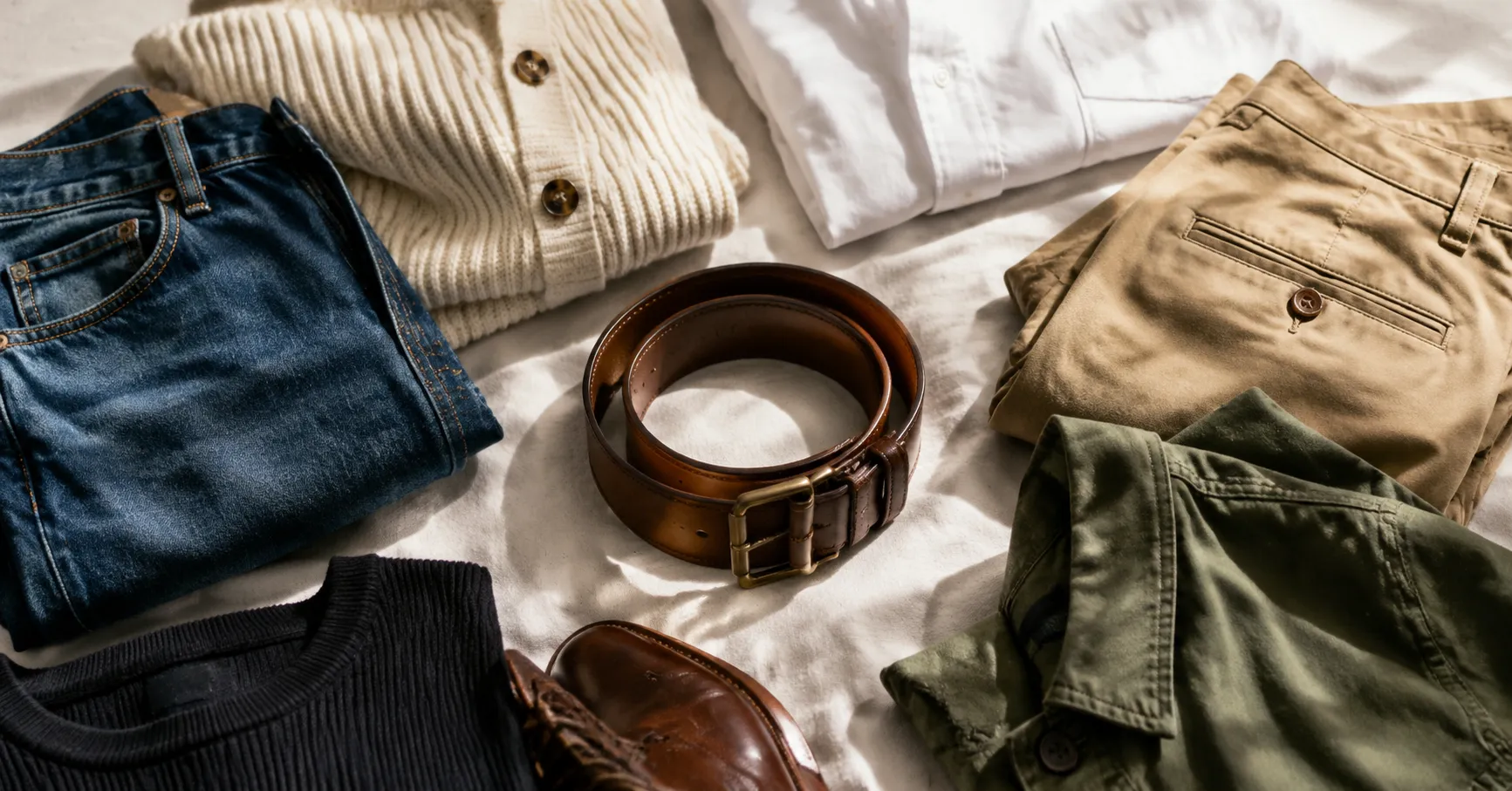
A thin patent leather belt in a matching color can look like an extension of the pants seamless, almost invisible, but still providing that crucial waist marker. A thick woven leather belt in cognac over a white linen dress immediately introduces warmth and texture, making the whole look feel more considered. A wide statement belt in suede over a flowing midi skirt creates drama without adding a single new garment.
The material conversation matters because texture is one of fashion’s quietest but most effective tools. When every element of an outfit has a similar finish smooth, matte, clean there’s a visual monotony that can read as dull even when every individual piece is beautiful. Introducing a belt with a contrasting texture breaks that monotony. It gives the eye something to notice, something to move through on its way to reading the whole look.
This is also why vintage and thrifted belts often outperform their new counterparts. Aged leather has a character that manufactured smoothness can’t replicate. The slight distressing, the natural variation in color, the way the buckle has taken on a warm patina these details make an outfit feel lived-in and real rather than assembled from a catalog.
Color as a Strategic Tool
Most people default to black or brown, which is fine those are workhorses for a reason. But treating belt color as a strategic decision rather than a default can open up possibilities that change the entire feel of a wardrobe.
A white or cream belt in summer instantly refreshes an outfit that might otherwise read as heavy. An unexpected pop of color cobalt, burgundy, forest green can pick up a secondary color from a print and make a pattern feel more intentional. Metallic belts, silver or gold, carry evening energy into daytime dressing in a way that adds sophistication without effort.
The interesting move, though, is the tonal belt matching the belt closely but not exactly to the color of the pants or skirt. This creates a subtle visual elongation of the lower half. The eye doesn’t register a hard stop at the waist the way it would with a contrast belt. Instead, the line continues, creating the impression of length. It’s a minor adjustment with a disproportionate visual effect.
When the Belt Becomes the Outfit
There’s a category of belt that stops being a supporting player and becomes the centerpiece wide corset belts, heavily embellished statement belts, sculptural pieces in unexpected materials. These operate differently. They’re not there to define a silhouette quietly. They’re there to be seen.
Wearing a belt at this scale requires the rest of the outfit to retreat. Clean lines, minimal detail, muted color the clothes become the canvas and the belt becomes the painting. It’s a high-commitment styling choice that pays off when done with conviction and falls flat when the surrounding outfit is competing for the same attention.
What’s interesting about this category is how effectively it solves the problem of “I want to wear something simple but it feels too plain.” A basic slip dress or straight-leg trousers with a stunning belt is actually a more sophisticated move than adding layers or accessories trying to create complexity. One strong element, allowed to do its work, beats five weaker ones fighting for dominance every time.
The Investment Case for Buying One Good Belt
If there’s a single accessories category worth spending real money on, a quality leather belt makes the strongest argument. Unlike a trendy bag or statement shoes that lock you into a particular aesthetic or season, a well-made belt in a foundational color works across years, across silhouettes, across whatever direction your style happens to move in.
The craftsmanship difference between a fast-fashion belt and a quality one is also more apparent than with almost any other accessory. Cheap belts crack, stretch, and lose their shape within months. Good leather softens and forms to the buckle, develops patina, and honestly looks better at five years than it did on day one. There’s something satisfying about that owning something that improves rather than deteriorates.
It also forces a kind of intentionality that changes how you approach getting dressed. When you have one belt you love one that fits well, feels right, goes with most of what you own you start reaching for it the way you reach for a great pair of earrings or your favorite watch. Not as a functional fix, but as a decision. A starting point.
Which is maybe the most underrated thing a belt can give you: a reason to stop thinking about your outfit as a problem to solve and start thinking of it as something you’re building. One anchor at a time.