
You know that moment when you finish your makeup, look in the mirror, and think something’s off, but you can’t quite put your finger on it? That was me, every single morning for about three years, right after I’d drawn on my eyeliner.
The line was sharp. The look was technically fine. But my eyes? They looked a little harsh. A little tired, actually like I was trying too hard and somehow still getting it wrong.
I kept blaming the liner itself. Bought a different formula. Tried a different brush. Watched enough YouTube tutorials to earn some kind of unofficial degree in eye makeup. And then a makeup artist her name was Daniela, and she was doing a friend’s wedding in Nashville looked at my face for about four seconds and said, “You don’t need liner. You need to learn how to smoke out shadow along your lash line.”
That one sentence changed everything.
Why Eyeliner Can Actually Work Against You
Here’s something most beauty tutorials won’t say out loud: a hard line of eyeliner can make your eyes look smaller. It creates a defined edge, which is great if that’s the look you’re going for a dramatic cat eye, a sharp graphic liner moment. But if what you actually want is eyes that look open, warm, and kind of effortlessly beautiful? That crisp line might be doing the opposite.
Think about it. A hard edge draws a border. And borders, by definition, close things off.
Eyeshadow along the lash line works differently. It builds color gradually. There’s no single point where your eye “ends” and the makeup begins it just blends into your skin, your lashes, the light. The whole effect is softer because it mimics what eyes naturally look like when they’re slightly shadowed, slightly defined, without the clinical precision of a drawn line.
But honestly, I resisted this idea for longer than I should have. I thought, without liner, my eyes will just disappear. That was wrong and it took me embarrassingly long to figure out why.
The Eyeshadow Trick That Replaces Your Liner
This isn’t complicated. That’s the part that always surprises people. You don’t need a special product or a twenty-step process. You need a small, fluffy brush, a matte eyeshadow in a medium-to-deep shade, and about forty seconds of patience.
Here’s exactly how it works.
Pick the Right Shade (This Part Actually Matters)
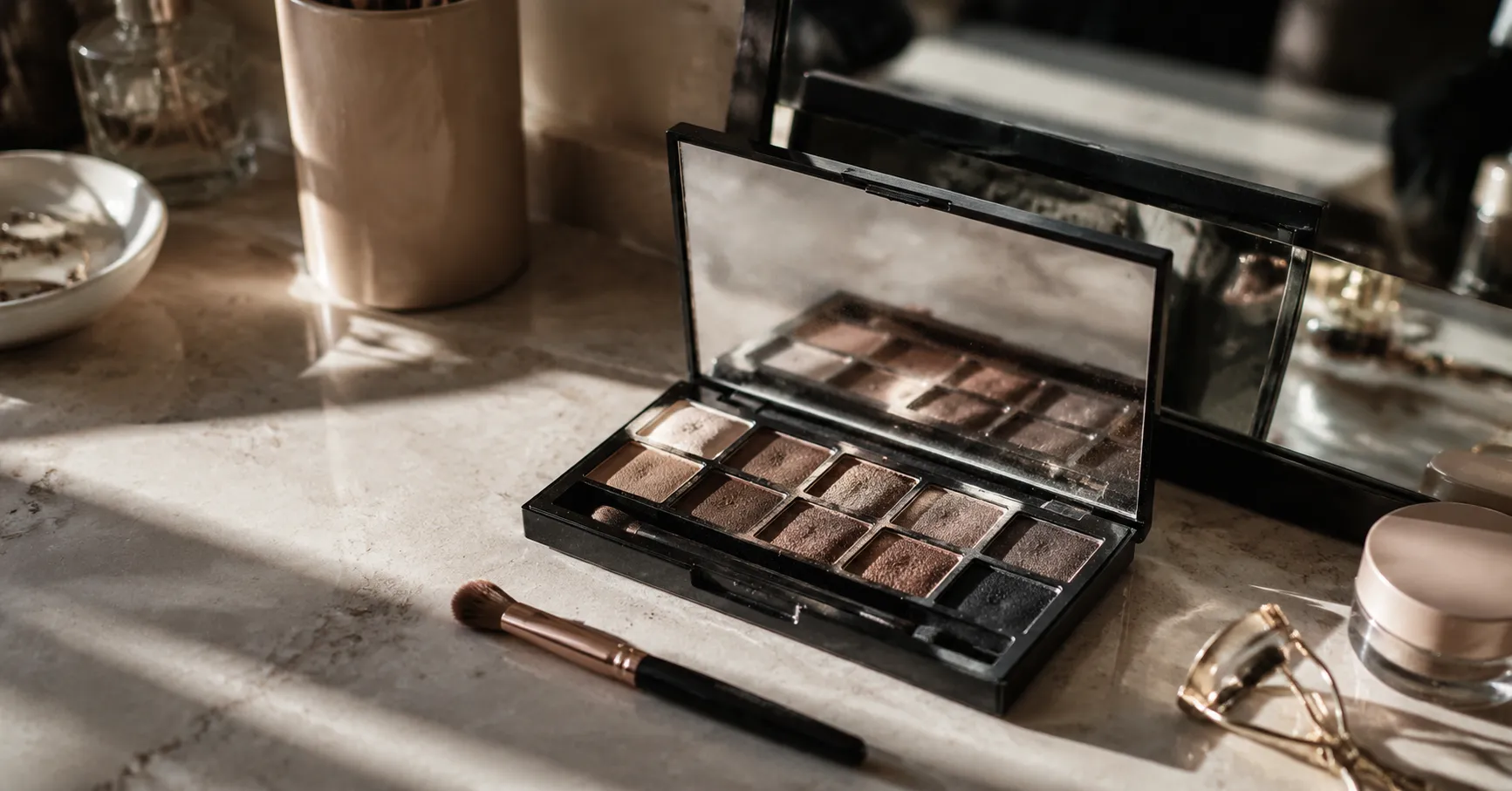
Skip anything with shimmer for this technique. Glitter and sparkle along the lash line catch the light in a way that brings attention back to the edge which defeats the whole point. You want a matte shade, something in the range of warm brown, taupe, soft black, or even a deep mauve, depending on your coloring.
The goal is definition, not drama. A shade two to three times deeper than your skin tone is a solid starting point. If you’d normally reach for black liner, try a dark brown shadow first I’m not saying never go back to black, but the softer color will make a noticeable difference in how open your eyes look.
The Application Method Most People Get Wrong
Most people press eyeshadow along the lash line with a stiff brush and wonder why it still looks harsh. The brush matters more than almost anything else here.
Use a small, fluffy brush not a flat shader brush, not an angled liner brush. Something with a rounded, slightly tapered tip that has a little give to it. Load the brush lightly, tap off the excess, and then use tiny back-and-forth strokes directly at the base of your lashes.
The key and this is the part Daniela actually showed me, right there at the wedding venue, liner brush in hand is to work into the lash line rather than on top of it. Press slightly downward so the shadow nestles between the lashes rather than sitting as a layer on top of your lid. When you look straight ahead, the color should look like it’s coming from within your lashes, not drawn on from outside.
Blend upward just slightly. Not much. Maybe two millimeters. Enough to soften the top edge so there’s no visible border.
That’s it. That’s the trick.
Where People Go Wrong With This Look
Going too heavy too fast. It’s tempting you want to see the result, so you load up the brush and go in strong. And then you’ve basically recreated the liner look you were trying to escape, just with a slightly fuzzier edge. Build the color in thin layers. You can always add more. You can’t easily take it back without starting over.
Also, skipping the lower lash line is a mistake a lot of people make. You don’t need to line the entire lower lid that can actually drag the eye downward. But running that same shadow very lightly along the outer third of your lower lash line? It connects the look without closing the eye off. Subtle. Warm. Way more flattering than a full lower liner on most people, most of the time.
Does This Work If You Have Hooded Eyes?
Yes and actually works better than traditional liner for a lot of people with hooded lids. Hard liner on a hooded eye disappears when the eye is open, so you end up applying more and more product just to see any effect. Shadow along the lash line, because it’s softer and builds gradually, tends to stay visible even when the lid folds over it.
If you have hooded eyes, lean toward slightly deeper shades and focus most of the intensity on the outer two-thirds of the lash line. Let it fade toward the inner corner rather than intensifying there.
The Soft Eye Look: Pulling It All Together
The eyeshadow lash line trick works best when the rest of your eye makeup supports it. A wash of neutral shadow on the lid something matte and skin-toned, or very slightly warmer than your natural lid lets the lash line definition do its job without competing with anything else. Mascara, obviously. And if you want to add a little more dimension without reintroducing that hard-line quality, a tiny bit of the same shadow smudged softly into the lower waterline can look beautiful.
What you end up with is eyes that look defined but not drawn-on. Warm, not severe. The kind of eye makeup that makes people tell you that you look well-rested which, if you’re anything like me, is basically the highest compliment makeup can earn.
Does that mean eyeliner is bad? Of course not. There are looks that need a clean, precise line. But the assumption that liner is the only way to define your eyes that one deserves a second look.
Your eyes might just look better without it.