
Clean Beauty vs Conventional Skincare: What’s the Difference?
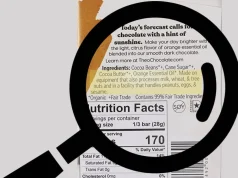
There’s a moment a lot of people have standing in the skincare aisle, product in hand, squinting at an ingredient list that reads like a chemistry dissertation. You recognize maybe three things on there. The rest might as well be a foreign language. It’s around that moment that the question starts to form: does any of this actually matter? And more specifically, is “clean beauty” a meaningful answer to that question, or just a very well-marketed one?
The honest answer is: both. And the tension between those two truths is worth sitting with.
Where “Clean Beauty” Came From
Clean beauty didn’t emerge from a regulatory body or a scientific consensus. It grew out of a cultural mood one shaped by a broader wellness movement, rising consumer distrust of large corporations, and a growing unease about what exactly we’re putting on our skin every day. By the time it hit mainstream consciousness in the mid-2010s, it had already become a multi-billion dollar positioning strategy.
The term itself has no legal definition. That’s the first, most important thing to understand. In the United States, the FDA does not regulate the word “clean” on a skincare label. There is no official list of banned ingredients a brand must avoid to earn that label. Any company can call their product clean. The meaning is self-assigned, which is why you’ll find “clean” lines that still include fragrance, alcohol, or essential oils ingredients that a different brand’s definition of clean would exclude entirely.
This isn’t a conspiracy. It’s an identity crisis baked into the concept from the beginning.
The Conventional Skincare Framework
Conventional skincare operates within a different logic one built on decades of formulation science, clinical testing, and regulatory frameworks. In the US, cosmetics are governed by the Federal Food, Drug, and Cosmetic Act, which requires that products are safe and properly labeled, but stops well short of the kind of premarket approval that, say, pharmaceuticals require.
Ingredients like parabens, sulfates, synthetic fragrances, and PEGs have been staples of conventional formulas for decades. They’re used because they work preserving products, creating texture, delivering active ingredients more effectively. The scientific literature, in most cases, supports their safety at the concentrations used in cosmetics. Parabens, arguably the most controversial example, have been studied extensively. The European Commission’s Scientific Committee on Consumer Safety has repeatedly concluded that commonly used parabens are safe at approved levels.
That doesn’t mean the conversation should be closed. It means the stakes have often been misrepresented.
The Ingredient Anxiety Problem
One of clean beauty’s lasting cultural effects has been the spread of what some dermatologists call “ingredient anxiety.” The logic usually goes like this: a chemical sounds unfamiliar, therefore it’s suspicious. A brand capitalizes on that suspicion by removing it and labeling the absence a feature. Consumers feel empowered by the choice. And the cycle continues.
Methylparaben sounds alarming if you’ve never heard of it. Rosehip oil sounds trustworthy because it’s a plant. But that framing collapses under scrutiny. Poison ivy is a plant. Arsenic occurs naturally. And methylparaben, as it turns out, is a preservative that prevents the bacterial contamination that can genuinely harm your skin.
This isn’t to dismiss clean beauty wholesale it’s to point out that “natural” and “safe” are not synonyms, and “synthetic” and “harmful” are not synonyms either. The dose, the concentration, the delivery mechanism, the individual’s skin biology these things matter in ways that a marketing label can’t capture.
Where the Clean Argument Has Real Legs
Here’s where things get more interesting. While the fear-based marketing deserves scrutiny, there are legitimate areas where clean beauty has pushed the industry in useful directions.
Fragrance disclosure, for one. Conventional beauty has long hidden ingredient blends under the umbrella term “fragrance” or “parfum,” a catch-all that can contain hundreds of undisclosed compounds. For people with sensitive skin, allergies, or conditions like eczema, this opacity is a genuine problem. Clean beauty brands have generally been more transparent here not because the ingredients are inherently safer, but because transparency allows consumers to make informed decisions. That’s not nothing.
Formaldehyde-releasing preservatives are another area worth paying attention to. Certain preservatives used in conventional products DMDM hydantoin, for instance slowly release formaldehyde over time. Formaldehyde is a known carcinogen at high exposures. The concentrations in cosmetics are low, but for someone using ten products a day, cumulative exposure is a legitimate consideration that mainstream formulation hadn’t adequately grappled with before clean beauty forced the conversation.
The EU has long maintained a stricter regulatory list over 1,300 ingredients banned or restricted in cosmetics, compared to roughly 11in the US. That gap alone suggests that the conversation about what belongs in a product isn’t settled. Clean beauty, for all its marketing excess, has been part of the force pressing for that conversation.
The Efficacy Question
One criticism of clean formulas that has real evidence behind it: they sometimes work less well. Preservative-free or minimally preserved products have shorter shelf lives and can harbor microbial growth. Avoiding certain delivery systems or emulsifiers can limit how deeply an active ingredient penetrates the skin. Some synthetic ingredients are more bioavailable, more stable, or more effective at their stated job than their natural alternatives.
Vitamin C is a useful example. L-ascorbic acid, the most studied and bioavailable form, is notoriously unstable. Many clean brands have shifted to derivatives like sodium ascorbyl phosphate, which are gentler and more stable but convert to active ascorbic acid at lower rates. The product feels safer, cleaner, more aligned with the brand story but may deliver less measurable skin benefit.
This isn’t true across the board. Niacinamide works just as well regardless of its origin. Hyaluronic acid is hyaluronic acid. But the pattern is worth knowing: sometimes the “cleaner” version involves a real tradeoff in performance.
What a More Honest Framework Looks Like
The most useful shift isn’t choosing a team clean or conventional but developing a different kind of literacy. What is this ingredient? What does the research actually say about it? Is the concentration relevant? Do I have specific sensitivities that change the calculus?
Some conventional products are beautifully formulated, clinically validated, and genuinely effective. Some clean products are thoughtfully made with real attention to both safety and performance. And some products on both sides are primarily marketing vehicles dressed up as solutions.
The most honest brands in either camp tend to be the ones that can talk about their formulations in detail, cite evidence, acknowledge tradeoffs, and resist using fear as a sales mechanism. Those exist. They’re just not always the loudest voices in the room.
There’s something telling about the fact that the most rigorous clean beauty advocates and the most rigorous cosmetic chemists have started to converge on similar language: look at the full ingredient list, understand the concentrations, know your own skin, and be skeptical of any brand that treats complexity as a problem to be eliminated rather than understood.
The aisle is still overwhelming. But the squinting, at least, is starting to feel like it has a point.