

Why Your Fitness Routine Isn’t Giving You That “Glow” Yet
You’ve been showing up. Three, four, maybe five days a week. The alarm goes off before sunrise, you lace up, you sweat, you track your steps and macros and sleep scores. And yet something’s missing. The skin still looks tired. The eyes don’t quite sparkle. That luminous, effortless quality you associate with people who seem to have figured something out? It’s not there yet.
This isn’t a motivation problem. And it’s almost certainly not a discipline problem either. What it usually is, is a systems problem a gap between what exercise can actually deliver and what we’ve been told to expect from it.
The Glow Isn’t Just Aesthetic
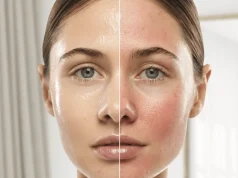
Let’s start by agreeing on what we’re even talking about. The “glow” isn’t just clear skin or bright eyes, though it includes those things. It’s a quality of aliveness the way someone walks into a room and seems lit from within. It shows up as even skin tone, a certain ease in posture, a kind of relaxed alertness in the face. You can spot it immediately, and you can’t fake it with product.
Physiologically, it has real underpinnings. Healthy circulation delivers oxygen and nutrients to skin cells while flushing metabolic waste. Low systemic inflammation keeps everything from joints to complexion running clean. Balanced hormones particularly cortisol, growth hormone, and estrogen regulate skin repair, collagen production, and that quality of softness versus puffiness in the face. Sleep quality determines how much cellular regeneration actually happens overnight.
Exercise, in theory, supports all of these things. Cardio improves circulation. Strength training stimulates growth hormone. Movement reduces baseline cortisol. So why isn’t it working for you?
The Paradox of High-Effort, Low-Return Workouts
Here’s what almost no fitness content will tell you directly: a certain kind of exercise makes you look worse before it makes you look better and if you never recover properly, it just keeps making you look worse.
Intensive exercise is a controlled stressor. When you run hard or lift heavy, you’re deliberately creating micro-damage and metabolic disruption that the body then repairs, coming back stronger. The repair phase is where all the actual benefit lives. And that repair requires something most driven people are chronically short on: genuine rest.
When you stack intense sessions day after day without adequate recovery or when you train hard while also sleeping poorly, eating in a deficit that’s too aggressive, and running on low-grade stress at work the body reads all of those inputs together. The result is elevated cortisol that doesn’t come down, elevated inflammation that doesn’t resolve, and a skin barrier that stays subtly compromised. The face looks a little puffy. Or a little grey. Or both.
This is the fitness paradox that trips up disciplined people more than lazy ones. The harder you push without recovering, the more you look like you haven’t been taking care of yourself because at a cellular level, you haven’t been.
What Your Body Is Actually Doing While You Sleep
There’s a reason dermatologists get obsessed with sleep quality in a way that has nothing to do with eye cream. Between roughly 10pm and 2am, growth hormone secretion peaks. Skin cell turnover accelerates. The lymphatic system clears the metabolic debris that accumulated during the day. Cortisol drops to its daily low, allowing inflammation to resolve.
None of this happens adequately on six hours. Or on seven hours of fragmented sleep driven by late-night phone use. Exercise can push your body to produce more growth hormone and be more efficient at cellular repair but only if you’re actually giving it the sleep window in which to do that work.
The people who seem to glow don’t always train harder than you. Many of them just recover better. They treat8 hours of sleep with the same seriousness that they treat their workout programming.
The Inflammation Nobody Talks About in the Gym
Chronic low-grade inflammation is one of the most underappreciated drivers of a dull, tired appearance. It doesn’t show up on most routine blood panels. You don’t feel sick. But it sits in the background, keeping your immune system slightly activated, your skin slightly reactive, and your hormones slightly dysregulated.
Common drivers include ultra-processed food even in small amounts, alcohol even moderate and consistent alcohol chronic psychological stress, poor sleep, overtraining, and certain nutritional deficiencies, particularly omega-3fatty acids, zinc, and vitamin D.
You can be someone who exercises religiously and still carry significant background inflammation if you’re also drinking a few glasses of wine most evenings, eating refined carbohydrates regularly, and running your nervous system at a constant low hum of anxiety. The workout is real. The inflammation is also real. And theycoexist.
Addressing this isn’t about extreme clean eating. It’s about recognizing that the glow you’re looking for is downstream of systemic calm and that systemic calm doesn’t come from one input in isolation.
Circulation, Zone2, and the Undervalued Easy Day
Most people’s cardiovascular training clusters around two extremes: completely sedentary, or going hard. What gets skipped is the middle range what exercise scientists call Zone 2, which is roughly the pace where you can hold a full conversation but wouldn’t want to. Slightly elevated heart rate, nose breathing possible, sustainable for45 minutes or more.
This zone is where mitochondrial density improves the most. It’s also where the skin gets the most sustained, even delivery of oxygenated blood not the acute flush of a sprint that resolves quickly, but the long, slow warm river of circulation that feeds every layer of tissue.
There’s something almost meditative about this kind of movement. It calms the nervous system while still being active. A long walk, an easy bike ride, a swim at a pace where you could chat. It doesn’t feel like a real workout to people who’ve been trained to equate effort with results. But for skin quality, for that underlying luminosity, it may deliver more than your hardest sessions.
The Nutrition Gap That Exercise Can’t Fill
Even with perfect training and sleep, there’s a category of nutrients that skin requires directly and that no amount of cardio will compensate for.
Collagen synthesis requires vitamin C not a supplement necessarily, but consistent daily intake from food. The skin barrier requires adequate healthy fat: olive oil, avocado, fatty fish, nuts. Zinc is critical for wound healing and controlling inflammation in the skin specifically. Hydration affects skin plumpness and elasticity in ways that show immediately on the face.
The people who eat chronically low-fat in pursuit of a leaner body often sacrifice skin quality in the process. The face gets slightly hollowed, the skin loses its cushion, and the barrier becomes more reactive. Fat is not the enemy of the glow inadequate fat is.
The Mental State That Shows on Your Face
This is the part that sounds soft but is backed by substantial science. Chronic psychological stress ages the skin through multiple pathways: it elevates cortisol, which breaks down collagen; it disrupts sleep architecture; it increases inflammatory cytokines; it compromises the gut microbiome, which in turn affects systemic inflammation and nutrient absorption.
The relationship between the nervous system and the skin is so direct that dermatologists increasingly talk about the “skin-brain axis” as a clinical reality, not a metaphor. Anxiety shows on the face. So does chronic overwork. So does the particular exhaustion of never fully resting, even on days off.
Exercise helps with this, genuinely. Movement is one of the most reliable tools for nervous system regulation. But if you’re using exercise as a form of punishment, or as a way to outrun anxiety rather than metabolize it, the benefit gets diluted. The body knows the difference between movement done from depletion and movement done from a baseline of care.
The glow that you’re looking for and that you’ve seen on people who have it is not a product of one thing. It’s the external expression of a body that is genuinely well. Sleeping enough. Eating with some intelligence about what the skin actually needs. Moving in ways that build rather than just burn. Keeping the background inflammation low enough that the repair systems can actually do their work.
You’ve already done the hardest part, which is showing up consistently. What might be worth examining now is not whether you’re working hard enough, but whether you’re recovering well enough for that work to land.