
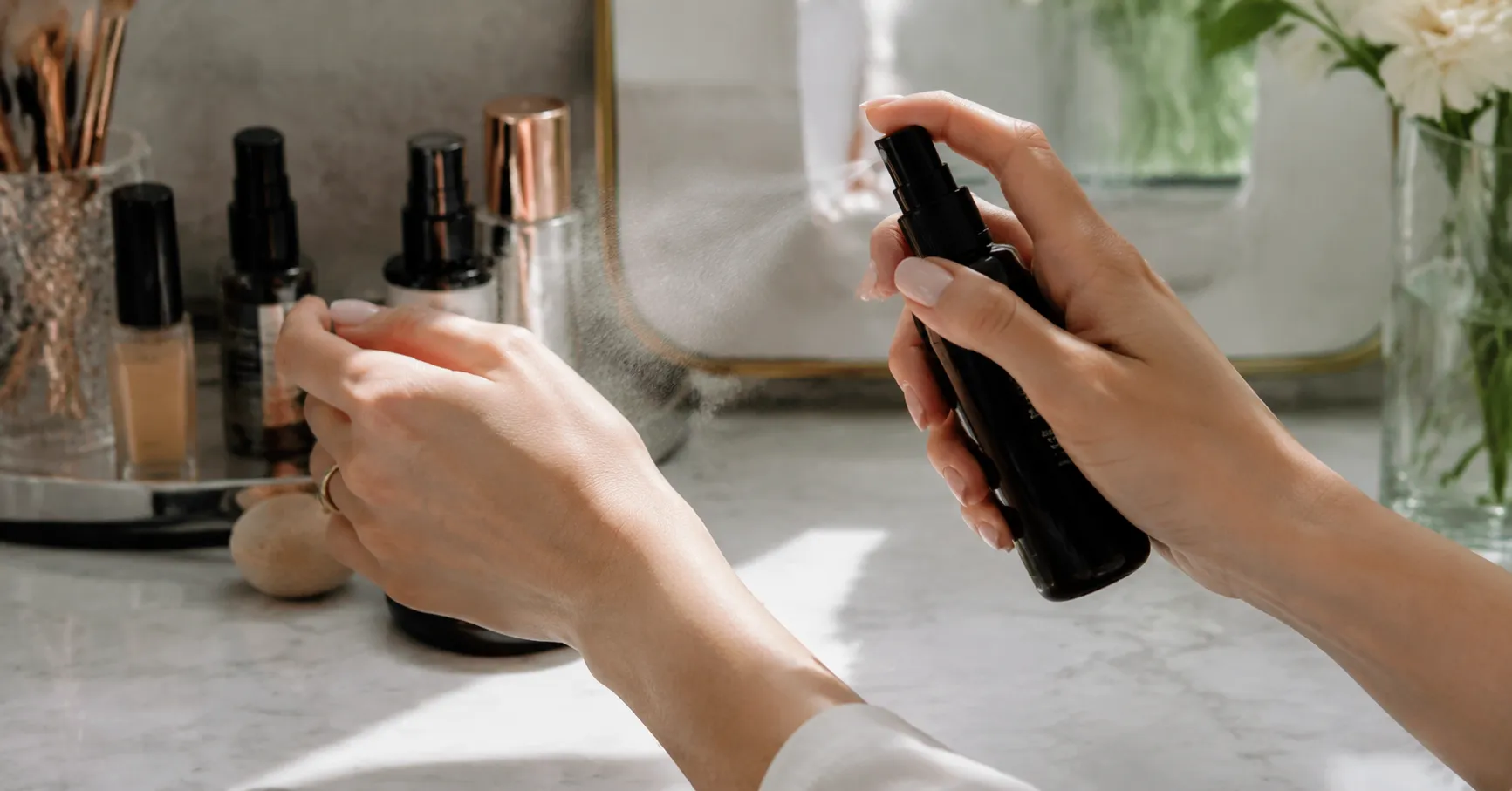
There’s a particular kind of beauty counter seduction that happens with setting sprays. You’re standing there, foundation freshly blended, and someone hands you a bottle that costs sixty, eighty, sometimes over a hundred dollars and tells you it’ll make everything last. That it’ll blur your pores. That it’ll make you look like you’re not wearing makeup at all. The mist hits your face and for a moment, it genuinely feels like something is happening.
But is it actually? That question sits at the center of a debate that beauty editors, dermatologists, and everyday makeup wearers have circled for years without quite landing anywhere satisfying.
What Setting Sprays Are Actually Doing to Your Skin
At their most basic, setting sprays work by depositing a thin film of polymers over your makeup, which binds the layers together and slows down the natural breakdown that occurs from oil production, humidity, and friction. The formulas vary wildly some are alcohol-based for a quick-drying matte effect, others use glycerin and hyaluronic acid to add a dewy finish, and a growing number include ingredients like green tea extract or vitamin C that are positioned as skincare hybrids.
The high-end versions think Urban Decay All Nighter, Charlotte Tilbury Airbrush Flawless Setting Spray, or the cult-followed Tatcha Luminous Dewy Skin Mist tend to lean heavily on that skincare angle. The pitch is that you’re not just sealing your makeup, you’re also treating your skin while you wear it. Whether that claim holds up under scrutiny is another matter. Most dermatologists will point out that the concentration of active ingredients in a setting spray is too low, and the contact time too brief, to meaningfully affect the skin in the way a serum or moisturizer would. You’re not doing a treatment. You’re adding a finishing layer.
That’s not inherently a problem. It just means you should know what you’re actually buying.
The Daily Wear Question Is the Real Variable
The hype around high-end setting sprays is often built on performance benchmarks that don’t reflect how most people use makeup. A 24-hour wear test where someone sits in controlled conditions is not the same as a Tuesday where you commute, eat a burger at your desk, sweat through an afternoon meeting, and rub your eyes approximately forty times. Real daily wear is chaotic, and the gap between what a product promises and what it delivers in that chaos is where most of the value proposition starts to crumble.
That said, anecdotal evidence and there is a mountain of it, documented in painstaking detail across YouTube, Reddit, and TikTok does suggest that higher-priced sprays often outperform their drugstore counterparts in certain specific ways. Texture tends to be more refined. The mist is usually finer and more evenly distributed, which means less patchiness and no weird wet spots that disturb your foundation. Some formulas, particularly those from brands that invest in fragrance and sensory experience, simply feel better on the skin. There’s a pleasure element that shouldn’t be dismissed, because how a product makes you feel during the ritual of getting ready is part of why people buy beauty products at all.
Where the Price Gap Actually Lives
When a $75 setting spray sits next to a $9 one at Ulta, what’s in that price difference? Partly research and development. Partly packaging and premium packaging costs real money to produce, even if it ultimately ends up in a landfill. Partly brand equity, marketing spend, and the invisible tax of being stocked in Sephora. And partly, in some cases, genuinely superior formulation.
The honest answer is that all four factors are usually present in some proportion, and it’s almost impossible for a consumer to know which is contributing most to the number on the tag. A brand like Tatcha invests meaningfully in ingredient sourcing Japanese fermentation technology, upcycled silk extract and those supply chains cost more to maintain than the generic polymers in a mass-market drugstore spray. That’s real. But it doesn’t automatically mean the end result justifies the premium for your specific skin type and makeup routine.
This is where personal testing becomes unavoidable. The beauty industry’s inconvenient truth is that skin chemistry, sebum production, the specific foundation formula you’re using, and even your local climate all interact with a setting spray in ways that no reviewer can fully predict for you. Someone with oily skin in Miami will have an entirely different experience with the same product than someone with dry skin in Denver.
The Case for and Against Splurging
If you wear makeup every single day, a setting spray is arguably one of the more defensible luxury purchases in a beauty routine not because the formula is magical, but because it’s a product you interact with at the very end of a routine you’ve already invested time and money into. Protecting that investment makes psychological sense, even if the science is more ambiguous.
There’s also a concentration argument. A bottle that costs $65 but lasts nine months with daily use breaks down to roughly twenty-two cents a day. In that light, it’s not the most extravagant line item in your budget. The same logic applies less convincingly if you’re someone who reaches for a setting spray only occasionally or forgets it exists the moment you leave your bathroom.
The counterargument worth taking seriously is that several drugstore sprays have closed the formulation gap considerably. e.l.f.’s Power Grip Primer Spray, NYX’s setting sprays, and Milani’s Make It Last have all developed loyal followings that include people who have tried the luxury alternatives and come back down. These aren’t consolation prizes they’re legitimate competitors in the functional category. Where they tend to fall short is in the sensory and aesthetic experience: the bottle feels cheap, the scent is flat or chemical, the mist is inconsistent. For some people, that matters not at all. For others, it’s the whole point.
The Ritual Is Part of the Product
There’s something worth sitting with here about what luxury beauty products are actually selling. When you use a Charlotte Tilbury setting spray, you’re not just misting your face you’re participating in a carefully constructed experience. The bottle is heavy and elegant. The name evokes something aspirational. The scent is deliberately chosen to feel expensive. That experience is real, even if it’s not strictly functional, and it contributes to why getting ready can feel like self-care rather than maintenance.
This isn’t a cynical observation. Human beings have always attached meaning and ritual to the objects they use on their bodies. The question isn’t whether that value is legitimate it clearly is, for a lot of people but whether it’s worth the specific dollar amount being asked.
Setting sprays in the high-end category are worth it when the formulation genuinely addresses something your routine is missing, when the sensory experience contributes to a morning ritual you actually enjoy, and when the price per use makes reasonable sense for your budget. They’re not worth it when you’re buying the bottle for the status it implies on your vanity shelf, or when a ten-dollar alternative would give you ninety percent of the same result.
The mist settles on your face either way. What it means is entirely up to you.