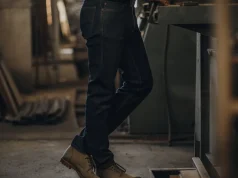


There’s a particular kind of morning most people know well. You’re running late, you grab whatever is clean, you don’t think twice. By noon, something feels off not the meetings, not the workload, but you. A low-grade restlessness. A sense that you’re slightly out of sync with yourself. It’s easy to blame the coffee or the bad night’s sleep, but sometimes the answer is hanging in your closet.
The connection between clothing and cognition isn’t new territory for researchers, but it remains deeply underestimated in everyday life. Most productivity conversations obsess over time-blocking, app stacks, and morning routines. Almost none of them pause to ask what you’re wearing while you do all of it.
The Psychology Hiding in Plain Sight
In2012, two researchers at Northwestern University Hajo Adam and Adam Galinsky published findings from a series of experiments they called “enclothed cognition.” The premise was straightforward: clothing doesn’t just signal identity to other people; it actively shapes the mental state of the person wearing it. Participants who wore a lab coat described as a “doctor’s coat” demonstrated significantly sharper attention and reduced errors compared to those who wore the same coat described as a “painter’s coat.” The coat was identical. The psychology was not.
What this tells us is that clothing functions as a kind of wearable cue a signal you send to your own nervous system before the day even begins. Your brain is constantly pattern-matching, looking for context clues about what kind of situation it’s in and what kind of performance is expected. Your outfit is one of those clues. The problem is that most of us have never treated it that way.
Dressing Down and the Blurred Mental State
Remote work culture made this tension impossible to ignore. When the pandemic collapsed the boundary between home and office, millions of people discovered something uncomfortable: working in pajamas felt freer for about two weeks, and then it started feeling like nothing at all. The environment was technically the same, but without the ritual of getting dressed without the physical act of transitioning into a work identity the brain had trouble loading the right mode.
Productivity coaches began hearing versions of the same complaint. People weren’t lazy. They weren’t unmotivated. They were just blurry. The psychological container that a work outfit provides the sense of I am now this version of myself had dissolved, and with it went the associated focus and follow-through.
This isn’t purely anecdotal. Research on behavioral activation suggests that physical rituals, including the act of dressing, help trigger mental state transitions. You’re not just putting on clothes. You’re cueing a shift. Strip that ritual away and you’re asking your brain to perform without a warm-up.
Fit, Color, and the Subtle Levers of Energy
The effect isn’t just about formality level. It runs deeper into fit, color, and personal resonance. An outfit that fits well that doesn’t pinch at the waist, doesn’t drag at the hem, doesn’t require constant readjustment removes a persistent low-level distraction that most people never consciously register. Physical discomfort doesn’t announce itself loudly; it just quietly siphons attention. By the time you notice it, it’s already cost you something.
Color operates on a different register. Studies on color psychology consistently link certain hues with cognitive states blue with calm and focus, red with heightened alertness (and sometimes aggression), gray with subdued energy. None of this is deterministic. Context matters, personal associations matter, and the research here is less tidy than fashion marketers would have you believe. But the point isn’t to follow a color formula. It’s to notice that your clothing environment the spectrum you’re surrounded by all day is not emotionally neutral.
There’s also the question of personal resonance: whether an outfit feels like you. This is harder to quantify but easier to feel. Most people have experienced the difference between wearing something that makes them feel capable and wearing something that makes them feel like they’re borrowing someone else’s confidence. That internal coherence the sense that how you look aligns with how you want to show up isn’t vanity. It’s fuel.
What High Performers Actually Do
Look closely at people who consistently produce at high levels across creative and professional fields and you’ll notice that many of them are deliberate about this in ways they rarely publicize. The writer who has a specific jacket they wear only at the desk. The executive who takes twenty minutes every morning to put together an intentional outfit before a high-stakes day. The designer who shifts between different modes of dress depending on whether they’re in a generative phase or a critical review phase.
Steve Jobs’s black turtleneck and jeans are often framed as a story about decision fatigue reduce choices, preserve cognitive bandwidth. That’s part of it. But it was also a deliberate identity construction. The outfit said something to him, not just to the world watching him. It was a daily act of becoming the person he intended to be that day.
This isn’t about wealth or brand names. A $30outfit that fits well and carries personal meaning will outperform an expensive one worn reflexively. The variable isn’t cost it’s intentionality.
The Morning Choice as a Micro-Commitment
Here’s a frame worth sitting with. Every morning, when you decide what to wear, you’re making a micro-commitment to a version of yourself for that day. It’s one of the first concrete choices of your waking hours, which means it has the potential to set a tone not just aesthetically, but cognitively and emotionally.
People who treat that choice as an afterthought grabbing whatever requires the least thought are technically saving time. But they may be forfeiting something harder to measure: the psychological orientation that comes from showing up as an intentional version of yourself rather than a default one.
This doesn’t mean dressing formally every day. Intentionality and formality aren’t the same thing. A thoughtfully chosen casual outfit can carry every bit as much psychological weight as a suit. The question isn’t how dressed up you are. The question is whether the choice was made or just avoided.
When the Research Meets Real Life
None of this means you’ll transform your output overnight by upgrading your wardrobe. The variables of productivity are genuinely complex sleep, nutrition, environment, workload design, and a dozen other factors carry enormous weight. Clothing is one input among many.
But it is an input. And it’s one with unusually low friction to change. You don’t need a new system, a new tool, or a significant investment of time. You just need to spend two minutes in the morning making a real choice instead of a passive one.
The closet has been the overlooked room in the productivity conversation for too long. What you wear is a message and the first person receiving it every morning is you.