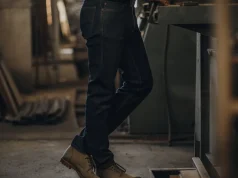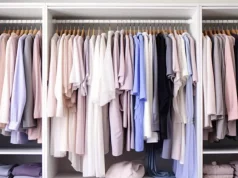

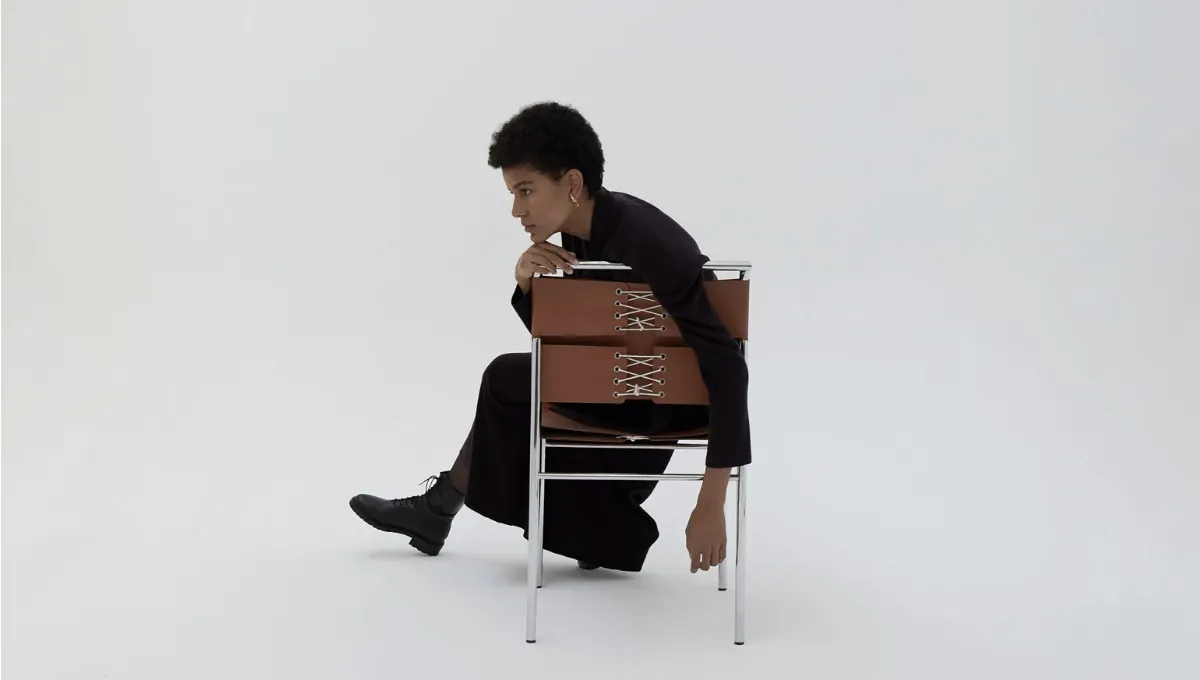
Something has shifted in the way people get dressed. It’s not announced on runways or celebrated in glossy editorials. It happens in the quiet of a Tuesday morning when someone reaches for a well-worn linen shirt instead of something new, or when a twenty-six-year-old decides to spend three weeks researching a single pair of boots before buying them. The fashion industry, for all its noise and spectacle, is being quietly renegotiated from the bottom up not by designers or trend forecasters, but by ordinary people who have simply started paying closer attention.
This isn’t a trend story. Trends, by definition, peak and fade. What’s happening right now feels more stubborn than that.
The Death of the Impulse Purchase
For roughly two decades, fast fashion operated on a simple psychological lever: make buying feel effortless and slightly thrilling. Zara’s famous restocking model, which rotates new inventory every two weeks, wasn’t just a supply chain achievement it was a behavioral engineering project. The goal was to make deliberation feel like a waste of time. If you thought about it too long, it would be gone.
That logic is unraveling. Partly because of social media saturation when everyone has access to the same $22 dress, the thrill evaporates fast and partly because a generation of consumers has grown up watching the footage: the mountains of discarded clothing in Chile’s Atacama Desert, the toxic rivers running outside textile factories in Bangladesh. The visual evidence of overconsumption has been so relentlessly circulated that it’s become genuinely difficult to unknow.
The result is a measurable slowdown in impulse buying among younger demographics, paired with a sharp rise in what retail analysts have started calling “considered consumption.” People are buying less, but they’re thinking harder about what they do buy. This is, in commercial terms, a nightmare for companies whose margins depend on volume. For the culture of dress, it’s something else entirely.
The Secondhand Economy Grows Up
Thrift shopping used to carry a stigma that required a certain kind of confidence to override. You wore vintage because you were artsy, or broke, or both. That social calculus has completely inverted. Today, resale platforms like Depop, Poshmark, Vinted, and ThredUp collectively process billions of dollars in transactions annually. The secondhand market is projected to surpass fast fashion in market size within the next decade a forecast that, even five years ago, would have seemed absurd.
What’s interesting isn’t just the scale. It’s the culture that’s formed around it. Dedicated resellers have turned the hunt into a craft. Communities on TikTok and YouTube document thrift hauls with the same seriousness that wine enthusiasts discuss vintages. There’s a vocabulary forming around quality markers the weight of a fabric, the construction of a seam, the provenance of a label. People are learning to read clothing in a way that mass-market retail never required them to.
This literacy changes things. Once you understand why a jacket from 1987 still holds its shape while a 2023 equivalent falls apart after eight washes, you start making different decisions. The education, in other words, is happening through the act of shopping itself.
What “Personal Style” Actually Means Now
There’s a broader cultural recalibration underway around what it means to have a personal style. For much of the 2010s, the dominant aesthetic mode was aspiration-mimicry you looked at what someone cool was wearing, you bought the closest accessible version, you repeated the cycle. Instagram accelerated this into something almost frantic. Trends moved from subcultural origins to mass adoption in a matter of weeks, burning through their meaning almost instantly.
The reaction has been predictable and, in many ways, healthy. “Quiet luxury,” “old money,” “coastal grandmother” these micro-aesthetics, whatever you think of their names, all share a common thread: they prioritize longevity over novelty. The aspiration has shifted from wearing what’s new to wearing what fits, what lasts, what communicates something stable about who you are.
This plays out differently across demographics, but the through-line is a growing fatigue with trend-chasing as a lifestyle. A 34-year-old office worker in Chicago building a capsule wardrobe and a 19-year-old in Seoul scouring vintage markets for 90s Japanese workwear are approaching dress from completely different angles but both are, in their own way, rejecting the idea that fashion’s value is primarily in its newness.
The Craft Resurgence Nobody Predicted
Parallel to all of this is something that would have seemed genuinely eccentric fifteen years ago: people are learning to make and mend their own clothes in significant numbers. Sewing tutorial channels on YouTube command subscriber counts in the millions. The hashtag #visiblemending has accumulated hundreds of millions of views on TikTok, celebrating the practice of repairing garments in ways that leave the repair visible a deliberate aesthetic and philosophical statement against throwaway culture.
Knitting and crochet, long dismissed as grandmotherly hobbies, have attracted a devoted younger following that approaches them with real technical ambition. Independent pattern designers sell digital downloads directly to consumers, building small but sustainable creative businesses in the process. The community around fiber arts has become genuinely global, connected and cross-pollinating across platforms.
None of this is going to displace the garment industry. That’s not the point. The point is what it signals: a desire to have a different kind of relationship with clothing. One that involves time, intention, and skill rather than just transaction. When someone spends forty hours knitting a sweater, they’re not being economically rational they could buy something cheaper in ten minutes. They’re making a statement about value that has nothing to do with price.
The Industry’s Awkward Response
Fashion brands, for their part, have noticed. The response has been a mixture of genuine adaptation and elaborate performance. Sustainability reports proliferate. “Conscious collections” appear seasonally. Repair programs, rental services, and take-back schemes are launched with considerable fanfare.
The skepticism is warranted. Many of these initiatives exist primarily as narrative management a way to preserve brand equity with environmentally aware consumers while changing as little as possible about the underlying model. Greenwashing is real, it’s widespread, and consumers are increasingly able to identify it. The brands that have built genuine credibility in this space Patagonia is the obvious example, but smaller labels like Nudie Jeans or Eileen Fisher have done serious structural work have done so through consistency over years, not through campaigns.
What’s more telling is what happens at the supply chain level, away from the marketing. Some manufacturers are genuinely investing in material innovation mycelium leather, recycled synthetics, closed-loop dyeing processes. Others are finding ways to produce smaller runs closer to demand, reducing the chronic overproduction that results in so much unsold inventory being incinerated or landfilled. Progress is uneven and slow. But the pressure, for the first time, feels structural rather than optional.
Dressing as a Form of Attention
Underneath all of this the secondhand markets, the mending communities, the capsule wardrobes, the slow fashion manifestos is something harder to name but worth sitting with. Getting dressed has always been a form of communication. But it’s becoming, for a growing number of people, a form of attention. A daily practice of noticing: what am I actually wearing, why did I buy it, how was it made, how long will it last?
That sounds heavy, and it doesn’t have to be. Most days it’s just a question of reaching for the shirt that actually fits, or choosing not to order the thing you’ll wear twice. Small decisions, repeated. The revolution, if that’s the right word for it, isn’t dramatic. It’s not a manifesto or a movement with a name. It’s closer to a collective change of habit the kind that tends to be permanent precisely because it doesn’t announce itself.
Fashion has always reflected the anxieties and aspirations of its moment. What this particular moment seems to be reflecting back is a desire for things that hold. Things that were made carefully, worn thoughtfully, and allowed to age. In an era of relentless acceleration, that might be the most radical thing of all.