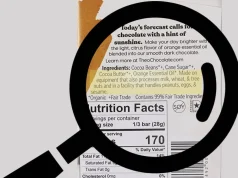

There’s a particular kind of frustration that comes from standing in a skincare aisle, turning a bottle over in your hands, and realizing you can’t pronounce a single thing on the label. You’re not a chemist. You just want to take care of your skin. And somewhere along the way, someone convinced you that more ingredients, more complexity, more science-sounding names meant better results. Clean beauty emerged as a response to exactly that not just a trend, but a genuine reckoning with what we’re putting on the largest organ of our body, every single day.
But here’s the thing about “clean skincare” that doesn’t get said enough: it isn’t about being chemical-free (everything is a chemical, technically), and it isn’t about using only ingredients you could eat. It’s about transparency, intentionality, and choosing actives that are both effective and unlikely to harm. The brands doing this well aren’t stripping out all science they’re applying it with more care. So when we talk about the ingredients that define clean skincare, we’re really talking about a philosophy made visible at the molecular level.
Hyaluronic Acid: The Honest Hydrator
Hyaluronic acid has become almost synonymous with clean skincare, and for good reason. It’s a molecule naturally produced in the human body found in connective tissue, skin, and eyes which means it’s biocompatible in a way that’s hard to argue against. When applied topically, it draws moisture from the environment and binds it to the skin, which sounds simple but represents a fundamental shift away from occlusive, petroleum-derived moisturizers that dominated the market for decades.
What makes it definitively “clean” is its mechanism. It doesn’t disrupt hormones, it doesn’t accumulate in tissue, and it doesn’t require a long tail of stabilizers to function. Formulations with hyaluronic acid tend to be shorter on the ingredient list overall, because the molecule does its job without needing backup.
There’s also something intellectually honest about hyaluronic acid in a product. It signals that the brand isn’t hiding anything. They’re building from a base that most dermatologists would consider low-risk, high-reward.
Niacinamide: The Workhorse That Needs No Disguise
Niacinamide vitamin B3 is one of those ingredients that clean skincare and conventional skincare agree on, which is itself a kind of endorsement. It brightens. It minimizes pores. It strengthens the skin barrier. It calms inflammation. And it does all of this without sensitizing skin to the sun or requiring the intense buffering that retinoids demand.
The reason niacinamide earns its place in clean formulations is its stability and versatility. It doesn’t break down easily in the presence of light or air, so brands don’t need to load up a formula with preservatives or antioxidant stabilizers just to keep it viable on a shelf. Less supporting cast means fewer ingredients overall and fewer ingredients means fewer potential irritants.
There’s a subtler point worth making here. Niacinamide became popular in clean skincare partly because it offered a gentler alternative to hydroquinone for hyperpigmentation a compound that, while effective, carries enough controversy (and enough regulatory scrutiny across multiple countries) to make its presence in a “clean” product feel incongruous. Niacinamide doesn’t carry that weight. It works more slowly, yes. But it works without compromise.
Plant-Based Oils: When Fat Is the Point
Rosehip oil. Squalane. Jojoba. Sea buckthorn. These aren’t skincare ingredients borrowed from the kitchen out of some pastoral fantasy they’re structurally intelligent choices. The reason plant-based oils show up so consistently in clean formulations is that many of them are compositionally similar to human sebum. They don’t sit on top of the skin as a barrier; they integrate.
Squalane, in particular, has undergone a kind of reputational transformation. Originally derived from shark liver (which was, rightfully, a problem), it’s now produced almost universally from sugarcane or olive. The molecule itself a saturated hydrocarbon is nearly identical to a compound our skin already produces. It’s non-comedogenic, oxidatively stable, and light enough to layer under almost anything.
Rosehip oil brings a different gift: a high concentration of linoleic acid, which is often deficient in acne-prone skin. Research suggests that skin prone to breakouts tends to have lower levels of linoleic acid in its sebum making rosehip a genuinely corrective ingredient rather than just a carrier.
What unites these oils in the clean skincare conversation is provenance and process. Cold-pressed, unrefined oils retain their phytonutrients. Refined oils lose them. Clean brands specify this on the label. That specificity matters.
Bakuchiol: The Retinol Conversation Gets More Interesting
For years, the hardest argument against clean skincare was retinol. Vitamin A derivatives are the gold standard for anti-aging clinically proven to stimulate collagen, accelerate cell turnover, and reduce the appearance of fine lines. And they’re synthetic. They require careful formulation. They cause purging, peeling, sun sensitivity. They cannot be used during pregnancy. None of this fits cleanly into the clean beauty narrative.
Then bakuchiol arrived, and the conversation shifted.
Derived from the seeds of the Psoralea corylifolia plant, bakuchiol has been used in Ayurvedic medicine for centuries. But its recent clinical attention has been more pointed. A 2019 study in the British Journal of Dermatology found that bakuchiol and retinol produced comparable improvements in fine lines, pigmentation, and skin elasticity over 12 weeks with bakuchiol producing significantly less irritation and dryness.
This doesn’t mean bakuchiol is identical to retinol. It functions differently at the receptor level, and the long-term research simply isn’t as deep. But for someone who can’t tolerate retinoids, or who’s pregnant, or who simply wants the benefits without the disruption period, bakuchiol is a meaningful answer. It earned its place in clean formulations not by marketing itself as a “natural alternative” but by submitting to the kind of comparative testing that actually matters.
Zinc Oxide: The Sunscreen Ingredient That Doesn’t Compromise
No conversation about clean skincare is complete without addressing sunscreen, and no ingredient in this space is more contentious than chemical UV filters. Oxybenzone, octinoxate, and homosalate standard actives in conventional SPF products have faced increasing scrutiny. Hawaii banned oxybenzone and octinoxate in 2018 over coral reef toxicity. Multiple studies have detected oxybenzone in human blood, urine, and breast milk after topical application, at concentrations that exceeded FDA thresholds for safety data requirements.
Zinc oxide doesn’t have this problem. It’s a physical (or mineral) UV filter, meaning it sits on the surface of the skin and scatters UV rays rather than absorbing and converting them. It doesn’t penetrate the bloodstream in meaningful amounts. It provides broad-spectrum protection across both UVA and UVB ranges. It’s gentle enough to use on infants. Dermatologists recommend it for rosacea, eczema, and post-procedure skin.
The trade-off has always been cosmetic. Zinc oxide, especially in higher concentrations, leaves a white cast a problem that’s disproportionately significant for people with deeper skin tones. The clean beauty industry has responded with micronized and nano-zinc formulations, which improve opacity, though the safety research on nanoparticles remains an ongoing conversation. Some brands are doing genuinely careful work here. Others are using “nano-zinc” as a marketing play without meaningful transparency about particle size or testing.
This is actually where clean skincare reveals its real complexity: being clean isn’t a permanent destination. It’s a practice of staying informed, questioning what you think you know, and choosing the option that asks the least of your body while delivering what your skin actually needs.
Green Tea Extract and Centella Asiatica: Antioxidants With Provenance
Antioxidants are a foundational category in clean skincare they neutralize free radicals that accelerate aging and inflammation. But not all antioxidants are created equal, and two have earned particular standing through both traditional use and clinical evidence.
Green tea extract, rich in epigallocatechin gallate (EGCG), offers broad antioxidant and anti-inflammatory properties. It’s also been studied for its potential to reduce redness, calm reactive skin, and even offer mild photoprotection as a complement to SPF. What makes it a clean standard is its stability in formulation and its low sensitization rate it plays well with almost everything.
Centella asiatica, sometimes called cica or tiger grass, has roots in traditional Korean and Ayurvedic medicine as a wound healer. Contemporary research has validated its ability to stimulate collagen synthesis, reduce inflammation, and support barrier repair. It’s become almost ubiquitous in K-beauty, which has influenced the clean skincare market significantly introducing an entire framework where less is considered more, where soothing comes before stripping, and where the goal isn’t transformation but sustained health.
The real story of these two ingredients isn’t just what they do. It’s what they represent: the idea that efficacy doesn’t require novelty, that longevity of use across cultures is a kind of evidence too, and that the best version of skincare science might be the kind that converges with what humans have quietly known for a very long time.