
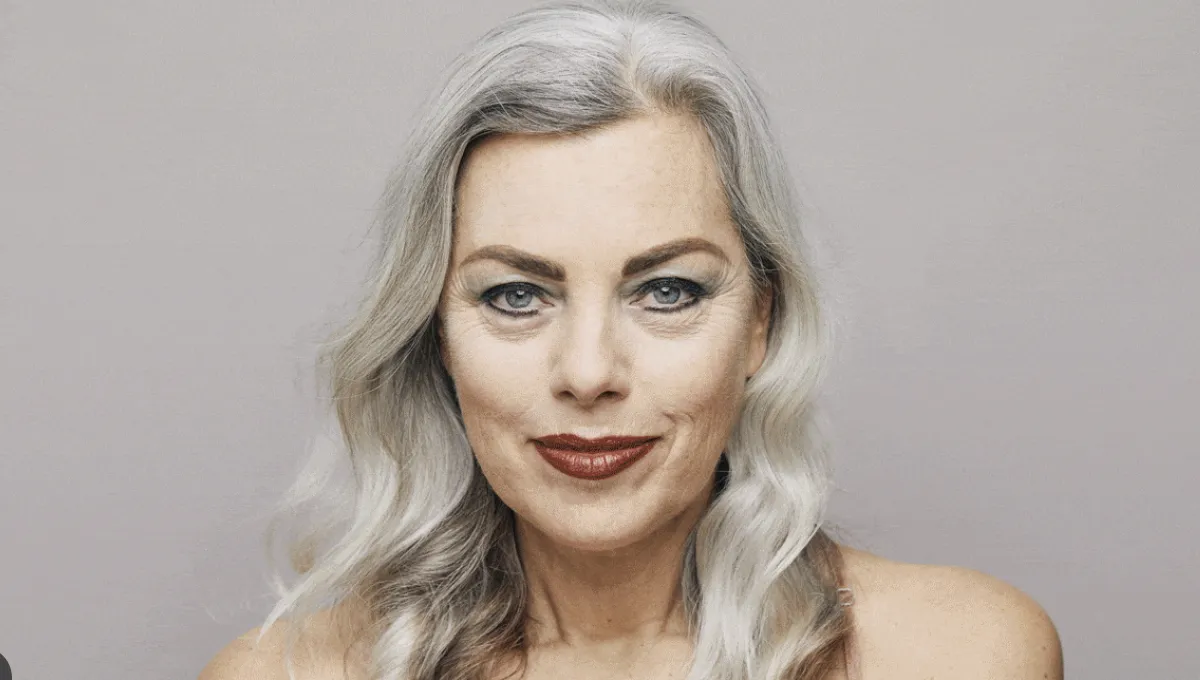
You’re Doing Everything Right And It’s Still Not Working
Picture this: you spend twenty minutes on your makeup, use products that cost real money, follow the same routine you’ve had for years and then catch your reflection under the fluorescent lights at the grocery store and think, “When did I start looking so tired?” Not sick. Not bad, exactly. Just… older than you feel.
That’s the thing about aging makeup mistakes. They don’t announce themselves. They just quietly accumulate until one day you realize your routine is working against you.
I’ve been writing about beauty for a long time, and I’ve made basically every error I’m about to describe. The foundation shade I thought matched my neck but was actually three shades too light giving me what I can only describe as a floating-head effect. The heavy black eyeliner phase I was convinced was sophisticated. We don’t need to dwell on it.
But those mistakes taught me something: the most aging everyday makeup mistakes aren’t the dramatic ones. They’re the small, habitual ones you stop even seeing.
The Foundation Trap Most Women Fall Into
Wrong shade is the obvious culprit, but it’s not actually the biggest issue. The real problem is texture.
As skin matures even just into your late twenties and thirties it changes. Pores shift. Dryness creeps in. Fine lines settle in places that used to be smooth. And full-coverage, matte foundations? They don’t just settle into those lines. They announce them. A heavily matte formula grabs onto texture and essentially highlights every little imperfection it was supposed to cover.
But here’s the part nobody says out loud: lighter coverage can actually make you look younger. Counterintuitive, right? When you let skin breathe through the foundation using something sheer, skin-tint level, or strategically applied only where you actually need coverage faces tend to look fresher, more awake, more alive. Heavy coverage reads as effort. And effort, weirdly, reads as age.
The fix isn’t expensive. Try buffing a lighter-coverage formula with a damp sponge, or mixing a drop of your foundation with a moisturizer. See if your reflection feels more like you.
Powder: The Age Accelerator Nobody Warned You About
I genuinely used to set everything. My T-zone, my under-eye area, my cheeks the whole face, baked and locked. I thought that’s what “lasting makeup” meant.
What it actually meant was I was emphasizing every dry patch and making my under-eyes look crepey by about eleven in the morning.
Powder under the eyes is and I say this with full confidence one of the most aging everyday makeup mistakes in existence. The skin there is already the thinnest on your face. Powder dries it out, catches in the fine lines, and creates a texture that didn’t exist before you got dressed. Skip it entirely under the eyes. Use a tiny amount, sparingly, only on genuinely oily areas. Then stop.
What Overdrawing Your Lips Is Actually Doing
There’s a version of overlining that looks intentional and modern. Then there’s the kind where the liner doesn’t quite match the lipstick, the edges blur by noon, and you end up with a lip that somehow looks both bigger and less defined than you started with.
Lip lines feather as we age that’s just biology. But trying to compensate by heavily drawing outside your natural lip line tends to make that feathering worse, not better. The outline gets fuzzy faster. The color bleeds more. You end up reapplying constantly, which nobody has time for.
A better move: use a liner that matches your lip color exactly (not darker, not dramatically different), apply it on the actual edge of your lips, and if you want more volume, keep it subtle we’re talking a millimeter, not a construction project.
The Concealer Mistake That’s Aging Your Eyes
Most people apply too much concealer under their eyes, and they apply it in a way that draws attention directly to the area they’re trying to minimize.
Here’s the thing if you have deep-set eyes or significant hollowing, piling on a thick layer of brightening concealer doesn’t fill that in. It just creates a light-colored patch that your eye is immediately drawn to, which somehow makes the circles look more prominent. And if you set that concealer with powder? See above.
The trick most people figure out too late is color-correcting first, covering second, and doing both in lighter layers than feels comfortable. A peach or orange-toned corrector neutralizes the blue-purple before you even reach for concealer. Then a thin layer on top, blended outward. No setting powder.
Harsh Brows Age a Face Faster Than Almost Anything Else
Someone in your life has overfilled brows right now. Maybe it’s you and that’s okay, because at some point it was basically everyone.
The problem isn’t filling in brows. Sparse brows do age a face; that part is real. The problem is filling them in as a solid, flat block of color with a product that’s too dark for your natural hair color. It creates a hard border where there should be texture. It pulls attention upward in a way that, strangely, makes eyes look smaller and more sunken.
Try going one shade lighter than you think you need. Use short, hair-like strokes actually mimicking hairs rather than coloring in an outline. And leave the front of the brow slightly softer than the tail. That one adjustment alone can take years off a face, and I mean that literally, not as a figure of speech.
Shimmer, Highlighter, and the Fine Line Between Glow and Glitter
Highlighter became everything for a while there blinding, visible-from-space highlight on the cheekbones, the nose, the cupid’s bow, the inner corners of the eyes. And on younger skin with minimal texture, it can look incredible.
On anyone with visible pores or fine lines, chunky shimmer amplifies both. The particles sit on top of uneven texture and essentially strobe it under light. The effect isn’t dewy. It’s magnified pores.
The move here is switching to a finely milled, luminous product something that reflects light diffusely rather than reflecting it back in a single blinding beam. Liquid highlighters mixed into foundation, or cream formulas patted on with fingers, tend to read as real skin that happens to look well-rested. Which is, let’s be honest, the actual goal.
The Color You’re Still Using That Stopped Working for You
This one’s going to sting slightly: the blush color you loved five years ago may genuinely not be doing you any favors now.
Skin tone shifts over time. Hormones, sun exposure, changes in circulation all of it affects how color sits on your face. A coral that once gave you life might now read orange. A cool-toned pink that used to pop might now clash with new redness around your nose.
This is where I’d argue most women need a proper mirror test in real daylight, with your actual skin, at your actual age not the age you were when you developed the habit. Try a few different blush tones and take photos outside. The camera doesn’t lie the way bathroom lighting does.
And placement matters just as much as color. Blush that sits too low on the face pulls everything downward. Keeping it up, toward the temples and the tops of the cheekbones, lifts the whole face optically. It’s a small shift with a disproportionately large result.
The Habit Nobody Talks About: Skipping Skincare Before Makeup
No makeup application technique corrects dehydrated skin underneath it. Not primer, not setting spray, not any amount of blending.
Dry skin under foundation looks like dry skin with foundation on top of it. The makeup doesn’t hydrate; it just sits on whatever surface it finds. If that surface is rough, tight, or flaky, the foundation will tell you exactly that.
A moisturizer that’s actually absorbed not just applied right before foundation changes what’s possible. Give it a few minutes. Even ten. The difference in how your makeup looks by midday is significant enough that it’s worth the schedule adjustment.
So: when did you last actually look at your routine as it is now, rather than how it was when you first built it?
Because skin changes. Products change. And sometimes the most useful thing isn’t buying something new it’s stopping something old.