
The Beginner’s Guide to Effortless Style Inspiration
Nobody Is Born Stylish
There’s a persistent myth that some people simply have it that effortless style is a genetic gift, something you either inherited or didn’t. Watch enough street style videos or scroll through enough curated feeds and you start to believe that certain people wake up looking like that. They don’t. What looks effortless is almost always the result of quiet, accumulated decisions made over years: learning what fits, what doesn’t, what makes you feel like yourself and what makes you feel like you’re wearing a costume.
That’s actually good news. Style isn’t a talent. It’s a practice.
The problem for most beginners isn’t a lack of taste. It’s a lack of a starting point. You know you want to look better or at least more intentional but every time you open a fashion app or walk into a store, you feel vaguely overwhelmed. There are too many options, too many conflicting opinions, too many “rules” that seem to contradict each other depending on who’s giving them. So you default to what’s safe. The same jeans. The same rotation of three shirts. The same shoes you’ve had since 2019.
Getting out of that loop doesn’t require a complete wardrobe overhaul or a personal stylist. It requires something simpler: a method for finding genuine inspiration that actually connects to your life.
Start With What Already Works
Before you look outward, look at what’s already in your closet not to judge it, but to study it. Pull out the things you actually reach for. The pieces that have survived multiple closet purges. The shirt you get compliments on without trying. The jacket you feel slightly more confident in.
These items are data. They tell you something true about your instincts, even if you’ve never articulated it. Maybe everything you naturally gravitate toward is a similar palette. Maybe the silhouettes share something in common all relaxed, or all fitted, or all with interesting texture. You’re looking for the thread running through your genuine preferences, underneath all the aspirational pieces you bought and never wore.
This exercise isn’t about limitation. It’s about finding your actual baseline, which is a much more honest starting point than copying someone else’s aesthetic wholesale.
The Right Way to Use Visual References
Pinterest, Instagram, TikTok these platforms are both the greatest tools for style research and the fastest path to complete confusion. The key is in how you use them.
Most people browse passively, liking things that catch their eye in the moment. The problem is that your eye gets caught by a lot of things that have nothing to do with who you are or what your life looks like. You’re drawn to an editorial spread of someone in a tailored suit on cobblestone streets in Paris. You save it. Then you look at your actual life your actual commute, your actual budget, your actual body and it evaporates into irrelevance.
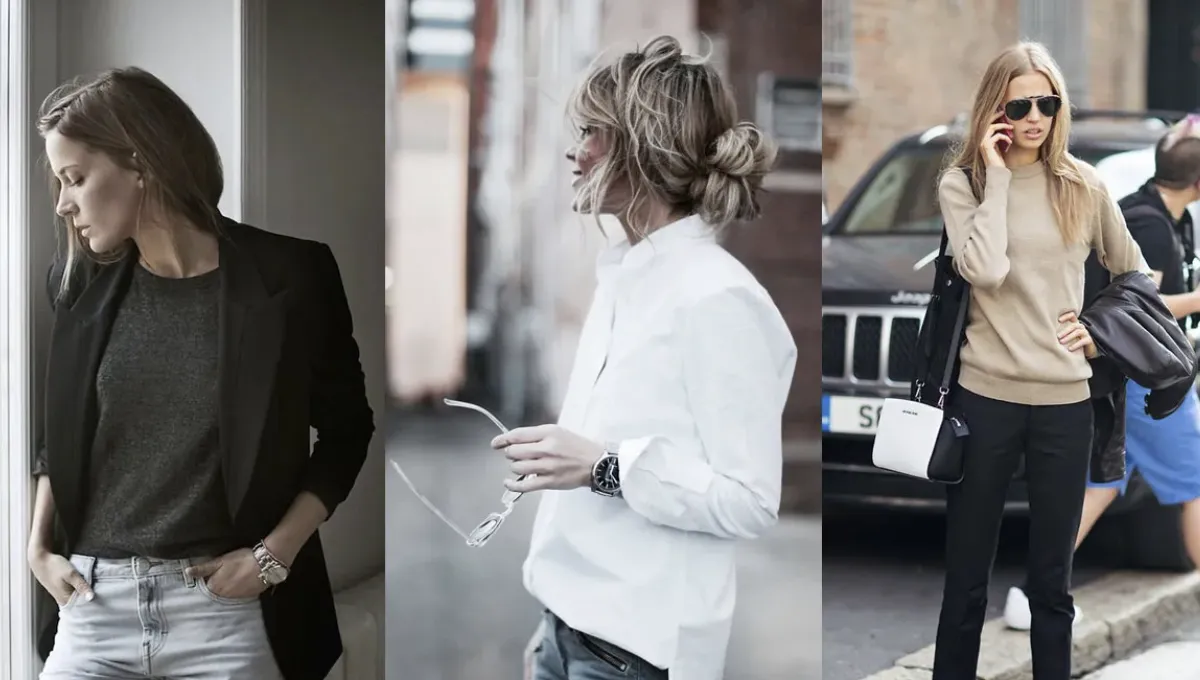
A better approach is to save obsessively for two weeks without editing yourself. Save everything that gives you any kind of reaction. Then, at the end of those two weeks, go back and look at what you saved as a collection. Patterns will emerge that you didn’t consciously notice. Maybe it’s always the same neutral tones showing up. Maybe every image has a certain looseness to the fit. Maybe the styling is always minimal, no visible logos, no loud prints. That pattern is more useful than any individual image, because it reveals something consistent about your taste rather than just what caught your attention on a given afternoon.
Dress for Your Actual Life, Not Your Imaginary One
One of the most underrated pieces of style advice is brutally practical: dress for the life you have, not the one you wish you had.
This sounds almost disappointingly simple. But the reason so many people feel disconnected from their clothes is that there’s a gap between what they buy and how they actually live. Someone who works from home five days a week but keeps buying structured office wear. Someone who hates fussy outfits but keeps being drawn to pieces that require careful maintenance. Someone living in a humid coastal city who’s somehow accumulating sweaters.
Getting dressed should feel like a natural extension of your day, not a negotiation with it. That means getting honest about what your typical week actually looks like. What activities are you dressing for most often? What’s the climate like where you live? What are the practical constraints budget, storage space, how often you do laundry? Style inspiration that ignores these realities will always feel slightly out of reach, like you’re borrowing someone else’s life for a few minutes and then giving it back.
Steal Smarter
Every stylish person you admire is, to some degree, borrowing from someone else. That’s not a critique it’s just how aesthetic culture works. Influence moves in long chains. The thing you love about how your favorite musician dresses probably traces back through four or five people they were watching when they were figuring it out.
So steal. But steal with intention.
When you find someone whose style resonates a friend, a public figure, a character in a film don’t try to replicate their entire look. Instead, isolate the specific element that drew you to them. Is it the way they mix a formal piece with something casual? The way they use one strong color in an otherwise neutral outfit? The way they seem completely unbothered by trends? Take that one thing and experiment with it. Try it in the context of your own wardrobe, your own body, your own life. See what happens.
Copying wholesale produces imitation. Stealing a single technique and making it your own produces evolution.
The Confidence Variable Nobody Talks About
Here’s something that doesn’t show up in most style guides: a significant portion of what reads as “effortless” style has nothing to do with the clothes themselves. It’s the way the person is wearing them.
Confidence isn’t something you fake your way into. But it does tend to follow familiarity. When you wear something new that feels slightly outside your comfort zone, there’s an adjustment period where you’re hyperaware of it tugging at the hem, catching your reflection with a slightly uncertain expression. That’s normal. Give it a few more wears. Let yourself forget you’re wearing it.
The people who look most at ease in their clothes aren’t necessarily wearing the most expensive or technically “correct” things. They’re wearing pieces they’ve worn enough to stop thinking about. That comfort reads as confidence, which reads as style. It’s not a mystery it’s just repetition.
Build Slowly, on Purpose
The consumer culture around fashion wants you to believe that a new wardrobe will fix things, that the next purchase is the one that completes the picture. It rarely works that way. The most thoughtfully dressed people tend to buy less, not more but what they buy is chosen carefully, with a clear sense of how it connects to what they already own.
Think of your wardrobe less like a collection of individual pieces and more like an ecosystem. Every new addition should coexist with what’s already there. Not in a rigid, matchy-matchy way, but in the sense of shared energy similar tones, compatible silhouettes, a consistent feeling when you put things together.
When you find something you genuinely love, sit with it before buying. Ask whether you could style it three different ways with what you already own. If you can’t, that’s not necessarily a reason to pass but it’s worth knowing.
Style, at its best, is just a form of clarity. Clarity about who you are, what you actually like, and how you want to move through the world. The “effortless” part comes later, once the decisions have been made so many times that they stop feeling like decisions at all.