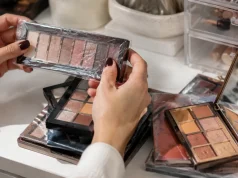

There’s a particular kind of exhaustion that comes from feeling like you’re supposed to want something you don’t. For years, the beauty industry has operated on the assumption that everyone given enough time, money, and the right YouTube tutorial secretly wants a full face. Foundation, contour, highlight, setting spray. The whole production. And if you don’t want that, well, you just haven’t found your routine yet.
But some people genuinely don’t want a routine. They want to wash their face, maybe do one or two things, and leave the house feeling like themselves. Not “a better version” of themselves. Just themselves, with maybe slightly less chaos happening on their skin.
This isn’t a guide for people who love makeup but want to simplify. It’s for the ones who’ve never really connected with it who find the whole process time-consuming at best, performative at worst but still want to feel put-together without looking like they crawled out of a ditch.
Start With Skin, Not Products
The single biggest shift you can make if you want to wear less makeup or none at all is investing in your skin itself rather than what you put on top of it. This sounds obvious until you realize how much of “minimal makeup” content is still just… more products. Tinted moisturizer instead of foundation. Tinted lip balm instead of lipstick. The productcount barely drops; the category labels just change.
Real skin investment looks more boring than that. It’s consistently wearing SPF during the day, because sun damage is responsible for more visible skin aging than almost any other single factor. It’s using a gentle, unfussy moisturizer one that doesn’t break you out and doesn’t cost a fortune morning and night. It’s not scrubbing your face aggressively because you read somewhere that exfoliation is important. (It is, in moderation. Daily physical scrubbing is not moderation.)
If your skin is reasonably comfortable not tight, not oily by noon, not constantly breaking out you’ve already done most of the work. What you see in the mirror on a given morning is much more manageable when the baseline is solid.
The One-Product Rule
Here’s a framework that sounds almost too simple: pick one thing and do it well.
Not one category. One product. For some people, that’s a tinted sunscreen, which does three jobs at once moisturizer, SPF, and the lightest possible evening of skintone. For others, it’s a clear brow gel, because shaped eyebrows create the impression of effort even when the rest of your face is completely bare. For others still, it’s a creamy lip-and-cheek tint in a shade close to their natural coloring, giving the face a slight flush that reads as “awake” rather than “done up.”
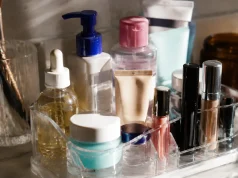
The goal of the one-product rule is to stop the decision fatigue before it starts. When you have twelve products on your bathroom shelf and a vague sense that you should be using most of them, the mental overhead of getting ready in the morning becomes genuinely taxing. Narrowing it to one removes the negotiation entirely. You either use it or you don’t, and either way, you haven’t failed.
What that one product is depends entirely on what your face actually looks like and what bothers you if anything bothers you at all. Some people are primarily self-conscious about redness, and a green-tinted primer or a light, blendable coverage product handles that in under ninety seconds. Others feel like their eyes disappear without something to define them, in which case a single coat of brown or black mascara does more than any five-step eye look. The key is figuring out your specific concern rather than following a generalized routine built for someone else’s face.
The Myth of “Effortless”
It’s worth pausing on a word that gets thrown around constantly in minimal beauty content: effortless. The effortless look. No-makeup makeup. Skin that looks effortlessly good.
There’s something slightly dishonest buried in that language. Because what “effortless” usually means is effort that isn’t visible which is a very different thing. The woman who looks luminously bare-faced in a meeting has, in most cases, spent years building habits around sleep, hydration, and skincare. Or she’s just genetically lucky, which is also a real thing that exists and doesn’t need to be explained away.
True effortlessness actual zero effort is available to exactly everyone, and it looks like whatever your face looks like when you wake up. Which is fine. Your face at rest is a completely acceptable face to walk around with. The industry has done a remarkable job of convincing people otherwise, but it remains factually true.
The point of a bare-minimum routine isn’t to fake effortlessness. It’s to do the small number of things that make you feel comfortable in your own skin without those things becoming a project.
When You Want a Bit More Without Committing
There are occasions job interviews, weddings, the kind of event where someone is going to be photographing you under fluorescent lights when bare-faced isn’t quite what you want, but a full face feels wrong too. This is where a handful of genuinely low-effort products earns their place.
A light concealer under the eyes, patted in with a finger rather than a brush, neutralizes the hollowness that makes people ask if you’re tired. It takes about thirty seconds and blends with zero technique. A brow pencil or powder, used lightly to fill any sparse areas, gives the face structure that reads as “awake and intentional” in photographs even when nothing else is happening. And if you want some color in your cheeks, on your lips a single cream product that can do both means you’re carrying one thing instead of four.
None of this requires a mirror lit like a film set. None of it requires a brush collection. These are things you can do in a car visor mirror, in a bathroom with bad lighting, in under four minutes. And importantly, all of it can be removed with a single face wipe and a bit of water if you decide halfway through the day that it’s not for you.
What You Actually Need on the Shelf
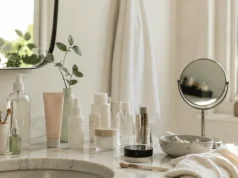
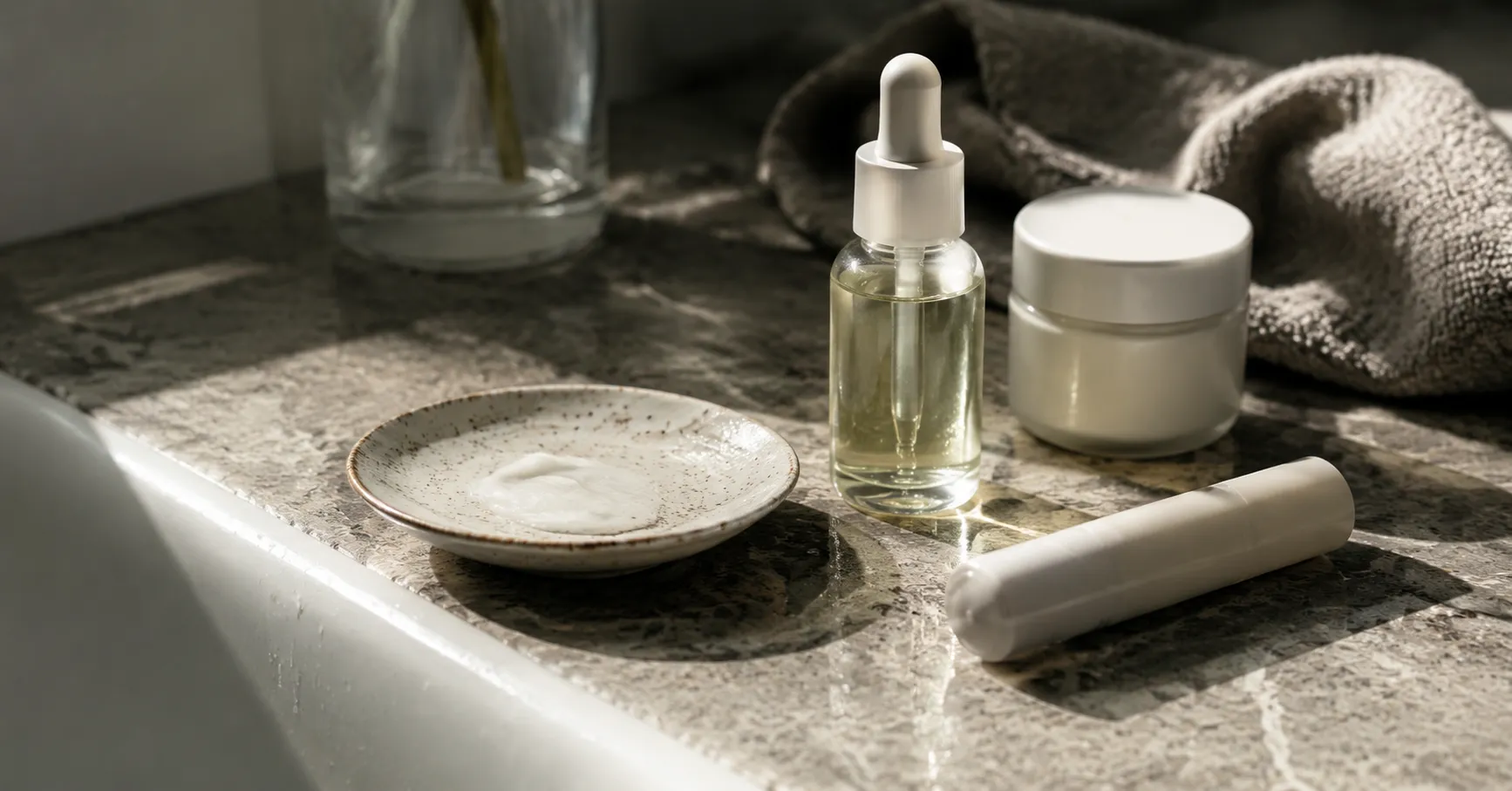
Keep it short. A gentle cleanser that doesn’t strip your skin. A moisturizer that agrees with your face. SPF separate or built into your moisturizer, doesn’t matter, as long as you actually use it. One optional product for whatever specifically bothers you. That’s it. That’s the whole shelf.
Everything else is optional in the truest sense of the word. Not “optional but you probably should” optional. Genuinely, completely, no-one-is-grading-you optional.
The beauty industry is built on the expansion of perceived need. New categories, new concerns, new solutions to problems you didn’t know you had until someone named them and gave them a product. Stepping back from that expansion doesn’t mean you’re neglecting yourself. It might mean you know exactly what you need which is, honestly, a much harder thing to arrive at than a ten-step routine.
The Question Underneath the Routine
People who say they hate wearing makeup are sometimes told, with a gentle condescension that’s hard to argue with, that they just haven’t found the right products. And that might be true for some. But for others, the resistance isn’t a puzzle to be solved. It’s a clear signal about how they want to move through the world.
There’s something worth sitting with in that distinction. A routine should serve you your time, your comfort, your sense of yourself in the morning. The moment it becomes an obligation, a performance, or a disguise, it’s doing something other than what it’s supposed to do.
Bare skin isn’t a statement. It’s not laziness, and it’s not rebellion. For a lot of people, it’s just where they feel most like themselves. And working outward from that building habits that support your skin rather than cover it is a quieter, more sustainable relationship with how you look than any twelve-step routine promising transformation.