
There’s a certain kind of frustration that beauty lovers know all too well. You spend twenty minutes on a flawless foundation application, blend your contour until it’s seamless, and set everything with powder. Then, three hours later, you catch your reflection in a bathroom mirror under fluorescent lights and barely recognize what you see. The color looks muddy. The skin tone is off. The whole thing just feels… wrong.
Most people blame the products. They blame the formula, the shade, the brand. They switch foundations, try different setting sprays, and spend a small fortune chasing a finish that never quite arrives. But the problem usually isn’t what’s going on your face. It’s what isn’t happening before any of it begins.
The Step That Changes Everything
Primer. Not moisturizer, not SPF, not a tinted serum dedicated, intentional primer applied as a standalone step between your skincare and your makeup. It sounds obvious when you say it out loud, and yet the number of people who skip it, rush through it, or use something completely wrong for their skin type is staggering.
Primer isn’t glamorous. It doesn’t show up on anyone’s “get ready with me” video as the exciting part. Nobody posts a close-up of their primer application because, well, it just makes your skin look like skin. That’s exactly why it gets underestimated. The effects of primer are invisible in the best possible way you only really notice them when you stop using it.
The core function of primer is adhesion. Your skin is not a flat, inert surface. It has texture, pores, movement, oil production, and a natural cycle of hydration and sebum output that shifts throughout the day. Foundation, no matter how advanced its formula, is not designed to bond directly with all of that complexity. Primer creates a standardized surface one that’s been neutralized, smoothed, and prepared specifically to grip pigment and hold it in place.
Think of it the way a painter thinks about gesso. You wouldn’t apply oil paint directly to raw canvas and expect the colors to behave the way you want. The canvas needs a primer layer first. The same principle applies here, just with considerably higher stakes because you’re wearing it on your face.
Why Skin Type Makes All the Difference
Here’s where a lot of people go wrong even when they do use primer: they grab the wrong one. Primers are not universal. A silicone-based primer on dry skin can create a smooth initial finish that flakes apart by noon. A hydrating primer on oily skin can turn into a slip-and-slide surface that sends foundation migrating toward your hairline within an hour.
Oily skin needs a primer with oil-absorbing ingredients mattifying agents like kaolin clay, dimethicone in specific formulations, or silica. These work to reduce the excess sebum that acts as a solvent for your foundation, essentially dissolving it from beneath. Without controlling that variable, no foundation on the market will last.
Dry skin needs something fundamentally different. Hydrating primers with humectants and emollient ingredients create a moisture buffer that keeps foundation from clinging to dry patches and cracking in the creases. A dry-skin person using a pore-minimizing, mattifying primer is essentially applying a product that will pull moisture out of an already parched surface. The result is the flaky, patchy finish that makes people think their foundation is the problem.
Sensitive or redness-prone skin benefits from a color-correcting primer often green-tinted that neutralizes the underlying discoloration before any flesh-toned product goes on top. Layering foundation over visible redness means the foundation has to work overtime to neutralize and cover simultaneously, which always results in a heavier, less natural look.
Combination skin, predictably, is the most complicated. A lightweight primer applied more heavily to the T-zone with a lighter application on drier areas is a more effective approach than slapping a single formula uniformly across the face.
The Technique Nobody Talks About
Even when people pick the right primer for their skin type, they frequently apply it incorrectly. The most common mistake is applying primer immediately after moisturizer while the skincare is still actively absorbing. That’s a collision of products happening at the surface level, and it compromises both the skincare’s efficacy and the primer’s ability to adhere properly.
The rule is simple but it requires a little patience: wait. Give your moisturizer and especially your SPF if you’re wearing it time to fully absorb and settle before primer goes on. This is usually around five minutes, though it varies depending on the product’s texture and your skin’s absorption rate. If you touch your skin and it still feels slightly slick or tacky from your skincare, it hasn’t finished absorbing. Wait another minute or two.
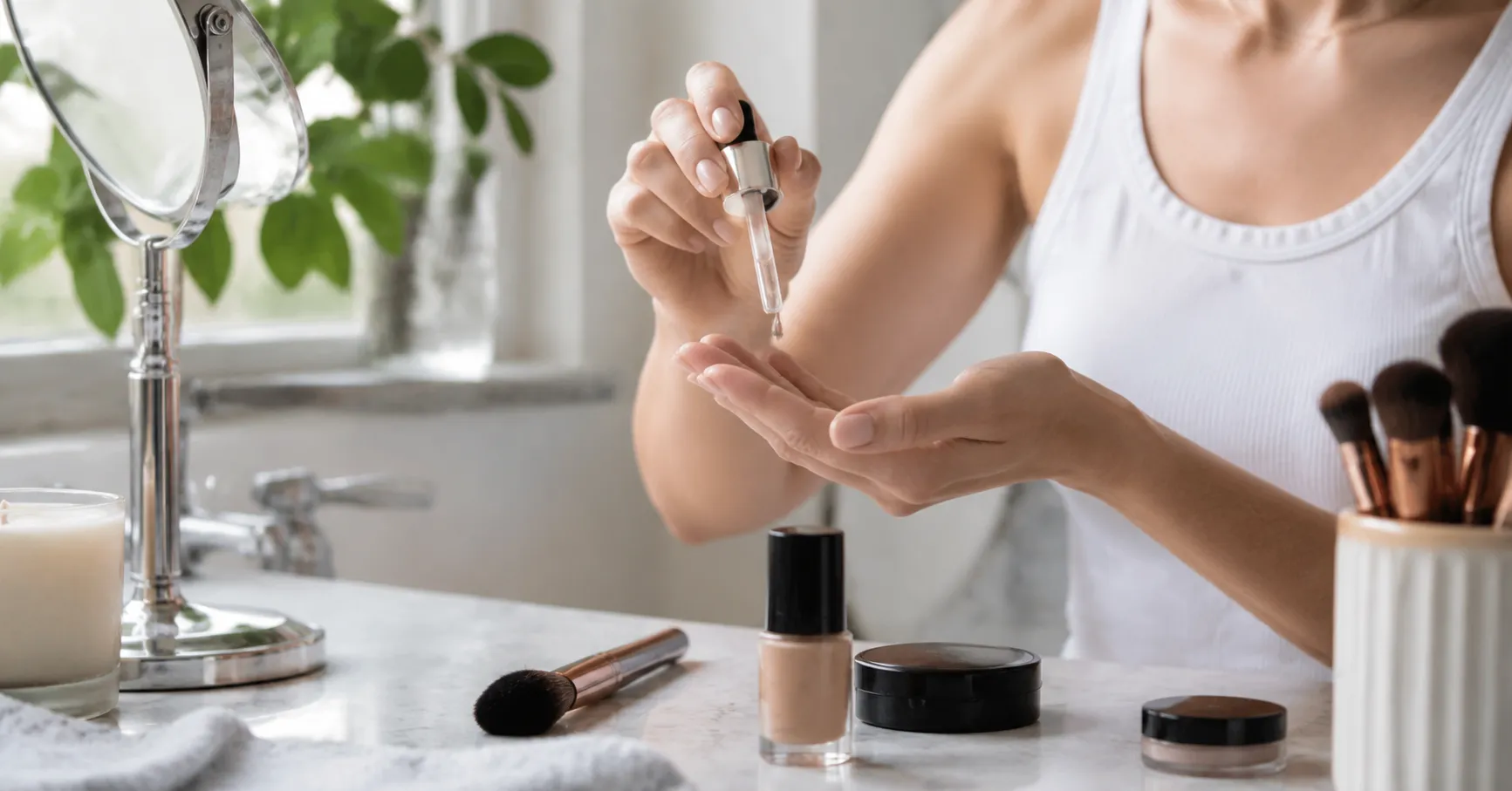
Application method matters as well. Fingertips work well for most primers because the warmth helps emulsify silicone-based formulas and encourages them to meld into the skin rather than sit on top of it. A damp sponge is useful for hydrating primers and can help sheer out the product for a more even, breathable layer. What you generally want to avoid is applying primer so thickly that it creates its own distinct, visible layer the goal is integration, not stacking.
One area that routinely gets neglected is the eye area. The eyelid is one of the most mobile parts of your face, crease-prone and naturally oily. If you’re wearing eyeshadow and skipping an eye primer, you’re working against yourself from the beginning. The same logic applies. A small, dedicated eye primer applied before your eyeshadow is the single most effective thing you can do for color payoff, blendability, and longevity far more impactful than switching to a different eyeshadow formula or brand.
What Happens to Your Makeup Without It
Let’s be specific about the failure modes. Without primer, a few predictable things happen over the course of a day. Foundation begins to separate from areas of higher oil production typically the nose, inner corners of the eyes, and forehead. This is called “oxidation” by some, though it’s more accurately a combination of oil disruption and pigment breakdown. The color shifts, usually darker or more orange, because the foundation’s pigments react with the sebum that’s broken through.
Powder products lose their dimension. Blush fades from a flush to barely-there. Bronzer loses its warmth. Highlight, which depends entirely on precise pigment placement, smears and diffuses into nothingness. Concealer migrates into fine lines and settles into a crease under the eye that no amount of setting powder can fully prevent.
With a proper primer layer, the foundation has something to grip onto. Movement still happens this is a living face, not a portrait but the rate of degradation is dramatically slower. Products hold where you placed them. Color stays true. The overall effect still looks intentional at the end of the day rather than like something that survived an incident.
A Note on “Primer” Products That Aren’t Really Primers
The beauty industry has a habit of labeling things loosely. There are hundreds of products on the market right now marketed as primers that are, functionally, either glorified moisturizers or serums with a small amount of silicone added. They’re not bad products. They just don’t do what a dedicated primer does.
If the primer you’re using has a long ingredient list of active skincare ingredients niacinamide, peptides, hyaluronic acid in high concentrations it’s probably more skincare than primer. That’s fine in its place, but it doesn’t replace a true adhesion-focused formula. Read the product purpose carefully, look at the texture and finish, and test its actual effect on your makeup’s longevity. The proof is always in how your face looks six hours after you leave the house.
Some people have genuinely good luck with their foundation lasting without primer, and that’s often down to a specific combination of skin type and foundation formula that happen to be compatible. But that’s the exception, and even in those cases, a compatible primer would likely improve the result further.
Starting Over With Your Routine
If you’ve never made primer a non-negotiable part of your routine, the easiest way to understand its impact is to do a direct comparison. Do your makeup one day without it. The next day, same products in the same order, with the right primer added between your moisturizer and foundation. Take photos at the same time intervals. The difference won’t be subtle.
That single addition that one step you’ve been glossing over or skipping entirely will make everything else you’ve invested in your makeup bag actually perform the way it was meant to. You don’t need to overhaul your collection. You just need to stop starting without a proper foundation for your foundation.