
Quiet Luxury vs Old Money Style: What’s the Real Difference?
There’s a moment most people have experienced scrolling through a fashion editorial or spotting someone across a hotel lobby where you think: that looks expensive. Not flashy. Not labeled. Just… expensive. And quietly so. But here’s where it gets interesting: are you looking at quiet luxury, or old money style? Because while these two aesthetics have been used interchangeably across social media for the past few years, they are not the same thing. Not even close.
The conflation is understandable. Both aesthetics reject logomania. Both favor neutral palettes, clean tailoring, and a certain restraint that reads as confidence rather than insecurity. On a Pinterest board, they can look nearly identical. But the difference between them is less about what you wear and more about why and that “why” runs much deeper than a color palette.
The Rise of Quiet Luxury: A Reaction to the Moment
Quiet luxury as a contemporary aesthetic trend didn’t emerge from nowhere. It was, in large part, a cultural response a rejection of the maximalist, logo-heavy flexing that dominated the early 2010s and found its logical extreme in the hypebeast era. When Succession started airing and people began dissecting the Roys’ wardrobe choices, quiet luxury got a name and a face. Suddenly, “stealth wealth” was searchable.
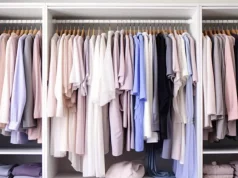
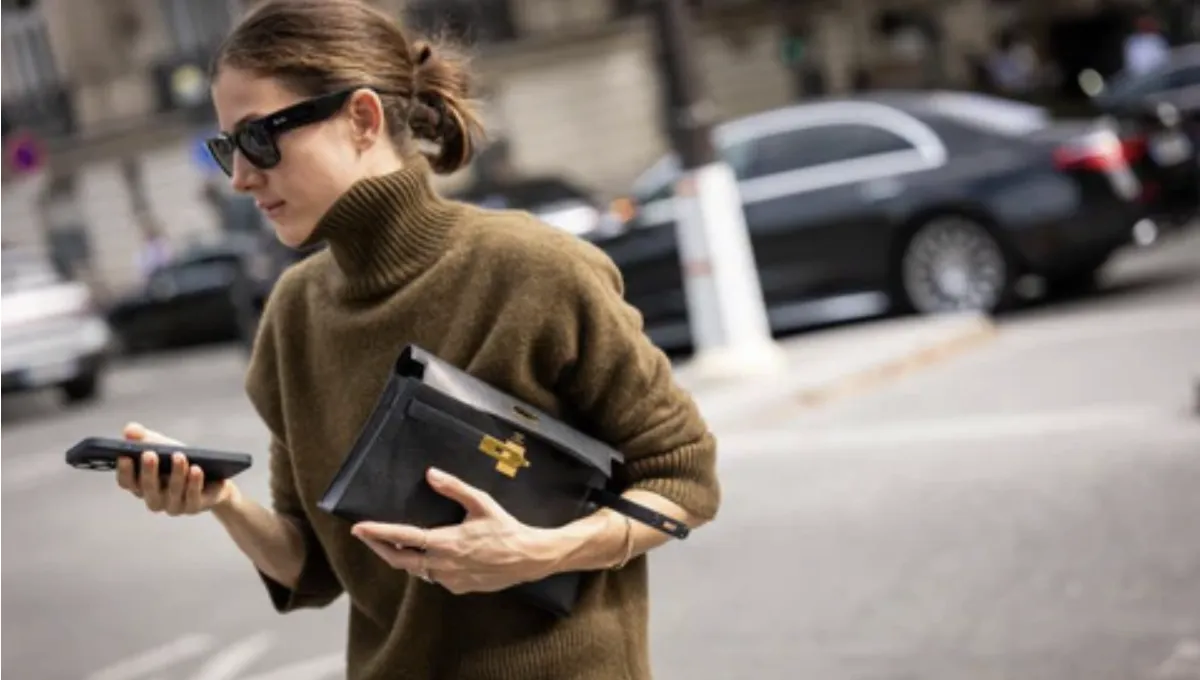
The aesthetic is defined by what it removes. No visible branding. Muted tones oatmeal, camel, stone, navy. Impeccable fit without theatrical structure. The idea is that the clothes whisper rather than shout, and the whisper implies that the wearer has nothing to prove. Loro Piana cashmere, The Row, Brunello Cucinelli these became the reference points. Expensive, yes, but more importantly, unreadable to anyone outside the know.
Here’s the thing though: quiet luxury is still a performance. It’s a consciously assembled aesthetic, curated with full awareness of how it will be perceived. The person wearing $900 linen trousers and a seamless turtleneck has made a deliberate choice to communicate something a position in culture, a rejection of one tribe in favor of another. It’s thoughtful. It can even be genuinely beautiful. But it is, at its core, a style choice made in response to a cultural moment.
Old Money Style: When Dressing Is Simply Habit
Old money style operates from an entirely different psychological foundation. It isn’t a trend someone opted into. It’s the residue of generations the visual grammar that develops when wealth is so normalized it stops being a subject worth communicating.
Think about the classic markers: a slightly worn Barbour jacket, loafers that have been resoled twice, a cable-knit sweater in a color that was never particularly fashionable but has always been perfectly appropriate. The striped Oxford shirt that belonged to your father. The signet ring that belonged to his. There’s a specificity to old money style that quiet luxury, for all its intentionality, struggles to replicate the specificity of accumulated time.
Old money dressing tends to skew preppy in the American context, leaning on institutions (Andover, Yale, the Adirondacks in August), team sports, and a certain cheerful indifference to current fashion. It’s the Brooks Brothers suit worn because that’s what one wears to this particular event, not because it was selected from a mood board. In the British context, it’s Tattersall shirts and Hunter wellies and the specific faded quality of a tweed that has genuinely been worn to shoot in. The wear is real, not manufactured.
What’s most telling is the relationship to shopping. Quiet luxury requires active, often significant consumption to maintain. Old money style is partially defined by its resistance to shopping things are kept, repaired, inherited. A quiet luxury wardrobe might cost $15,000 assembled over two seasons. An old money wardrobe might cost less than that, because so much of it was simply… already there.
The Color Question Is More Complicated Than It Seems
Both aesthetics favor neutrals, but the reasoning diverges in ways that reveal their fundamental difference.
Quiet luxury chooses neutrals because they read as sophisticated, versatile, and implicitly expensive in the current visual climate. The palette is selected. There’s often a coherence to it that feels almost editorial everything works together because it was chosen to work together.
Old money neutrals exist because certain colors have simply always been appropriate for certain occasions. Navy and white for summer. Khaki for weekends. Dark wool for winter evenings. The palette isn’t curated; it’s inherited, both literally and culturally. And because old money dressing includes a wider range of contexts country weekends, sailing, institutional events, informal family gatherings it also accommodates things quiet luxury would never touch: a slightly garish club tie, a boldly patterned kilt at a Scottish event, a sailing jacket in a very particular shade of bright yellow.
There’s also a relationship to color that comes from genuinely wearing things until they fade. The oatmeal of quiet luxury is intentional. The oatmeal of old money is a navy that has simply been washed many, many times.
What Aspiration Looks Like From Both Sides
Here’s where the conversation gets genuinely interesting, and a little uncomfortable. Both aesthetics are aspirational, but they’re aspirational in different directions.
Quiet luxury is aspirational upward. It borrows the visual codes of a certain kind of wealth and uses them to signal membership or proximity. Even for people who can genuinely afford The Row, there’s an element of positioning I am the kind of person who chooses this. The aesthetic is aware of itself, aware of its audience, aware of what it communicates. That’s not a criticism; it’s just an accurate description of how contemporary fashion functions.
Old money style, when it’s authentic, isn’t aspirational at all. It’s simply the default. The person who grew up wearing it isn’t making a statement about wealth; they’re just dressed. The aspiration only enters the picture when someone from outside the culture attempts to adopt it and that’s where things get complicated, because old money style is notoriously difficult to imitate convincingly. Not because the clothes are inaccessible (a lot of old money staples are actually quite affordable Lands’ End, L.L.Bean, thrifted tweed), but because the ease is impossible to fake.
Ease is the operative word. Old money style is worn with a specific kind of unconsidered comfort. The collar is slightly rumpled. The trousers have a proper break, not a perfect one. Nothing is too new. A quiet luxury wardrobe, by contrast, tends to be very well pressed, very intentional, very considered. The difference between the two in person is the difference between a person who got dressed and a person who got dressed carefully.
The Internet Made This Messier
Before social media turned both aesthetics into searchable categories, theycoexisted without much friction because they occupied different cultural spaces. The old money crowd wasn’t watching what streetwear influencers wore. The fashion-conscious urban professional wasn’t particularly aware of how people dressed at the Knickerbocker Club.
The internet collapsed those distances and created a strange situation where both aesthetics are now being performed for the same audience. Old money signifiers get extracted from their original context the signet ring, the NantucketReds, the prep school name-drop and reassembled into an aesthetic package that looks like the real thing without carrying any of its cultural weight. Quiet luxury gets critiqued as mere wealth performance while aspiring to the authenticity it can’t quite access.
What’s lost in this flattening is that old money style, at its best, isn’t about exclusion or superiority. It’s about a relationship with objects and clothing that is genuinely different from consumer culture slower, less concerned with the new, more attached to the particular. A pair of Bean Boots worn for twenty years carries a different meaning than a pair of impeccably selected minimalist sneakers, even if both photographs equally well.
So What’s the Real Difference?
Strip away the Pinterest boards and the TikTok aesthetics and the trend cycles, and it comes down to this: quiet luxury is a language being spoken deliberately, while old money style is a dialect absorbed unconsciously.
One requires intention. The other requires inheritance not necessarily of money, but of a particular set of habits, values, and indifferences. You can learn quiet luxury from a mood board in an afternoon. You cannot learn old money style, not truly, because what you’re really trying to learn isn’t how to dress it’s how to stop thinking about how you dress.
And that’s the quiet irony at the center of both aesthetics. The one that tries harder to look effortless tends to look more effortful. The one that doesn’t try at all tends to look like exactly what it is which is either the most authentic thing in fashion, or proof that authenticity in fashion was always a function of where you happened to start.