
Is “Natural” Always Better? The Myth of Clean Cosmetics
The Vocabulary That Sells Before You Even Read the Label
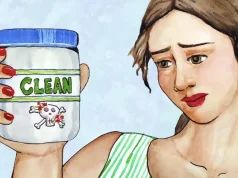
Walk into any Sephora, scroll through a wellness influencer’s feed, or browse the skincare aisle at Whole Foods, and you’ll be swimming in a particular kind of language. “Clean.” “Natural.” “Non-toxic.” “Pure.” These words carry an almost spiritual weight they promise not just better skin but a kind of moral clarity, the feeling that you are making the right choice in a world full of wrong ones.
The problem is that none of these words mean anything legally. In the United States, the FDA does not define “natural” or “clean” when it comes to cosmetics. There is no regulatory checklist a brand must pass before printing those words on a bottle. Which means the entire clean beauty movement, a multi-billion-dollar industry reshaping how millions of people shop and think about their health, is built on a foundation of vibes.
That’s not a cynical take. It’s the starting point for a more honest conversation.
Where the Myth Comes From
The appeal of “natural” is deeply human and not entirely irrational. For most of history, what went on your skin came from plants, minerals, and animal fats things with names you could recognize. The industrial era brought synthetic chemistry into personal care, and while it delivered real innovations (stable preservatives, broad-spectrum sunscreens, emulsifiers that make creams actually feel good), it also introduced unfamiliar-sounding ingredients that made people uneasy.
Then came the internet, and with it the asymmetry of information anxiety. A parent researching their baby’s lotion falls down a rabbit hole of studies, forum posts, and activist campaigns. They encounter phrases like “endocrine disruptor” and “carcinogenic at high doses.” They see long chemical names on labels methylisothiazolinone, phenoxyethanol, titanium dioxide and something instinctive kicks in. If I can’t pronounce it, maybe I shouldn’t put it on my body.
The clean beauty movement arrived as a kind of rescue narrative. Companies like Beautycounter, Erewhon’s house brands, and hundreds of indie labels positioned themselves as the antidote to Big Beauty’s reckless chemistry. The messaging was savvy: we did the research so you don’t have to. Their “never lists” and “banned ingredient” pages gave consumers a satisfying shorthand for trust.
What they were really selling, though, was a story.
The Dose Makes the Poison Always
There is a principle in toxicology that precedes modern science by five centuries: the dose makes the poison. Paracelsus, the 16th-century Swiss physician, stated it plainly everything is a substance, and everything can be toxic depending on concentration. Water can kill you. Vitamin A can kill you. The question is never simply what something is, but how much of it you’re exposed to, through what pathway, and for how long.
Clean beauty, in its more extreme forms, ignores this completely.
Take parabens. They were for years the clean beauty movement’s favorite villain preservatives used in cosmetics for decades that were accused of acting as estrogen mimics and potentially contributing to breast cancer. A widely cited2004 study found parabens in breast tumor tissue, and the panic spread fast. Brands rushed to reformulate. “Paraben-free” became a selling point.
The problem: the study found parabens present in tissue but made no causal claim about cancer. Subsequent research from the European Scientific Committee on Consumer Safety concluded that the most common parabens, at concentrations used in cosmetics, present negligible risk. The amounts involved are orders of magnitude below what would be needed to produce meaningful estrogenic activity in the human body. Meanwhile, lavender oil that staple of natural beauty has its own documented estrogenic effects and has been linked in case studies to prepubertal gynecomastia in boys.
Nature is not inherently gentle. Poison ivy is natural. Lead occurs naturally. The nightshade family gave us one of the most lethal toxins known to humans. Framing synthetic as dangerous and natural as safe is not science it’s mythology dressed in wellness aesthetics.
The Hidden Costs of Going “Clean”
When brands remove ingredients that actually work, something has to fill the gap. And sometimes what fills it is worse.
Preservatives are a useful lens here. Cosmetics need them. Water-based products without effective preservation become petri dishes breeding grounds for bacteria, mold, and yeast that can cause eye infections, skin reactions, and worse. Parabens were effective, well-studied, and safe at cosmetic concentrations. The alternatives that replaced them in “clean” formulations things like methylisothiazolinone and benzyl alcohol have in many cases caused a surge in allergic contact dermatitis. Dermatologists began reporting the trend almost as soon as the reformulations hit shelves.
There’s also the environmental calculation that clean beauty tends to skip. Plant-derived ingredients sound virtuous, but they require land, water, and often significant processing to extract and stabilize. Synthetic ingredients can frequently be produced with a smaller resource footprint and more consistent purity. The clean beauty narrative rarely makes room for this complexity because complexity doesn’t move product.
And then there’s efficacy. Some of the most evidence-backed skincare ingredients are synthetic by nature: retinoids, niacinamide, hyaluronic acid, azelaic acid. The idea that a rosehip oil or a green tea extract can replicate what a well-formulated retinol does for cell turnover is not supported by the clinical literature. For people spending real money trying to address real skin concerns hyperpigmentation, acne, premature aging the gap between expectation and result can be both financially and emotionally costly.
The Regulation Gap That Makes Everything Worse
Part of why this confusion persists is structural. The United States has historically been one of the least regulated markets for cosmetics in the developed world. The European Union has banned or restricted over 1,300 cosmetic ingredients. The US has banned or restricted around 11. The FDA does not require pre-market approval for cosmetic ingredients, does not mandate safety testing before products reach shelves, and does not have the authority to recall cosmetics directly.
This regulatory vacuum created the conditions for clean beauty to flourish and also for it to mislead. When there’s no authoritative definition of safe, brands can define safety however they like. They can publish their own “banned” lists that include ingredients with strong safety profiles while greenlighting others that have far thinner evidence bases. The consumer, navigating this without specialized training, has little way to evaluate the logic.
The Modernization of Cosmetics Regulation Act, signed into law in 2022, was a step toward closing some of these gaps, giving the FDA more authority over safety and labeling. But implementation is slow, enforcement is underfunded, and the marketing culture around clean beauty moves far faster than any regulatory body can keep up with.
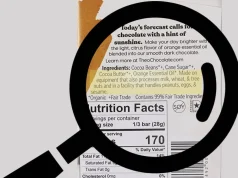
Reading the Label More Honestly
None of this means that every synthetic ingredient is harmless or that plant-based formulations have nothing to offer. There are genuinely problematic ingredients in conventional cosmetics certain fragrance compounds, some UV filters with environmental concerns, a handful of colorants with contested safety profiles. Scrutiny is warranted. Ingredient literacy is genuinely useful.
The goal, though, should be critical engagement rather than clean-versus-dirty tribalism. A fragrance-free formula may benefit someone with sensitive skin not because fragrance is universally toxic, but because it’s a common sensitizer. A mineral sunscreen may be preferred not because chemical filters are dangerous, but because certain individuals tolerate one better than the other. These are personal, context-dependent choices not moral positions.
The dermatologists and cosmetic chemists who have been quietly pushing back against clean beauty’s more extravagant claims aren’t defending corporate negligence. They’re asking for the same thing good science always asks for: evidence over narrative, nuance over fear.
When you reach for a product because the packaging makes you feel righteous, it’s worth pausing to ask what that feeling is actually based on. Marketing has always known how to make us feel like we’re making the wise choice. The language just gets more sophisticated with each generation. “Natural” is this era’s version of “new and improved” a signal designed to bypass your skepticism, not reward it.
The skin doesn’t know the difference between a molecule derived from a coconut and one synthesized in a lab. But your wallet, and sometimes your health, can feel the difference between a choice made with evidence and one made with aesthetics.