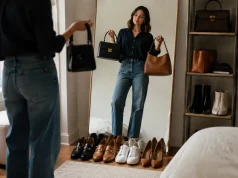

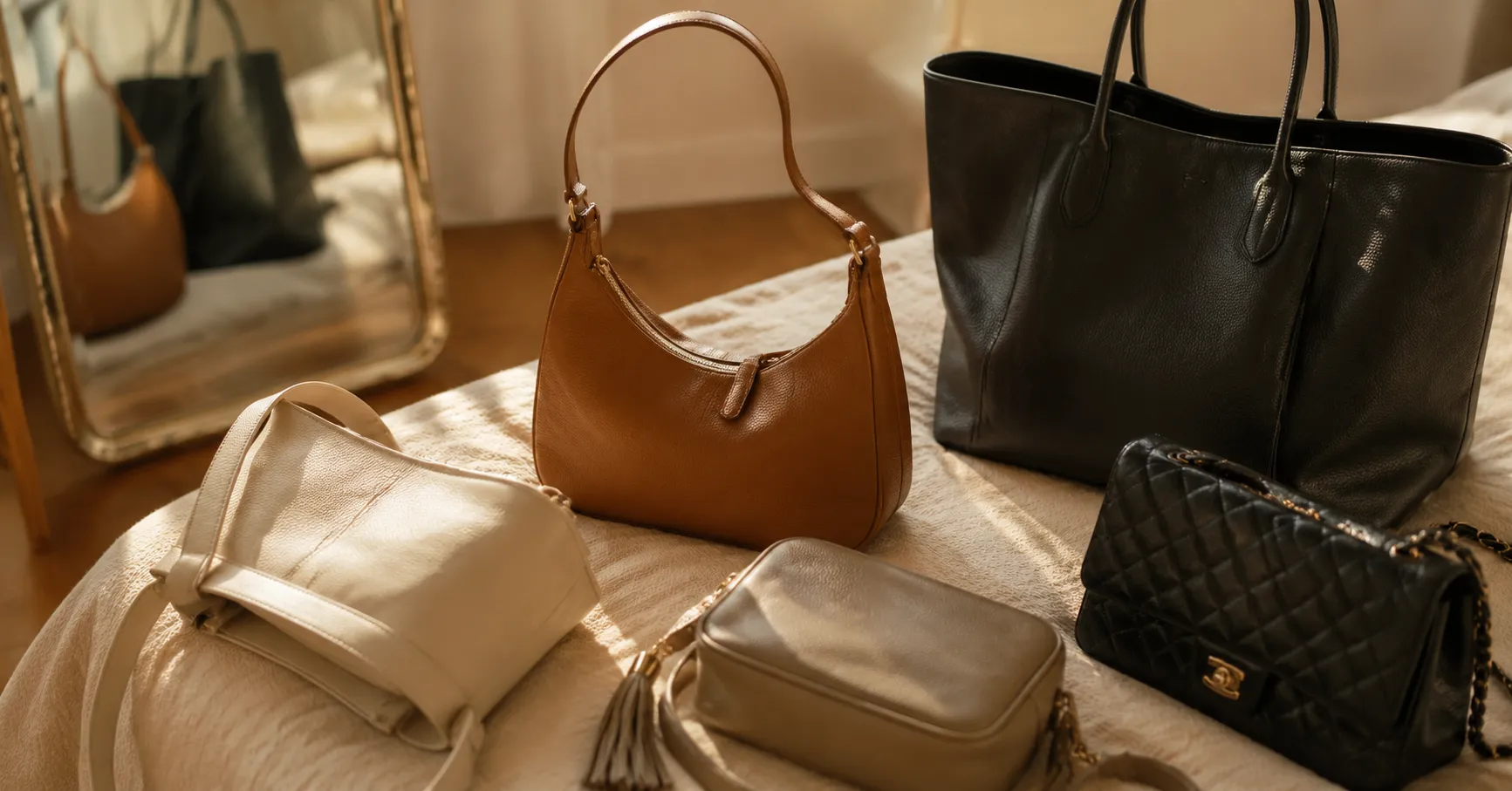
There’s a version of this mistake most of us have made at least once. You spot a bag in a store window oversized, structured, with just the right amount of hardware and it looks exactly like something you’d see on a runway editorial. You buy it. You get home. You hold it against your body in the mirror. And something is… off. The bag looks enormous, or weirdly shrunken, or it cuts your silhouette in a way that feels slightly wrong but you can’t articulate why. You end up leaving it on a shelf, half-guilty, half-confused.
The truth is, choosing a bag isn’t just about style preference. It’s about proportion. And proportion is one of those things that works invisibly when it’s right, and announces itself loudly when it’s wrong.
Why Proportion Matters More Than Trend
Fashion media tends to discuss bags in terms of “what’s in” the micro bag moment, the tote revival, the return of the shoulder bag. These conversations have their place, but they skip over something more fundamental: the same bag will read completely differently depending on who’s carrying it and how it relates to their frame.
This is basic visual psychology. The human eye is always making comparisons. When you carry a bag, it becomes part of your overall silhouette, and the brain immediately processes the relationship between your body’s proportions and the object next to it. A bag that’s too large for a petite frame doesn’t just look big it makes the person carrying it look smaller. A bag that’s too small against a tall or broad frame can look like an afterthought, a prop that forgot what it was supposed to be doing.
Understanding this isn’t about following rules. It’s about working with perception rather than against it.
For Petite Frames: The Scale Equation
If you’re on the shorter side roughly 5’4″ and under the most important principle is this: the bag should never visually dominate your torso. When a bag extends past your hip or sits at a height that cuts across the widest part of your body, it fragments your silhouette into competing sections rather than letting the eye travel naturally.
Small to medium-sized bags tend to work best here, but it’s not just about size it’s about placement. Crossbody bags that hit at the hip or just above it can be incredibly flattering because they keep the visual center of the look in a clean zone. Structured mini bags worn close to the body give a polished, intentional feel without overwhelming scale.
What to approach carefully: the oversized tote. This doesn’t mean you can’t carry one plenty of petite women carry large bags beautifully. The key is silhouette contrast. If the bag is oversized, keep the clothing minimal and streamlined so the bag reads as a deliberate statement rather than a proportion accident. The moment the outfit and the bag are both large, the figure gets lost somewhere in between.
One more thing worth noting: long straps that drop the bag below the hip tend to visually elongate, which can be lovely on a petite frame but only when the bag itself is appropriately scaled. A giant hobo bag on a very long strap is a different calculation entirely.
For Tall Frames: Owning the Full Canvas
Height gives you a proportional range that shorter frames simply don’t have. Larger bags, longer straps, bold structured shapes all of these work with a tall frame because there’s enough visual space for them to exist without swallowing the person carrying them.
But the interesting design challenge for tall women is often not “what fits” but “what creates visual balance.” If you’re tall and particularly lean, very narrow bags can look almost comically slender, emphasizing elongation when you might actually want to add horizontal weight to the look. Wide, structured bags the kind with a horizontal orientation rather than a vertical one can add presence and balance.
If you’re tall with a fuller figure, you have arguably the most flexibility of any body type. The proportional range is wide. The one area worth thinking about: very tiny micro bags can look lost, not because they’re necessarily unflattering, but because they require a very specific styling intention to land correctly. Worn casually without thought, they can look like you grabbed the wrong bag on the way out.
For Curvy and Hourglass Figures: Working With, Not Against
The hourglass or curvy figure has a defined waist and more volume in the hip and bust. The bag choice here becomes interesting because you’re working with a naturally dynamic silhouette that already has a lot going on visually.
Medium-sized bags in soft, unstructured shapes often complement this body type well. They move with the figure rather than imposing a competing geometry. A very rigid, boxy bag against a soft, curved silhouette can create an odd visual tension not always bad, but worth being conscious of.
Crossbodies are worth some thought here. Astrap that cuts diagonally across the body draws the eye across the chest and midsection if you’re self-conscious about that area, you might prefer a shoulder bag or top-handle style instead. If you love your curves, a crossbody can actually be a great way to showcase the figure by running a line right through its most dynamic sections.
The belt bag worn at the waist is a divisive piece for curvy figures, but when it works, it works beautifully. Positioned correctly, it emphasizes the natural waist and creates a clear visual anchor point for the whole look. The sizing matters enormously here: too bulky and it adds volume in exactly the wrong place; sleek and fitted, it acts almost like an accessory belt.
For Straight or Athletic Figures: Creating the Curve
A straighter frame one without a dramatically defined waist or significant hip-to-shoulder variation actually has a unique advantage when it comes to bags: you can use them as deliberate tools of visual architecture. Bags with volume, slouch, or strong horizontal presence can add perceived curve and dimension to the silhouette.
Hobo bags, bucket bags, and soft structured totes all do this job well. They introduce softness and roundness into the look in a way that feels organic rather than constructed. A stiff, flat bag worn close to a straight frame tends to flatten the silhouette further though again, this is a design effect, not a rule, and sometimes that’s exactly what you want.
Where the athletic frame has more latitude than it’s often given credit for: bold, oversized bags. Because the silhouette is less defined, there’s no dramatic proportional contrast to navigate you can carry a very large bag without it fighting against an hourglass or getting lost in curves. The relationship is simpler, and that simplicity can be genuinely freeing.
The Variables Nobody Talks About
Torso length is one of the most underrated factors in bag styling. Two women can be exactly the same height but have entirely different relationships with a shoulder bag depending on how long their torso is. A bag that hits at the natural waist on one person might ride at the hip on another, and these placement differences change everything about how the bag integrates with the outfit.
Shoulder width also comes into play more than most people realize. Wide-shouldered women often find that top-handle bags or very structured bags worn at the hand or arm create a more balanced look than shoulder bags that emphasize width by sitting right on the shoulder line. Narrower shoulders, conversely, can use a structured shoulder bag to add perceived width and presence to the upper body.
And then there’s the question of height of heel. The same crossbody bag will hit at a different point on your body depending on whether you’re in flats or heels, which shifts its proportional relationship with your entire silhouette. It sounds like a minor point until you try it and realize the bag you rejected in sneakers actually looks great with a modest heel.
Proportion in fashion is rarely about restriction it’s about information. Knowing why something works gives you the power to break the pattern deliberately, with intention, rather than by accident. The goal was never to match your body type to a prescribed list of acceptable bags. The goal is to understand the visual conversation happening between you and what you’re carrying, and then decide, consciously, what you want that conversation to say.