

The Problem With Buying More
Walk into anyone’s closet and you’ll likely find the same contradiction: racks of clothes, and nothing to wear. It’s a joke that stopped being funny somewhere around the third time you stood there, late for something, staring at a pile of impulse purchases that somehow never add up to an outfit.
The fast fashion industry is very good at making you feel like the solution is always the next thing. A new season means new silhouettes, new colors, new reasons to spend. And so the cycle continues more stuff, less clarity, a wardrobe that grows in volume while shrinking in usefulness.
Building a timeless wardrobe isn’t about spending more. It’s about spending differently, and thinking before you buy in a way most of us were never actually taught.
What “Timeless” Actually Means
The word gets thrown around a lot, usually next to a photo of a beige trench coat or a white button-down. But timelessness isn’t a color palette or a specific silhouette. It’s a quality something closer to staying power.
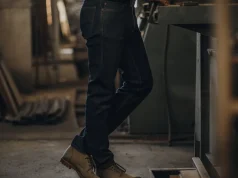
A timeless piece is one that doesn’t depend on a trend cycle to look right. It works this year and three years from now. It earns its place not by being boring, but by being versatile enough to carry different contexts without looking out of place. Think of the navy blazer that goes from a job interview to a dinner to a Saturday farmer’s market. Think of the dark denim jean that somehow survives every decade with its dignity intact.
Timelessness, in practice, means longevity both in construction and in relevance. And here’s where budget building actually has an edge over mindless spending: when every dollar counts, you’re forced to ask whether something will really work for you, rather than just work in the moment.
Start With a Ruthless Audit
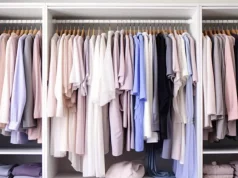
Before you buy a single thing, look at what you already own. Not a casual glance an actual accounting. Pull everything out. Every shirt, every pair of trousers, every jacket you keep meaning to tailor. Lay it out or hang it all visible at once.
What you’re looking for is pattern: what do you actually reach for, and what just takes up space? Most people find that they wear roughly20 percent of their wardrobe 80 percent of the time. That core20 percent is your real wardrobe. The rest is noise.
Once you see what’s working, you can identify the gaps not the gaps created by what’s trending online, but genuine functional gaps. Maybe you have no versatile outerwear. Maybe every bottom you own is the same casual cut. Maybe you lack one decent layering piece. Those gaps are your actual shopping list.
This audit also surfaces something useful: your real aesthetic. Not the aesthetic you aspire to, or the one you pin on mood boards the one you actually live in day to day. Building from that reality, rather than some imagined version of yourself, is what makes a wardrobe coherent instead of chaotic.
The Budget Paradox: Cheap Isn’t Always Cheap
Here’s something counterintuitive. A $15 shirt you replace three times in a year costs $45. A $45 shirt that lasts four years costs $45. The per-wear economics of quality almost always win the challenge is having the cash available at the point of purchase.
This is where thrift stores, consignment shops, and secondhand platforms change the equation entirely. You can find well-constructed, natural-fiber clothing for a fraction of its original price because someone else absorbed the depreciation. A wool coat from a thrift store at $30 might have originally cost $300. The quality is identical. The price is not.
Secondhand shopping rewards patience and the willingness to look without a specific mission. You won’t always find what you need the first time. But if you go regularly, or keep a saved search running on a resale app, the pieces come. And when they do, they come at prices that make the cost-per-wear math genuinely work in your favor.
For things that don’t translate well secondhand underwear, socks, shoes that depend on fit budget-friendly doesn’t mean cheapest. It means finding brands that sit in the middle range and are known for durability. Some of the most-worn basics in people’s wardrobes come from mid-tier retailers that nobody would call luxury. The key is construction: flat-felled seams, natural fiber content, consistentstitching. Those details outlast trend.
The Architecture of a Working Wardrobe
If you’re starting close to zero or rebuilding after realizing your current closet doesn’t actually serve you the sequence in which you acquire pieces matters.
Anchor pieces come first. These are the items that everything else can be worn with. A well-fitting trouser in a neutral. A clean, unbranded crewneck in a color that works with your complexion. A versatile outer layer. A single pair of shoes that handles the most occasions. These aren’t the most exciting purchases, but they’re the load-bearing walls of the whole structure.
Layering and accent pieces come second things that add personality without requiring a specific context. A shirt with interesting texture. A slightly bolder color that still pairs back to your neutrals. These extend the range of your anchor pieces, multiplying outfit combinations without multiplying cost.
What comes last, if at all, is the statement piece. The item that announces itself. These can absolutely exist in a timeless wardrobe but they work best once the foundation is solid, so the statement has something to play against rather than compete with.
The math on this approach is modest. A genuine working wardrobe for most people one that covers professional, casual, and social contexts can be assembled from fifteen to twenty pieces if those pieces are chosen with intention. That’s a finite goal. It’s achievable on a real budget, over time, if you resist filling gaps with the wrong thing just because it’s available and cheap.
On Letting Go of the Discount Reflex
There’s a specific trap in budget shopping that’s worth naming directly. The word “sale” has a way of bypassing rational thought. Something that costs60 percent off feels like a gain even when it’s still a poor decision a piece that doesn’t fit well, doesn’t suit your lifestyle, or that you only bought because the math felt good in the moment.
A discount on something you don’t need is still money spent. A full-price item that you’ll wear for a decade is an investment. These two things are not equivalent, even when the discount looks more responsible on paper.
The discipline required isn’t deprivation. It’s clarity. Knowing what you need before you shop insulates you against the noise. When you walk into a store or open a resale app with a specific gap to fill, you’re far less susceptible to the pull of a deal that would complicate your wardrobe rather than complete it.
Fit Is Not a Luxury
The single most common reason good clothes don’t get worn is fit. Not quality. Not color. Not style. Fit.
A piece that fits your body correctly looks more expensive than it is, reads as intentional, and photographs better, which has become oddly relevant as we all see ourselves in photographs more often than previous generations ever did. A poorly fitting expensive piece looks worse than a well-fitting cheap one. This is not a debate.
Basic alterations taking in a shirt, hemming trousers, tapering a jacket are often cheaper than people assume. A tailor shortening a pair of trousers might cost $12. That $12 can transform a $20 thrift-store find into something that looks genuinely tailored. The return on that small investment is outsized.
If you’re building on a budget, the combination of secondhand prices plus selective alterations is one of the most cost-effective paths to looking like someone who thinks about how they dress. Not because it creates an illusion, but because it actually produces clothes that fit which is the whole point.
The Wardrobe That Wears You
There’s a version of this project that ends with a perfectly curated closet, every piece earning its place, every outfit assembled in under two minutes with no second-guessing. That version exists. People live in it.
But the more honest truth is that a timeless wardrobe isn’t a destination it’s an ongoing relationship with your own taste, your own life, and the question of what you actually need versus what you’ve been convinced to want.
The budget constraint, for all its friction, has a way of clarifying that question faster than any amount of money ever could.