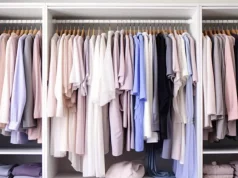

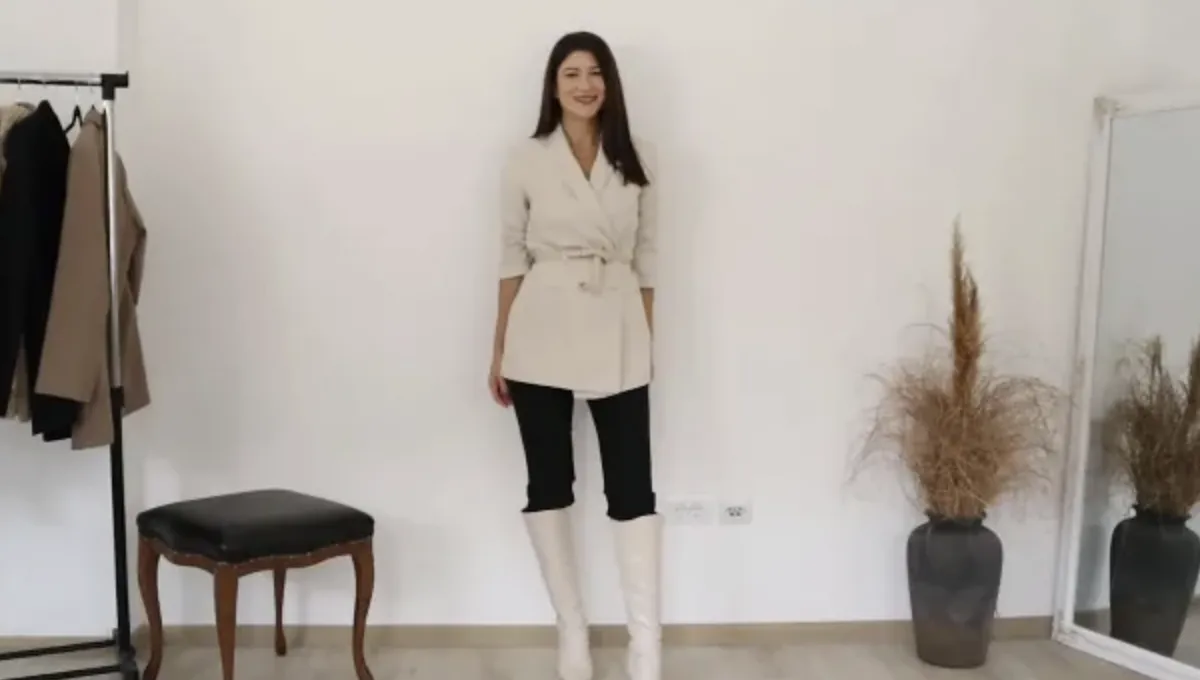
There’s a particular kind of morning dread that has nothing to do with your alarm clock. It’s the kind that hits when you’re standing in front of a closet stuffed with clothes and feel, with total certainty, that you have nothing to wear. The irony is almost funny except you’re running late, and nothing about it feels funny at all.
The real problem isn’t a lack of clothes. It’s a lack of a system.
Professional stylists don’t wake up inspired every morning. They don’t rely on mood or creativity to get dressed. They rely on formulas repeatable combinations that they trust, that they’ve tested, and that work without requiring a single ounce of decision-making energy before8 a.m. The good news is that none of this is proprietary knowledge. These formulas are learnable, and once you internalize even two or three of them, the entire experience of getting dressed shifts from stressful to almost automatic.
Why Formulas Work Better Than Inspiration
Fashion media has spent decades selling the idea that style is about self-expression, spontaneity, and an almost artistic approach to dressing. And while that’s a beautiful idea in theory, it sets an unrealistic standard for a Tuesday morning when you have a9 a.m. meeting and haven’t had coffee yet.
The cognitive load of getting dressed is genuinely real. Researchers who study decision fatigue have found that the quality of choices people make tends to decline as the number of choices increases throughout the day. Getting dressed is often one of the first decisions of the morning, which means you’re spending precious mental energy before the day has even started. A formula removes the decision. You’re not choosing you’re executing.
This is exactly why so many people with reputations for exceptional personal style tend to wear variations of the same thing repeatedly. It’s not laziness or lack of imagination. It’s deliberate design.
The Uniform Formula: One Base, Infinite Variations
The most sustainable outfit formula is what stylists call the personal uniform a silhouette or combination that you return to again and again, adjusting only the color, fabric, or finish.
For many people, this looks like a well-fitted trouser paired with a tucked-in top. The trouser can be wide-leg linen on a warm day, tailored wool in the fall, or a slim dark denim when you want something more casual. The top can be a silk blouse, a ribbed tank, a crisp Oxford shirt. The bones of the outfit never change. Only the texture does.
The beauty of this formula is its scalability. You can dress it up with a structured blazer and loafers, or strip it back with white sneakers and a crossbody bag. The silhouette high-rise bottom, defined waist, clean top does the visual work so you don’t have to.
Building your own version means identifying one bottom and one top silhouette that you genuinely feel good in, then buying multiples in different colors and weights. That’s not a capsule wardrobe in the aspirational Pinterest sense. It’s just practical infrastructure.
The Color Anchoring Formula
Color is where most outfit attempts fall apart. Not because people choose wrong colors, but because they have no system for combining them.
The simplest formula that works across almost every wardrobe is the two-neutral-plus-one rule. Choose two neutral pieces think ivory, camel, black, grey, navy, chocolate brown and let one piece introduce color or print. That single piece becomes the visual center of the outfit without overwhelming it.
A cream linen shirt, stone-colored wide-leg trousers, and a rust-red shoulder bag. Navy tailored pants, a white fitted tee, and olive green loafers. The formula handles the proportion so your eye doesn’t have to.
What’s worth understanding here is that neutrals are not boring. They’re the scaffolding. And once you start treating them that way as the architecture that makes a more interesting element land correctly your relationship with color changes entirely. Suddenly that vintage printed scarf you’ve been afraid to wear has a home. The cobalt blue boots make sense. One expressive piece, anchored properly, elevates the whole outfit rather than competing with it.
The Layering Formula for Days When Nothing Feels Right
There are mornings when every combination you try looks flat. The layering formula exists specifically for those days, and it’s one of the most reliable rescues in a stylist’s toolkit.
The structure is simple: something fitted underneath, something looser or more structured on top, and a third element that ties the whole thing together a belt, a scarf, a long necklace, a shoe with visual weight.
A fitted turtleneck under a slightly oversized blazer, finished with wide-leg trousers and a pointed ankle boot. Or a simple slip dress worn over a long-sleeve thermal, belted at the waist, with chunky loafers underneath. Layering adds dimension to even the most basic pieces, and it solves the “nothing looks right” problem because the visual interest comes from the relationship between the layers, not from any single piece being exceptional.
The third-element rule is the part people most often skip, and it’s usually why the outfit doesn’t quite come together. That finishing touch doesn’t need to be complicated a thin gold belt over a midi dress, a structured tote that grounds a floaty outfit, earrings with enough presence to frame the face. Proportion and weight are doing the work. The outfit goes from assembled to considered.
The Five-Minute Formula for Genuinely Busy Mornings
Not every morning allows for thought, even minimal thought. Some days the formula needs to be essentially zero-effort, and that’s where the monochrome approach becomes genuinely useful rather than just aesthetically interesting.
Wearing one color head to toe or very close to it is one of the most visually sophisticated things you can do, and it requires almost no styling skill whatsoever. The outfit reads as intentional because tonal dressing has that effect on the eye. It creates a clean vertical line that looks elegant and pulled-together without any actual effort.
The key is to allow for variation in texture and shade within the single color family. All-black in matte jersey and patent leather reads completely differently from all-black in cashmere and suede. Varying the finish keeps the outfit from looking like a uniform in the institutional sense. Camel on camel in different weights a ribbed sweater, a fluid wide-leg trouser, a suede loafer is one of the easiest and most quietly chic combinations available to anyone willing to just commit to the bit.
Keep two or three monochromatic combinations pre-mapped in your wardrobe for the days when your brain simply isn’t available. That alone removes an enormous amount of the friction.
The One Investment That Makes Every Formula Work Better
All of these formulas function best when the fit is right not tailored-to-within-an-inch-of-your-life perfect, but correct enough that the proportions land the way they’re supposed to. A wide-leg trouser that drags on the floor in the wrong way loses its elegance. A blazer with shoulders that don’t sit properly undermines the whole line.
Most people skip alterations because they assume it’s expensive or reserved for special occasion pieces. In reality, a basic hem or shoulder adjustment at a local tailor costs less than most people expect and transforms how a piece wears entirely. The slightly-too-long trouser that you keep avoiding suddenly becomes something you reach for constantly. The blazer that fits everywhere except the sleeves becomes a staple.
Fit is the least glamorous variable in any formula, and the one that quietly determines everything.
Making It Yours Without Starting from Scratch
The temptation when learning about outfit formulas is to feel like you need to go shopping before you can start using them. You almost certainly don’t. The more productive first step is to audit what you already own through the lens of these structures.
Pull out your bottoms and ask which ones have the silhouette you actually return to. Pull out your tops and identify the two or three you feel genuinely good in. See which pieces map onto the color anchoring formula, which combinations could work as monochromatic builds, which layers you have that could work over or under other pieces.
Most wardrobes contain the ingredients for at least two or three of these formulas already. They’re just not being used as formulas they’re being used as individual pieces competing for attention every morning. The shift isn’t about buying anything new. It’s about applying a different logic to what’s already there.
The mornings that used to feel impossible start feeling ordinary. And ordinary, when it comes to getting dressed before the day starts, is exactly what you want.