
There’s a particular kind of hope that lives inside a glass bottle with a minimalist label. You’ve seen it at the checkout counter, on the shelves of boutique wellness shops, maybe even in the hands of a celebrity who swears her skin has never looked better since she “made the switch.” Clean beauty has graduated from a niche concern to a cultural movement and with it comes a question that the industry has been quietly avoiding: does it actually work?
The honest answer is more complicated than either the true believers or the skeptics want it to be.
What “Clean” Actually Means (And Doesn’t)
Let’s start with the uncomfortable truth: there is no regulated definition of “clean beauty.” Not in the United States, not in most of the world. The word is a marketing term, not a certification. Unlike “organic” or “SPF30,” no regulatory body is checking whether a brand has earned the right to call itself clean. That means a product can proudly display the word while still containing ingredients that some researchers flag as problematic, or it can exclude a perfectly safe compound simply because it sounds chemical.
This ambiguity isn’t accidental. The clean beauty industry has thrived precisely because it operates in a space between science and feeling promising something that’s hard to disprove. When you can define your own standards, you can always meet them.
Different brands draw the line in wildly different places. One company’s banned list might include parabens, sulfates, and synthetic fragrances. Another might also exclude retinol, hyaluronic acid derivatives, or even certain plant extracts that have longer-chain chemical names. The result is a landscape where “clean” can mean almost anything, depending on who’s selling it.
The Ingredients Conversation Is Overdue
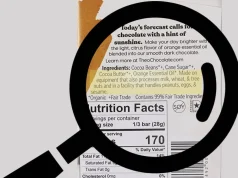
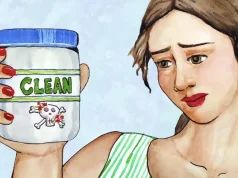
For years, clean beauty brands built their identity around fear. Parabens cause cancer. Sulfates strip your skin. Synthetic chemicals disrupt your hormones. These claims circulated on blogs, in magazine features, and across social media with the confidence of established science but the actual research picture is considerably murkier.
Take parabens. The concern originated from a 2004 study that detected parabens in breast tumor tissue. What that study did not establish and was never designed to establish was causation. Subsequent research has largely concluded that parabens at cosmetic concentrations do not pose a meaningful hormonal risk to humans. The European Scientific Committee on Consumer Safety, which is among the world’s most rigorous regulatory bodies, has reviewed the evidence repeatedly and continues to permit low-concentration parabens in cosmetics.
That doesn’t mean every synthetic ingredient is innocent, or that the clean beauty movement hasn’t identified some legitimate concerns. Formaldehyde-releasing preservatives, certain heavy metals in pigments, and some UV filters do have evidence linking them to skin sensitization or broader health effects. The problem is that clean beauty marketing rarely makes these distinctions. It treats “natural” as synonymous with “safe” and “synthetic” as synonymous with “harmful,” and neither equivalence holds.
Poison ivy is natural. So is arsenic. Meanwhile, niacinamide one of the most well-researched, skin-transforming ingredients in modern dermatology is synthesized in a lab.
Where Clean Beauty Actually Earns Its Reputation
Strip away the fear-based marketing and something real remains. Clean beauty, at its best, has pushed the industry toward better formulation practices, more transparent ingredient sourcing, and a genuine reckoning with filler ingredients that served no function except to bulk up a formula cheaply.
Many conventional beauty products historically contained ingredients not because they were optimal for skin health, but because they were cheap, they extended shelf life, or they created a particular sensory experience a thick lather, a silky slip that consumers associated with efficacy. Clean beauty brands, many of them smaller and forced to differentiate on something other than marketing budget, often developed leaner formulas with fewer unnecessary additives.
There’s also the question of fragrance, which is one area where the clean movement has real standing. Synthetic fragrance is the single most common contact allergen in cosmetics, and it’s used in a staggering number of products including ones marketed as “gentle” or “for sensitive skin.” The clean beauty push toward fragrance-free or clearly disclosed fragrance ingredients has been genuinely beneficial for people with reactive skin.
The Skin Transformation Claim, Examined Closely
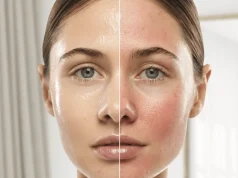
Here’s where the question in the headline demands an honest reckoning. Can clean beauty transform your skin? That depends on what you mean by transformation and what your skin actually needs.
If your skin has been reacting badly to conventional products, switching to a simpler formula with fewer potential irritants can produce remarkable results. Skin that has been chronically inflamed by fragrance or certain preservatives can, within weeks of removing the trigger, appear clearer, calmer, and genuinely different. In that context, yes clean beauty can transform your skin, in the way that removing an allergen transforms the health of someone who’s been unknowingly living with one.
But transformation as a baseline proposition, without an underlying irritant issue, is harder to substantiate. Many of the ingredients with the strongest evidence base for cellular-level skin change retinoids, alpha hydroxy acids in meaningful concentrations, niacinamide above5%, certain peptides are available in both conventional and clean formulations. Their efficacy doesn’t come from being “clean.” It comes from the chemistry.
What you’ll also find, if you look closely at many clean beauty lines, is that the active ingredient concentrations are often lower than what clinical research supports. A product might contain bakuchiol, the plant-derived retinol alternative, but at 0.2% when studies showing efficacy used 0.5%. It might list vitamin C but as a less stable derivative than the l-ascorbic acid that has decades of research behind it. The gap between “contains an effective ingredient” and “contains an effective dose of an effective ingredient” is where a lot of clean beauty products quietly live.
The Real Question Underneath All of This
Perhaps the most revealing thing about the clean beauty movement isn’t what it says about ingredients it’s what it says about trust. Consumers have been burned before by an industry that told them lead-based foundations were glamorous, that thalidomide was safe, that talc in baby powder was just talc. The desire for simpler, more transparent products isn’t irrational. It’s a reasonable response to a history of corporate opacity.
The frustration is that the clean beauty industry, born partly from that distrust, has sometimes replicated the same dynamics it claimed to oppose using emotional language in place of evidence, leveraging aesthetics to suggest purity, and building loyal audiences on the basis of fear rather than facts.
There are clean beauty brands doing genuinely rigorous work: sourcing carefully, formulating with evidence-based actives, being honest about what their products can and cannot do. There are also brands that are essentially selling the idea of wellness in beautiful packaging, with ingredients chosen more for their story than their efficacy.
The packaging rarely tells you which kind you’re holding.
What your skin actually responds to is particular to you your barrier function, your microbiome, your history of sensitization, your climate, your stress levels. Two people can use the same product and have opposite experiences. This is why dermatologists keep returning to the same advice: patch test, introduce actives slowly, pay attention to what your own skin tells you, and be skeptical of any system that promises universal results.
Clean or not, transformation has always been personal.